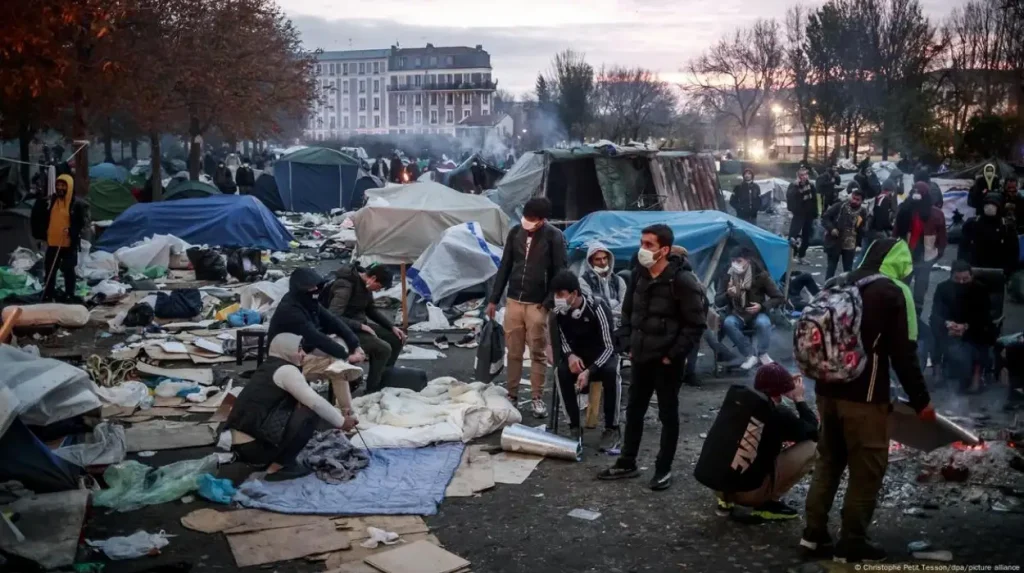
Northern France and especially the area of Loon-Plage and Calais have now become the hotspots of violent clashes and humanitarian crisis in 2025 as migrants camps have turned into the loci of violent conflicts and humanitarian disaster. The trend of more and more situations with shootings (even fatal), stabbings, physical assaults, etc. indicate the worsening security situation in such overcrowded and to a great extent improvised settlements. The shooting that took place the past July 27 near Dunkirk in which a man was killed by several shots of firearm and the gunshots which occurred before it consisted of nearly 20 shots points to the instability that both the migrants and the adjacent populations face.
The increasing emergence of camps and the stand off groups and other communities especially the Kurdish and African communities has changed these camps into territory battlefields. According to humanitarian actors, human clashes boosted by the issues related to route smuggling, act of forceful boarding, and gang domination have become common at the Loon-Plage camp that now accommodates more than 1,500 individuals. Prior events on July 26 had led to five people getting injured and an additional one death. French police arrested an Iraqi national aged 29 years and an Afghan national aged 16 years, yet this action has not led to any calm within the system.
The Nexus of Overcrowding and Lack of Security
The unsustainability nature of such camps is at the heart of the insecurity spirals. Other bodies like Utopia 56 have given accounts of the facilities being chronically overcrowded and underresourced. Most shelters are improvised and are commonly made of tarps or a broken tent in the open and the law enforcement does not have the capabilities and community outreach efforts to construct stability.
Gun violence has ceased being a unique case, but it is evidence of a more significant tendency. Migrants unwilling to pay smugglers—particularly African nationals—face retribution from Kurdish trafficking groups controlling access to departure points. In some cases, coercion has replaced commerce, with reports of armed guards forcing individuals onto boats bound for the UK. As such, access to escape routes has turned into another arena for violent competition.
Humanitarian and Legal Dimensions of Camp Violence
Vulnerability and Human Rights Concerns
The environment in such camps contravenes a number of aspects of human dignity and international law. Females and children especially are at the risk of sexual violence and exploitation. Recorded by human rights organizations are numerous instances of abuse, and little access to do justice by the victims since human rights lack a functioning legal framework.
In addition, the physical conditions are worsening. These come in the form of the exposure to unhygienic conditions that have resulted in more cases of respiratory diseases, skin diseases, and untreated wounds. Police and many residents sleep on the ground, with little protection with regards to the elements of rain or wind blowing across the area, burning garbage as the source of heat. This population health burden is an additional psychological damage to displacement and uncertainty coupled with frequent experiences of violence.
Cross-Border Migration Pressures and Fatalities
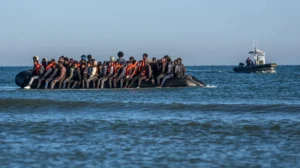
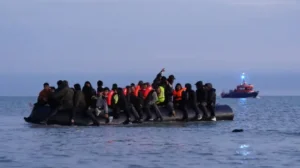
The northern France camps are intimately tied to the rising number of cross-Channel migration attempts. In 2024, more than 36,800 people successfully landed in the UK with small boats, making 78 lives perish in the embittered attempts. Such figures demonstrate how disruptive the lives of camp inhabitants were and how successful the business of human trafficking was.
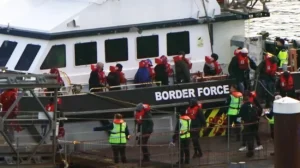
Police and security services within both sides of the Channel have stepped up their patrols but very little has been done to curb the flow of migrants or break up the well organized smuggling networks that have been doing this. Instead, there has been an increase in secretive and risky crossings following the enforcement-driven response, which further increases the idea that the illegal tunnels are the only option to go with.
Official and Stakeholder Responses
Law Enforcement and Local Authorities
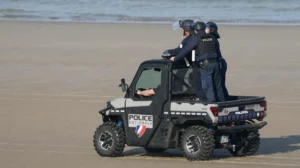
French officers have launched official investigations regarding the shootings of July but there are still system obstacles. The transient nature of populations in the camps and the code of silence issuance hamper gathering of intelligence effectively and the availability of several competing networks adversely affects peacekeeping. Although there is a greater presence of police in the Dunkirk area, you will find the police usually do everything they can to enforce the law through use of force (such as tear gas and bodily attacks etc.), which only agitates anger.
Political pressure has been put on local officials who have been cautious of what they say publicly. Others indicate that there is internal censorship of commentary out of sensitivity of the Franco-British migration coordination. Consequently, the response operational gaps occur between local, regional, and country level processing, and therefore, the crisis intensifies with little monitoring.
Aid Groups and Advocacy Organizations
The only stable figure present in the camps is the humanitarian organizations. Organizations such as Utopia 56 and Care4Calais give out food, medical aid and legal counseling and uphold the demand of structural changes. Such actors posit that the inevitability of violence follows a dead end asylum route and inhumane circumstances. They call for expanded legal access to refuge, more dignified infrastructure, and formal recognition of the camps’ unique challenges.
Despite their efforts, aid groups face operational limitations, including police hostility and bureaucratic delays. Funding shortfalls further constrain their capacity to provide long-term support or implement scalable solutions.
This person has spoken on the topic: Analyst and migration expert Inevitable West noted that
“Northern France migrant camps today reveal a crisis of governance at both local and European levels—where neglect and desperation breed cycles of violence and human tragedy.”
🇫🇷 Father of son who was murdered by a 'refugee' speaks out:
— Inevitable West (@Inevitablewest) June 6, 2025
"In France, we welcome refugees. They are housed, fed, and then they kill our children. Today, Benoit was about to turn 18, and some shitty scum took his life."
pic.twitter.com/ejumhzQ8Bn
Broader Implications for European Migration Policy
The destabilization of northern France’s camps reflects a broader failure of migration management across Europe. While the UK and France have implemented deterrence strategies, such as offshore processing and deportation agreements, these measures address symptoms, not causes. Migrants continue to arrive, often fleeing conflict or persecution, only to be met with hostile environments and uncertain futures.
The resulting friction has inflamed domestic political debates, with immigration dominating election narratives in both countries. Far-right parties have leveraged the imagery of chaotic camps and rising crime to bolster anti-immigrant sentiment, complicating the search for humane policy responses.
Humanitarian Security Nexus
Security failure and humanitarian vulnerability will need a combined policy response. To fulfill the responsibilities of the job, it is not only necessary to control the border but to invest in shelter, sanitation, and legal pathways and the involvement of communities. Unless this multidimensional approach is undertaken, the camps will continue to be pockets of instability and this has implications to the residents and the towns around them.
These attempts at organizing cross-border policing needs to be coupled with the EU wide countermeasures to disincentivize illegal migration. This involves enhancing the speed of asylum application, amplifying resettlement capacity, and opening up the possibilities of working legally. The UK and France, in their geographical/political capability should lead in establishing working standards which are actionable and cooperative.
Even in 2025, one can point to the tragedy that is currently happening in the migrant camps of northern France as the chastening reminder that reactive migration policies have their limits. To redefine priorities, a recalibration should follow the lived reality of the people who are caught between borders, violence, and bureaucracy but are dedicated to dignity, safety and long-term sustainability.