In London and Paris, collaboration on these Channel migration operations was strengthened with small-boat crossings persisting to increase in 2024 and 2025. The move by the UK to invest about EUR540 million towards French patrol activities was one of the largest bilateral security expenditures along the northern European coast.
The financing is an economic estimate: the policy of avoiding the exit of northern France is believed to be more, as opposed to the British landing procedures. However, according to the statistics, starting in 2025, the deterrence effect is unpredictable. Even though thousands of departures were prevented through patrols, the overall figure of migrants arriving to the United Kingdom still rose and demonstrated the ongoing mismatch between enforcement capabilities and the flexibility of smuggling networks.
Why did the funding expand after 2025 migration trends?
The numbers of migration in 2025 were the core reason behind hastening the funding framework. The numbers of crossings increased over the English Channel than in the past years, which added force to political pressure in the United Kingdom to prove stronger border controls.
The British and French reviews took place jointly, and the reviews showed that the early funding rounds enhanced the coverage of surveillance but failed to address gaps in operations. Consequently, the two governments settled on the expansion of the financial package to cover the widened coastal patrols, new surveillance technologies and coordination of intelligence to break up organized smuggling networks.
How the partnership fits within post-brexit border policy?
The two-way patrol is also a sign of the changing border control following the exit of the United Kingdom out of the European Union. The UK is becoming more dependent on direct agreements between the neighboring states to control the migration routes without having access to some of the EU migration frameworks.
Investing in French patrols is thus a two-fold role of improving the capacity to intercept on the frontline as well as maintaining cooperation with the diplomatic relations with Paris on a matter which is still a politically sensitive issue in both countries.
Financial structure behind the €540 million patrol initiative
The €540 million obligation is used to fund numerous operations in the French coastline, such as deployment of personnel, surveillance equipment and infrastructure that is aimed at ensuring that departures are spotted earlier.
The day-to-day patrol operations are run by the French authorities and British financing is used to supply the equipment and intelligence services. This model gives the UK a chance to control how policing is done on the French territory without directly dictating on the operations.
Surveillance technologies and coastal monitoring
Much of the funding is used in sophisticated surveillance systems that have been put in place along major migration routes. Troops of drones with night-vision cameras are currently patrolling parts of the coastline that had no round-the-clock coverage.
Cameras on mounts and mobile radars were also put in place in places where smugglers were known to frequent. As per the operation update that was discussed at the end of 2025, coordination meetings, these technologies added capacity to detect the crossing attempts and intervene earlier before boats could reach the open water.
In spite of these advancements, authorities have admitted that smugglers promptly change routes at the moment of increased surveillance and shift the points of departure to the further end of the coastline.
Expanded police presence along northern french beaches
The other significant aspect of the funding structure is personnel deployment. There were hundreds more French officers posted on beaches and access points in the coast between Dunkirk and Cherbourg.
During 2025, training programs were based on fast interception methods and working with the maritime rescue teams. These units work 24 hours and most especially when the weather is favourable as the rates of crossings usually rise.
Ongoing data on operations passed on during bilateral meetings indicated that there was an improvement in patrol coverage than in previous years. Nevertheless, the authorities have also stated that smugglers are increasingly using isolated estuaries and industrial waterfronts where they are harder to guard.
Operational impact of the “one in, one out” return mechanism
In addition to funding patrols, London and Paris adopted a small returns system that is commonly referred to as the one in, one out system. The idea is to send back some of the migrants who arrive in the UK back to France and to permit the UK to take in some of the asylum seekers by means of legal channels.
The program had a small numerical impact in its initial years of operation though it had a political significance.
Legal constraints shaping return outcomes
The amount of returned migrants to France was relatively low in comparison to the overall arrival. The legal provisions of asylum cases demand the case to be carefully examined and it is only after that returns can be effected, and this makes the whole process very slow.
According to the officials working in the program, humanitarian protection especially to minors and families limits the type of persons who can qualify as returned immediately. Consequently, the UK processing system still receives most of the asylum seekers instead of being shipped back to France.
Administrative bottlenecks and logistical barriers
The efficiency of the mechanism was also lowered by operational hurdles. Reception centers in France have to deal with returned migrants thus straining the capacity during the times of high arrivals.
The system is complicated by the administrative processes that involve identity verification and legal appeals. These obstacles underscore the problem of rapid return policies in the European asylum systems that emphasize on legal due process.
Smuggling networks adapt quickly to strengthened patrols
Adaptability of smuggling networks is one of the most intractable problems to deal with in terms of Channel enforcement efforts. The migrant transportation organised groups keep changing their strategies in an effort to evade the patrol operations.
Even in 2025, intelligence reports reported that there were some changes in tactics after the increase in UK-funded patrols.
New routes and faster boats reduce interception windows
The smugglers are also introducing ships more frequently through less patrolled coastal points. Other operations are now based on smaller estuaries or industrial ports as opposed to the beaches that are heavily patrolled around Calais.
There is also development of boat technology. Quicker inflatable vessels with rigid hulls minimize the time, which can be spent on interception after detection of a launch. This strategy compels the police to act within minutes and strains the patrol forces trying to arrive at the boats before they can pour into the busy shipping lanes.
Growing financial incentives for smuggling operations
As more effort is put into making smuggling illegal, the criminal organization has changed its financial structure. The increase in passage fees in 2025 was an indication of the increase in operational risks as well as the expense involved in shunning patrol.
In spite of these escalating prices, there is still high demand for crossings amongst the migrants who have been trapped in northern France. As migration analysts follow the migration patterns, they observe that in spite of the existence of economic incentives, enforcement may be unable to close the route completely.
Humanitarian implications of intensified border enforcement
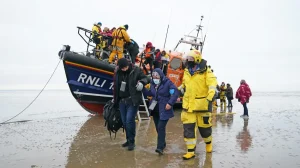
Increased patrols also inevitably come into conflict with humanitarian issues of the safety and treatment of migrants. Early 2026 crossings of the winter caused several medical crises associated with hypothermia and overcrowded boats.
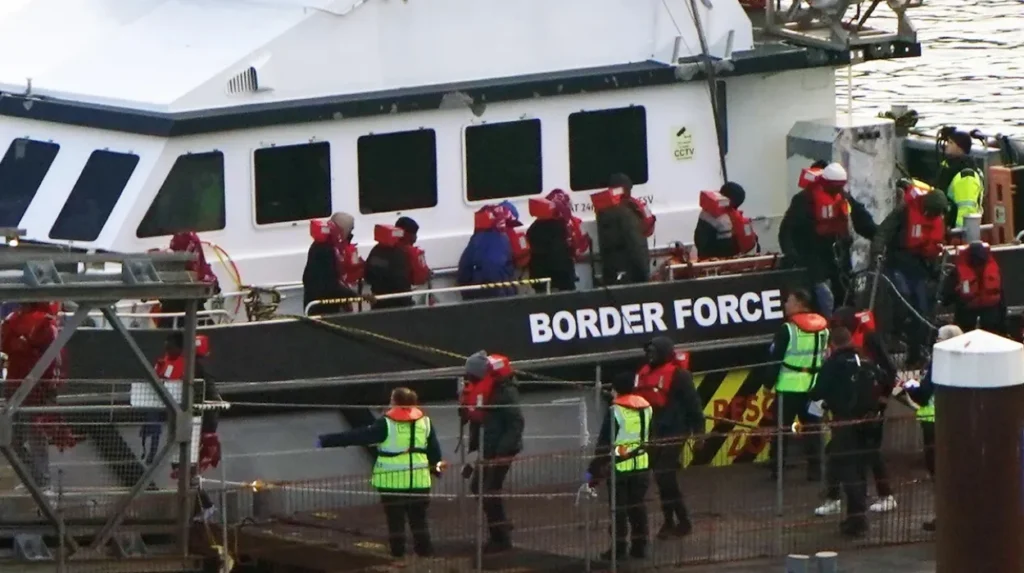
French rescue teams reported that patrol units frequently transition from enforcement roles to emergency response operations when vessels encounter distress.
Medical response pressures along the coastline
Medical facilities in coastal regions of northern France experienced increased demand during peak crossing periods. Local hospitals treated migrants suffering from exposure and dehydration following failed attempts to reach the United Kingdom.
Authorities emphasized that rescue obligations remain legally binding regardless of enforcement strategies. Maritime law requires assistance to vessels in distress, ensuring that humanitarian response remains integrated into patrol operations.
Debate over balancing deterrence and protection
Non-governmental organizations monitoring migration policy raised concerns about conditions in temporary camps and reception centers near major departure zones. Reports during 2025 highlighted overcrowding and inconsistent access to legal advice for asylum seekers.
Government officials acknowledge the challenges but maintain that deterrence policies are necessary to reduce the risks associated with dangerous small-boat crossings.
Political and diplomatic implications of the funding partnership
Beyond operational outcomes, the €540 million funding initiative carries broader implications for UK-France relations and European migration policy.
Reliance on bilateral cooperation after brexit
The Channel patrol partnership demonstrates how migration management increasingly depends on direct cooperation between neighboring states. British financial support effectively positions the UK as a major contributor to enforcement along French territory.
Diplomatic coordination therefore remains essential. Any breakdown in cooperation could significantly weaken patrol effectiveness and increase migration pressures along the Channel route.
Domestic political expectations driving enforcement measures
Migration policy continues to play a central role in domestic political debates in the United Kingdom. Government leaders face pressure to demonstrate that financial investments translate into measurable reductions in crossings.
Public expectations often exceed the practical capabilities of enforcement policies, particularly when migration flows respond to broader geopolitical pressures such as conflict and economic instability.
As European governments evaluate border strategies entering 2026, the Channel patrol initiative offers a revealing case study. Massive financial commitments can expand surveillance, increase patrol coverage, and disrupt smuggling activity. Yet migration routes evolve quickly, and enforcement measures rarely operate in isolation from humanitarian, legal, and diplomatic constraints. Observers across Europe are now watching whether this model becomes a template for future migration management or another illustration of how complex and persistent irregular migration routes have become.