In France, thousands of children remain largely invisible in public statistics, leaving them outside the scope of policies designed to protect their rights, according to a new report by the United Nations Children’s Fund (UNICEF).
A New Children’s Rights Observatory
To address the lack of reliable data, UNICEF has established a children’s rights observatory. Its inaugural report, published on Thursday, January 29, examines 76 indicators across 12 thematic areas, including education, health, mental health, child protection, poverty, migration, nutrition, digital access, early childhood, children’s opinions, demography, and the environment.
“The lack of comprehensive, reliable, and nationwide data, as well as systematic monitoring, still prevents us from guaranteeing the effective exercise of the rights of all children,”
the agency noted. UNICEF emphasized that thousands of children remain
“largely invisible in public statistics, and therefore in public policies tailored to their needs.”
Poverty and Housing: A Major Emergency
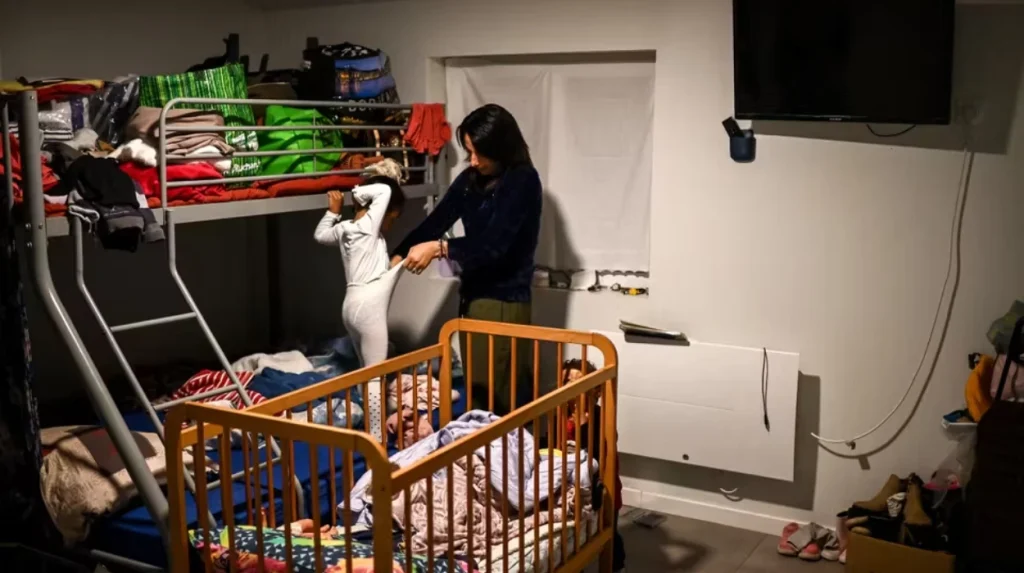
The observatory highlights the critical situation of children living in precarious conditions. At least 32,000 children in France live without a home or in hotels, while 38 homeless children died in 2024.
“These situations directly infringe upon children’s fundamental rights to survival, health, and development,”
the report said. Poverty and housing insecurity remain pressing issues, with families often struggling to provide adequate nutrition. Nearly 23% of children surveyed reported that they do not eat three meals a day.
Violence and Child Protection: Hidden Epidemic
UNICEF’s report underscores the persistence of violence against children in France. Every year, approximately 160,000 children are victims of sexual violence—roughly one every three minutes—and over 50,000 experience physical or psychological abuse. Alarmingly, a child dies at the hands of a parent or relative every five days.
Despite these alarming figures, many cases go unrecorded, highlighting significant gaps in child protection monitoring.
Out-of-School Children: The Right to Education at Risk
The right to education is not guaranteed for all children. Thousands remain out of school, but no consolidated national data exists on their numbers, location, or reasons for absence.
“The government does not have comprehensive data on out-of-school children in France, further exacerbating their invisibility,”
UNICEF stated. The agency is calling for the creation of a national observatory on out-of-school children to improve oversight and intervention.
The report also notes that the French education system often perpetuates inequalities.
According to the OECD’s latest PISA survey, social background in France heavily influences academic performance, with a 20% impact compared to the OECD average of 13%. Inequalities persist along lines of gender, social origin, disability, and mother tongue.
Overseas Territories: Under-Documented and Overlooked
France’s overseas territories face particularly severe challenges, often remaining under-documented despite greater needs. In the overseas departments, three in ten residents live in inadequate housing, while in Mayotte, eight in ten children are considered poor.
Estimates indicate that between 5,379 and 9,575 children in Mayotte are not enrolled in school. In 2024, 1,860 children were placed in administrative detention in Mayotte, compared to just six in mainland France, highlighting ongoing violations of children’s rights and stark territorial inequalities.
Calls for Action
UNICEF stresses that addressing these gaps in data collection is essential to ensure that all children in France, including those in marginalized communities and overseas territories, can fully exercise their fundamental rights.
“Without reliable, nationwide data, children’s rights remain theoretical rather than practical,” the report concludes. The observatory aims to provide policymakers with the tools to identify, track, and respond to these pressing issues effectively.