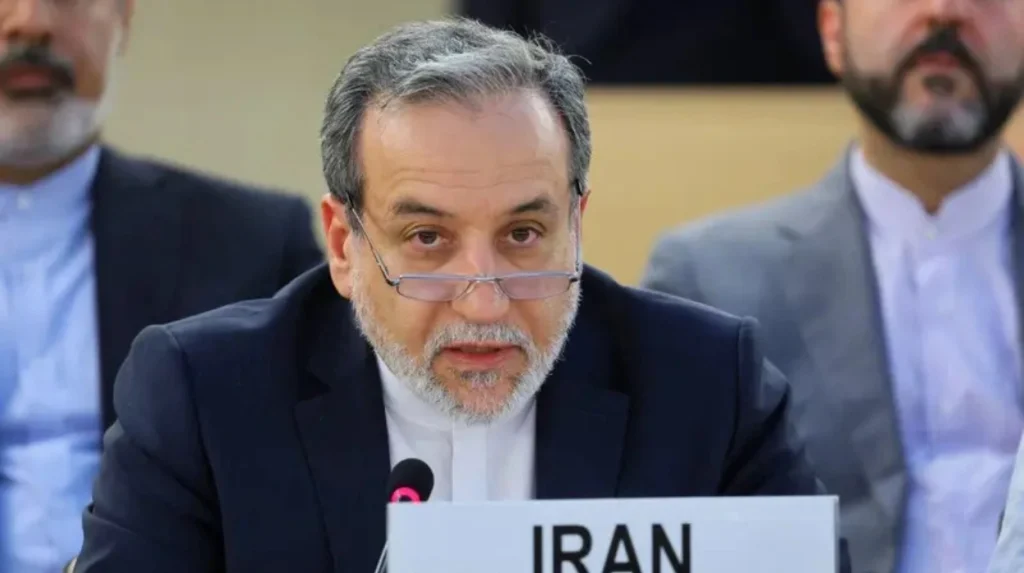
The Paris talks to be held in November 2025 between Abbas Araghchi, the Foreign Minister of Iran and Jean-Noel Barrot, the Foreign Minister of France is a well-timed intervention in a cautious but strategically essential relationship. The summit comes at a time when France has been trying to create more diplomatic room following months of the frozen relationship between Tehran and the western powers due to the persisting nuclear issue. French officials have made the debates to be seen as a critical move to coerce Iran into complete cooperation with the International Atomic Energy Agency. The aim, according to a French diplomatic source, is to regain confidence by seeing as being through verifiable cooperation and the message is that Europeans continue to feel anxious about the enrichment levels seen in Iran and the accessibility of the sites.
The time is indicative of the general French interest in regaining traction in the track of nuclear diplomacy. Paris is on board with the European Union trying to rescue the structure of the 2015 JCPOA although the multilateral agreement is virtually dead, following several failures. French policy makers have indicated that technical compliance should be revived by Iran before any wider political process can be revived. France wants to project its leadership in a negotiation environment where interests and trust are shifting because by framing the Paris negotiations as an occasion to preach on transparency and cooperation, France would be leading the pack.
An additional diplomatic agenda complication is a parallel humanitarian conflict. Two French nationals who were set free by Iranian custody but are still forbidden to depart Tehran, are still hiding in the French embassy. Another issue facing the case is the unresolved state of the case where France tries to reconcile citizen protection, and the overall diplomatic goals. The problem then merges with even bigger anxieties regarding consular access and detainee negotiations, providing the Paris negotiations with a certain emotional and political coloring that goes beyond nuclear issues.
Regional And Geopolitical Dynamics Shaping Negotiation Prospects
The Paris conference takes place in a backdrop of overlapping territorial antagonisms, mercurial alliances, and centuries-old strategic distrust between Iran and the west. Iran is insisting that its nuclear program does not contradict the peaceful development requirements. Officials of Iran still denounce the demands made by the western counterparts particularly the U.S to stop the enrichment at a higher purity level and curtail the missile advancement as politically driven and technically irrational. The fact that Tehran described the latest attempts of the U.S as being illogical is indicative of a more widespread unwillingness to seem conciliatory unless Washington makes similar vows.
The diplomatic policy of France is influenced by the fact that the country is a central European actor, which attempts to stabilize the security of the region by engaging in the process, instead of seclusion. Following the withdrawal of the U.S. out of the JCPOA in 2018, France and other signatories of the European continent have tried to ensure that the principles of the agreement are still alive, despite the increasing cases of verification disagreement. The sustained UN sanctions in 2024 and 2025 have added more economic pressure on Iran. This financial burden has a great impact on the bargaining position of Tehran, with both positive and negative incentives and limitations as the Iranian leaders aim to stop the further decline and resist what they consider to be overheated demands of the outside world.
How Regional Conflicts Influence Diplomatic Leverage?
The fighting in Palestine and Lebanon still contributes a low but important influence in defining expectations of diplomacy. The continued support by Iran of the armed groups is a part of its regional posture that makes the calculations of the European governments that aim to contain the escalation complex. The officials of France have always raised alarm that any instability in such theatres would have the effect of destabilizing thinly stretched diplomatic lines. Paris considers nuclear diplomacy to be irreplaceable to the general architecture of regional security even without formally tying up the matters in the negotiation texts.
The European Struggle To Maintain Collective Strategy
Unity among the European powers is still fundamental but getting harder with domestic political changes affecting foreign policy priorities. The discussions in the European cities in 2025 underline the necessity to avoid the nuclear crisis and reconsider energy and trade relations impacted by the sanctions. The efforts of France in hosting the talks are an indication that the country is ready to play the leadership role at a time when coordination within the European borders is facing an increasing challenge with the rise of the competing security issues such as the Russian incessant assertiveness and instability around the Mediterranean.
US-Iran Tensions And Their Indirect Impact On Paris
The result of the Indirect US-Iran relations still has an effect on the European initiative even though neither Washington nor Tehran was present at the Paris conference. The American officials insist that there cannot be any formal progress made unless Iran can show compliance on enrichment and monitoring. In its turn, Iran demands the implementation of a meaningful change, which can only be achieved with the help of sanctions relief, which the United States does not want. This diplomatic stalemate adds pressure on France to buy time on the way of small-step trust-building, even in absence of breakthroughs.
Negotiation Challenges And The Future Of Dialogue
The Paris talks, which were the most publicized high-contact interaction, were preceded by indirect negotiations between Iran and the United States that had failed in mid-2025 due to the increased military activity in the region. The tone of the exchanges, according to diplomats conversant with the communications, was cautious, not confrontational and both of the sides have perceived it to be worthwhile to keep lines of communication open as far as they are not expecting to move fast. Disagreements on verification, relief of sanctions, and sequencing compliance are fundamental obstacles, which have consistently made inroads and blocked developments.
The Dilemma Of Verification And Trust-Building
The main issue is the tension between the demands that Iran demands to have sovereignty over its nuclear program and the expectations of transparency in the international world. Since the beginning of 2024, IAEA has cited restricted access to some of the sites, and it is of concern that continuity in monitoring can be observed. The technical need of continuous verification is the ground of insistence on the restoration of full cooperation in France. The Iranian authorities claim that the pressure exerted by the world has destroyed their confidence, and it is a political risk to make some concessions at home.
Balancing Diplomatic Pressure With De-Escalation
The French policymakers refer to their strategy as a mixed form of being firm and engaging. With the encouragement of cooperation without increasing rhetoric, they are seeking a diplomatic atmosphere that will discourage errors. The case of the French nationals that has not been resolved represents the crosshood of coercive and cooperative pressures. The approach of France shows how humanitarian concern can affect the diplomatic overture, which supports the importance of restrained involvement even in tense negotiations.
France’s Strategic Role And Evolving Opportunities
The intervention of France is a long term desire to serve as a stabilizing force in the Middle East and strengthening of the global non-proliferation regime. By establishing itself as the intermediary between Iran and Western actors, Paris advocates a new compliance but is opposed to further regional escalation. The Paris negotiations might be used to keep the lines of diplomacy open at a time when the political polarization will restrict the future negotiations.
The Potential For Broader European Re-Engagement
Should the Paris talks create even modest openings, they could facilitate a structured effort by European governments to re-engage Iran on multiple fronts. Reviving technical dialogue through the IAEA could be a first step toward re-establishing multilateral frameworks that have been undermined by years of tension. French officials emphasize that predictability and stability, even if achieved incrementally, are essential for building a longer-term diplomatic pathway.
France’s decision to host the November meeting underscores a broader recognition that the current diplomatic environment remains fragile but not immovable. The intersection of nuclear verification challenges, humanitarian concerns, and persistent geopolitical rivalry creates a negotiation landscape where progress is difficult yet necessary. Observers across Europe and the Middle East are watching closely to see whether the Paris talks can ease entrenched positions or simply reaffirm them. As uncertainty persists, the potential for unexpected openings continues to shape speculation, raising questions about whether this moment may represent a turning point in Iran-Europe relations or merely a pause within a conflict marked by endurance, recalibration, and shifting regional dynamics.