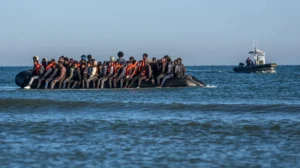
This crisis in the year 2015 was one of the largest migrations to Europe since World War II. Its occurrence was mostly the result of the Syrian civil war, and other strains were caused by long-term conflicts in Afghanistan, Iraq, and some of Africa. The disintegration of state systems, the emergence of militants like ISIL, and the overall destruction of humanitarian facilities displaced millions of people. As neighboring countries, including Turkey, Lebanon, and Jordan, were nearing their capacity, a lot of people wanted to find protection and prospects on the territory of the European Union.
In addition to the active warfare, economic instability, violation of human rights and climate stressors, were also underlying factors that led to the exodus. To most migrants, Europe had become a symbol of refuge and healthcare, education, and job opportunities that were not available in their home countries.
Europe’s Initial Reaction And Challenges
The reaction of Europe was prompt though disjointed. Germany and Sweden accepted great quantities of asylum seekers, and German Chancellor Angela Merkel once famously said, in 2015,
“Wir schaffen das” (“We can do this”).
In Germany alone more than 890,000 asylum applications were registered that year. Nevertheless, frontline states such as Greece, Italy and Hungary were soon crushed, suffering logistical overstretch and poor support structures.
The attempts to develop an integrated approach like the use of hot spot registration centers in major entry points were defeated by inappropriate infrastructure and lack of uniformity. In the 2016 EU-Turkey deal, the crossings declined in the Eastern Mediterranean, but was criticized as putting a disproportionate burden on Turkey and questioning the protection of human rights of the returned migrants.
Policy Transformations In Immigration Post-2015
During the years after the crisis, the EU proceeded to increase harmonization of asylum procedures. In 2022, the European Asylum Support Office (EASO) was enhanced to the European Union Agency for Asylum, which provides operational and technical support to member states who are strained. Also, the Common European Asylum System (CEAS) was updated in order to harmonize the conditions of reception and speed up decision-making.
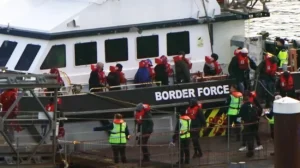
The functions of Frontex, the European Border and Coast Guard Agency, were also enlarged. It has thousands of officers on the EU external borders and carries out surveillance, returns and other support activities in third countries by 2025. An effort has however been made to come up with mandatory quotas in relocation of member states but this has not resulted in much success as a result of national opposition especially among the Eastern European countries that are considered to still have the issue of sovereignty.
Externalization Of Border Control
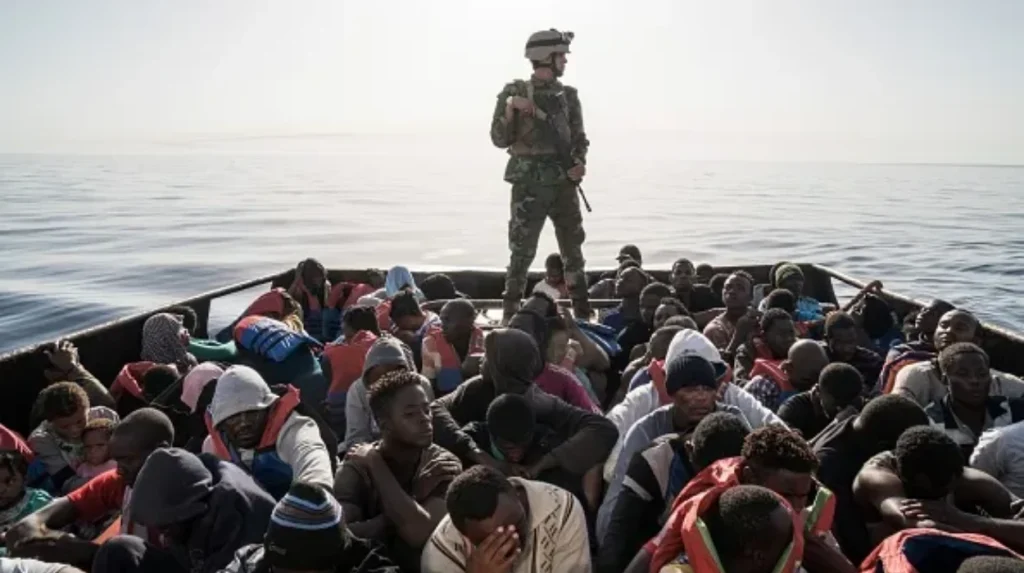
The other significant trend has been the strategic externalization of migration management by the EU. This involves collaboration with the North African countries like Libya and Tunisia and sub-Saharan countries like Niger and Sudan in which European financing is used to help with the enforcement of borders, processing of asylum, and the infrastructure of returns. Such arrangements are meant to discourage irregular departures and more repatriations of rejected asylum seekers.
More flexible legal systems are also indicated by the use of temporary protection mechanisms that were reintroduced during the conflict in Ukraine, in 2022. Nevertheless, this flexibility is not necessarily followed by long-term integration policies, which means precarity among the beneficiaries.
Persistent Challenges And The State Of Migration In 2025
Asylum demand is high despite the efforts of the policy. In the year 2024, an estimate of one million asylum applications was registered in the EU- the highest since the year 2015. Sudan Civil war, instability in the Sahel, as well as economic deterioration in some parts of Latin America and South Asia, have created new pressures. This has led to a change in migration paths. Western balkan corridor has reappeared and more are now crossing at Hungary and the border of Slovenia. There has also been an increase in arrivals at the Atlantic route to Canary Islands.
Illegal migration is still fatal. The Mediterranean Sea has been taking lives every year, and the International Organization for Migration (IOM) calculated more than 3,000 deaths in 2024. The legal and operational limitations imposed on the search and rescue performed by the NGOs complicate the humanitarian reaction.
Political Polarization And Societal Impacts
Immigration continues to be a divisive political subject in Europe. The publicity around the refugee crisis contributed to the rise of populist and far-right parties of which some have become a parliamentary force or even a coalition government in countries such as Italy, Hungary, and the Netherlands. To these parties, migration is usually presented as a challenge to cultural identity, social cohesion and security.
At the social level, the society is divided. Even though the arguments in favour of humanitarian principles remain, the issues of integration, housing, employment, and education strain keep on affecting the discussions. The integration programs differences among member states have different levels in their scope and effectiveness, which has led to disproportionate migrant performance and the possibility of social fragmentation.
Broader Impact And Future Directions Of European Migration Governance
This has led to the greater appreciation of the fact that effective migration governance should not only focus on integration in the host nations but also on what is happening back home to initiate the displacement. The current EU development policy focuses on cooperation with the countries of origin and enhances better governance, economic opportunities and climate resilience. The Global Gateway project by the European Commission is involved in infrastructure development, education, and employment in Africa and Asia to minimize the push factor towards migration.
At the national level, the strategies of integration are being re-defined. Language training, vocational training and qualification identification are being given priority. The efforts are frequently organized by cities and local governments, especially in such urban centers as Berlin, Paris, and Amsterdam where migrants are locally concentrated.
Lessons Learned And Innovations Ahead
The 2015 crisis demonstrated the weaknesses of the reactive migration policy and the necessity of long-term planning. Among these lessons has been the need to have early-warning systems and real-time data exchange amongst states. The EU is growing its utilization of online avenues to monitor migration flows, biometric information, and timelines of asylum processes to better coordinate the process by 2025.
Another factor that is contributing to the legal migration pathways is technological innovation. The digital work visa has been tested in a number of countries to address the shortage of labor but at the same time provide an alternative to irregular migration. At the same time, community sponsorship of refugees has become more popular, and the role of civil society actors in the process of reception and integration has also increased.
The current immigration policy of Europe can be characterized as the result of the ten-year accommodation to the shock of the 2015 refugee crisis. Although some structural reforms have enhanced the ability of the EU to deal with migration, some challenges that pertain to burden-sharing, integration and external collaboration persist. The two-fold pressures of humanitarian imperative and political prudence still characterize the space of policies. With the development of displacement drivers, Europe has the challenge of creating policies that are not only secure and efficient, but also representative of common values. The ability of the current systems to reconcile the national interests and collective responsibility could determine whether migration waves in the future will be resisted or strongly resilient.