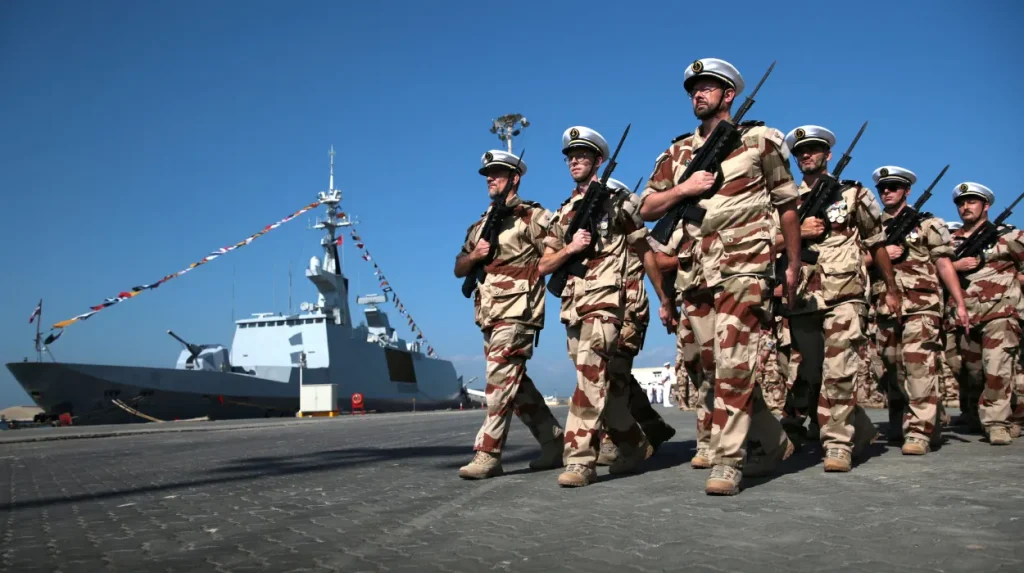
The Abu Dhabi military base of France is one of the highlights of the long-term military activity in the Gulf region. The installation was the first permanent French base outside Africa since the post-colonial period, which was created as a part of the bilateral defense pact with the United Arab Emirates in 2009. In the case of Paris, the facility was the result of the many years of diplomatic preparation that had been directed towards the establishment of long-term military presence in an area that is a focal point of energy and security patterns in the world. Its location in close proximity to the Strait of Hormuz is also strategically important and it provides vantage point on a waterway choke-point through which a substantial portion of oil trade in the world still passes.
The French deployment of the region of 700 French soldiers is not much compared to the US and the UK deployment in the Gulf, nevertheless, the presence has earned France a sustainable forward posture. The base offers logistical support to naval, air and ground forces and increases the ability of Paris to respond promptly to the circumstances in the Gulf, Red Sea and Indian Ocean. The base, according to senior French defense authorities, is often said to be a symbol of strategic confidence, long-term reliability in an area where the presence of external power swings with the wider change of world priorities.
With tensions surrounding maritime navigation, energy corridors and regional rivalry going into 2025, the French military presence in Abu Dhabi has not lost strategic value. It acts as a balance, and secures the longstanding belief of France that sustainable security in the Gulf is attained by international involvement supported by long-term physical presence and regular diplomatic communication.
Indo-Pacific integration and evolving defense doctrine
The core of its Indo-Pacific policy is based on its core elements that were initially defined in 2018 and modified in 2024 according to the evolving geopolitical realities. Having the overseas territories in the Indian and the Pacific Oceans, Paris considers the Gulf as a channel connecting European engagements with Indo-Pacific engagements. The base has facilitated France to have a wide operational capability, which will provide maritime presence in the Mediterranean to the Pacific.
Partner networks and regional coordination
Indo-Pacific partners, especially India, Japan, and Australia have been brought closer to Paris by way of common maritime drills and defense consultations. French naval operations in Abu Dhabi have assisted with multilateral patrols and freedom-of-navigation operations, especially when regional powers have increased their activities at the sea. French defense briefings in 2025 promoted the use of the base in facilitating joint surveillance operations and regional alertness in response to the emerging naval tensions.
Countering strategic competition and protecting access
The geopolitical rivalry in the area of maritime routes has put additional pressure on the timeliness of the French forward presence. The business and logistical growth of China in the gulf ports including those associated with the Khalifa Port has helped in mute recalibration of the French defense circles. Paris has instead focused on interoperability and maritime domain awareness alliances to be able to remain able and exercise control over contested sea lanes.
Franco-Emirati partnership and diplomatic depth
French-UAE relations go much deeper than the defense exports, which are also one of the pillars. Bilateral military collaboration is also demonstrated by the fact that UAE bought French Rafale fighter jet planes and air-defense systems. However, French leaders are getting more comfortable characterizing the relationship based on mutual long-term security perspectives and confidence and not only on procurement.
Economic and energy intersections
The defense cooperation still exists through the energy relations. Large French companies such as TotalEnergies also have a significant investment in Emirati energy and industrial projects. This foundation is the backbone of the security architecture of which these economic connections are functioning on, to enable predictable flows of trade and to strengthen the strategic interests of France of diversified supply chain of energy infrastructures.
Diplomatic reliability amid shifting alliances
The presence of France helps Gulf states to counterbalance Western variability as they strengthen relationships with Asian economies, and pursue diversified defensive relationship. The French policymakers use the base as an example of European strategic autonomy, and they emphasize the role of Europe in regional security without necessarily depending on NATO frameworks.
Operational missions and crisis response functions
The base is used as a starting point of naval activities in the Gulf and Arabian Sea. It has been in the heart of French involvement in European maritime security measures since 2020 aimed at protecting the commercial shipping routes against any interference and other underground threats. Frigates/ships that have patrolled and surveiled as a result of being based or supported with Abu Dhabi have helped in deterring maritime disruptions without escalation.
Counter-terrorism and capacity building
The presence of France enhances counter-terrorism cooperation with the partners in the Gulf and Africa. The base-based training programs also assist the regional force in the field of intelligence coordination and counter-infiltration in terms of threats posed by Yemen and the Horn of Africa. This is in conjunction with the larger French counter-terrorism policy in the Sahel and littoral of the Indian Ocean.
Evacuation and humanitarian mobility
Capacity for crisis response takes a low profile but indispensable role. In recent evacuation operations out of Sudan and previous evacuation operations out of Afghanistan, the French transport operations were staged out of Abu Dhabi. Being in a strategic location allows the base to mobilize quickly to deliver humanitarian and diplomatic evacuation operations, which allows it to remain flexible to regional instability.
Asia’s growing importance in Gulf security dynamics
The increased Indian presence in the Gulf has crossed the French strategic interests. A trilateral dialogue between France, India, and the UAE in 2025 indicated the further convergence of defense, which was supported by conducting air and naval drills on the territory of the Emirates. Analysts see this collaboration as an extension of France in trying to create a multipolar security space that cuts across the Gulf and the Indian Ocean.
At the same time, the expansion of Chinese military and logistic presence in the area, especially in the vicinity of dual-purpose port facilities, has brought in rivalry. French defense planning is not based on direct confrontation; rather, it focuses on enhanced coordination with Gulf states, confidence-building activities and maritime surveillance and cyber resilience technical cooperation. The Abu Dhabi base is a key driver in facilitating these interactions serving as a platform of enduring diplomatic and operational projects.
Balancing permanence and flexibility in regional posture
France still presents its Gulf presence as not being an action of interventionist positioning but as a way of strategic coherence. According to defense planners, the Abu Dhabi base can be regarded as an instrument of strategic continuity, which enables credible deterrence, and enables agile engagement across a variety of theaters with minimal expansion of heavy footprint. The model of the base is more general to France and her defense philosophy as a whole: forward bases that are used as a deterrent, diplomatic and humanitarian base simultaneously.
The presence of France in Abu Dhabi permanently is one of the points of contact between the old order of security structures and the new multipolar challenges as the Gulf security environment becomes more self-reliant, diversified in its alliances, and finds new sources of insecurity on the sea. The direction it is taking in the future will probably rely on the capacity of Paris to respond to changing geopolitical trends by being able to adjust operational capacity and maintaining old levels of trust with partners in the Gulf.