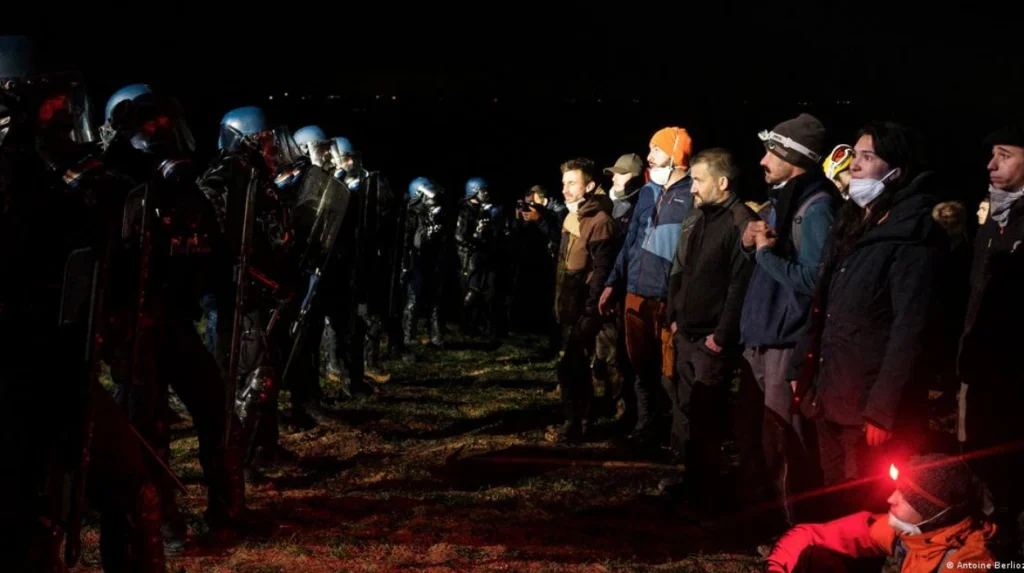
On December 12, 2025, the police used tear gas to clear a cattle farm in Les Bordes-sur-Arize, Ariege, to kill over-200 Blonde d’Aquitaine cows infected with lumpy skin disease. The intervention was preceded by a two-day blockade during which farmers and their followers constructed improvised barricades with the help of cut-down trees, hay bales, farm equipment in order to not allow veterinary teams to enter the premises.
Law enforcement officials announced that tensions were mounting with rocks hurled and police being pressed back by protestors trying to violate the security barrier. The operation saw four people being arrested and two of the police being injured in minor ways. It used tear gas following repeated warnings which failed to clear the crowd based on the accounts by the Interior Ministry.
Family Consent And Public Resistance
According to the animal health laws of France, the owners of the farm who were two brothers declared that they had signed a document consented to the cull. This approval notwithstanding, opposition by extended family members and other farmers who surrounded the operation turned the exercise into a larger struggle. This disjuncture between law and community resistance revealed major rifts within the farming families with irreparable losses.
Things went smoothly in local areas where residents recounted scenes of suffering with veterinarians moving under armed guard in an effort to underline the fact that disease control efforts may be morphed into emotionally charged confrontations when the enforcement of laws comes against rural identity.
Disease Context Driving Emergency Measures
Lumpy skin disease is a viral disease that is spread by insects, and it is not a danger to the human realm; however, it can cause the destruction of cattle herds due to fever, skin lesions, and low production. In June 2025, a few miles away from the Spanish border, France had the first confirmed cases, which led to a national emergency response that was coordinated with European Union veterinary authorities.
By December, Ariege became one of the most hit departments, and quarantine areas covered around ten percent of the cattle. On a national scale, over 5,000 animals had been culled in the process of containment, which shows how rapidly the disease was spreading during an unusually warm summer.
Vaccination Limits And Culling Protocols
The vaccination drive in Occitanie grew very fast with an estimated 90 percent coverage of the at-risk herds. However, the efficacy rates were closer to 70 percent in veterinary types of services, which are leaving sick animals as possible reservoirs. In the EU animal health law, the default reaction to infection confirmation is compulsory culling.
Authorities claim that the lack of decisive measures might hurt the exports of cattle in France and destroy the trust in its biosecurity system. Opponents respond that delayed implementation of vaccines and lack of consistent communication only fueled farmer opposition and this made enforcement of public health a focal point.
Stakeholder Perspectives Reveal Deep Fractures
The practice was characterized by the relatives of the farmers that were affected, as a break not only of lives but also of families. According to one of the family members, the breeding work that had taken almost 40 years disappeared in a few hours leaving in their wake emotional trauma and financial devastation. The exposure of the police force enhanced the feeling of humiliation among the people who considered the cull as an insult to the rural dignity.
The solidarity of the community was strengthened as the neighbors came together at the location with mixed feelings of grief and anger. Proponents put the confrontation in a symbolic perspective of a broadening rift between the Paris-based policymakers and the peripheral areas of farming.
Union Mobilization And Political Messaging
The Ariege incident was taken by the Rural Confederation to increase calls to the country to resist what it terms as unbalanced disease control practices. The officials of the union claimed that farmers were being required to pay biosecurity expenses without receiving equitable pay as well as trade security, especially as EU Mercosur talks progress.
The response of the police, according to Interior Minister Laurent Nunez, was justified, as it proceeded according to legal procedures and the officers made this action in order to prevent further deterioration. Prefectural officials made it clear that the use of tear gas was a final option, but its use bequeathed a major escalation in the policing of the countryside in 2025.
Broader Rural Protest Dynamics In 2025
The Ariege confrontation is part of a larger trend of protests in rural areas that have only escalated in 2025. Earlier in the year, farmers in southwestern France held roadblocks and tractor demonstrations because of the dropping of milk prices, subsidy cuts and competition on imports. The issue of disease cull gave a new dimension of changing economic grievances to existential battles of herd survival.
Equivalent incidents took place in Lot-et-Garonne and Haute-Garonne where veterinarians were forced to have police protection to perform the required slaughters. In November, tens of thousands attended nationwide protests in Paris, an indication of long-term mobilization and not isolated cases.
Economic Pressures Compounding Tensions
It has been experienced on the basis of economic indicators. The average milk prices plummeted about 15 percent annually and feed and energy prices were high. In the case of breeders of old cattle like Blonde d’Aquitaine, the lost genetic investment accumulated over decades is forced away, and the compensation does not represent a long-term value.
This economic crunch intensifies beliefs that disease policy is beneficial to export stability rather than the survival of farmers which strengthen anti-centralized decision beliefs.
Policy And Enforcement Challenges
In France, emergency funds of EUR200 million allocated to animal health crises are available in 2025, but according to farmers, compensation takes three months on average before execution. Market value is usually divided into payments and creates gaps that cause stress to cash flow and jeopardize the continuity of farms.
There have been increasing demands on breed specific compensation plans and accelerated disbursement services since the incident at Ariege. In the absence of reform, agricultural economists threaten to encourage further rapid farm shutdowns in already vulnerable rural areas.
Normalization Of Force In Biosecurity
The third such case from 2025 which was attributed to livestock culls involved the use of tear gas in Ariege. Although the state decides to enforce these steps as a need to ensure compliance with the law of public health, civil liberties organizations see the use of coercion as a possible method to increase opposition instead of obedience.
There is a subconscious awareness of sustainability amongst prefectural officials who point out that the constant movement of the police over time is straining the resources and are even turning the veterinarians into symbols of official coercion instead of disease prevention.
Health Security And Political Implications
The cattle industry in France is one of the agricultural products that play a substantial role in the agricultural trade balance of the country and its exports stand at about EUR5 billion each year. According to the officials, the inability to contain lumpy skin disease might result in import bans on trading partners even before 2026, which would further economic harm.
European veterinary authorities are still keeping an eye on the reaction in France as a reference point on how the control of cross-border diseases should be managed, increasing the stakes of the decisions on domestic enforcement.
Rural Trust And Governance Strains
With the Macron government struggling to grapple with a series of crises, whether agricultural, security, and so on, the Ariege incident highlights the frailty of the trust between the country and its rural communities. As the 2027 electoral horizon comes near, the unresolved tensions are most likely to be inflammable politically.
Tear gas drifting across cattle fields in Ariège leaves lingering questions about how far biosecurity enforcement can go before it undermines the very communities it seeks to protect. Whether France adapts toward earlier vaccination, decentralized monitoring, and compensation reform may determine if future outbreaks are met with cooperation or confrontation, shaping the social contract between farmers and the state in a warming, disease-prone agricultural landscape.