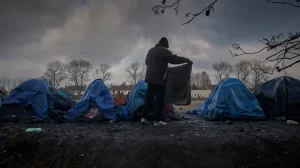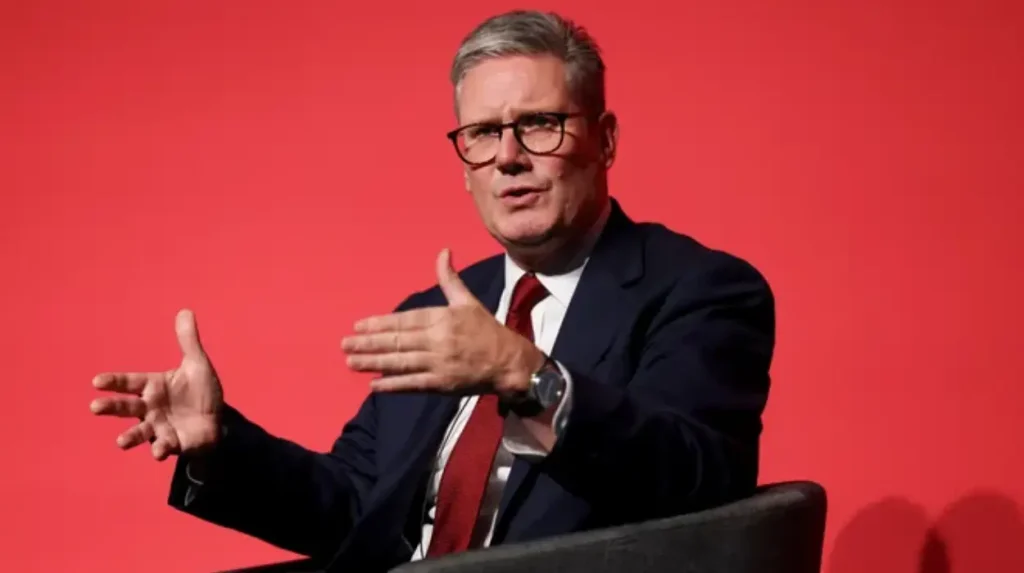
The English Channel still remains the center of the unsolved migration crisis in Britain. More than 20,000 people made the Channel crossing in small boats in the first half of 2025, an increase of more than 50 per cent compared to the first half of last year. Having lost dozens of lives this year alone already, with the general population losing its patience, the prime minister, Sir Keir Starmer, is already coming into scrutiny over his leadership.
A star politician who rose to the top on the platform of pragmatic and humane politics, today Starmer has to make a choice between dealing with governmental nervousness, the jurisdiction of the law, and global collaboration with others at a time when the results have to be impressive enough to keep his voters happy. It is not rhetorical anymore. It is logistical, political, and humanitarian.
The ‘One In, One Out’ Proposal: What Is at Stake?
The most pronounced feature of the Starmer plan is the so-called one in, one out migrant plan that is a bilateral process where the UK would send migrants who arrive via small boats back to France and in turn would accept legal asylum seekers in France those who have links with their families in Britain would be the first to benefit.
The reciprocal deal is aimed at destroying the business profits of human smugglers, minimizing arrivals on an irregular basis and enhancing confidence in the asylum application system. It is a simple premise. Its implementation, however, is full of law, diplomacy, and decaying political will.
Diplomatic Pageantry Meets Political Reality
The visit of the French President Emmanuel Macron to the UK this week was a moment in history. It was not only the first official upscale state visit of a European head of state since Brexit but it was also embellished with ceremonial charm as well as political symbolism. Migration was a major outstanding agenda item but behind the well rehearsed public rhetoric moved carefully choreographed fronts.
As leaders posed for photos and toasted bilateral friendship, negotiations continued in the background. Macron is facing political instability at home, while Starmer is navigating early administrative challenges. What both need is not symbolism, but a binding agreement that offers tangible results—something neither side could yet guarantee.
The EU’s Reluctance and Internal Divisions
France’s Calculated Hesitation
Paris remains the central partner in any migrant deal involving Channel crossings. France has long stood back from British calls for a firmer maritime response, invoking legal restrictions and humanitarian risk. But the latest operations have indicated a shift of approach. French law enforcement has reportedly begun sabotaging boats onshore before departure and considering intercepting vessels further out to sea.
British officials have hailed these developments as “significant tactical evolution.” Yet French cooperation stops short of full endorsement of the UK’s plan. The strategic hesitation stems from concerns over setting precedents for other EU member states and triggering internal backlash.
Southern Europe Pushes Back
The strongest criticism of the UK-French project, however, has not been coming from France but from within the wider EU. Italy, Greece, Spain, Malta, and Cyprus have jointly cautioned that the proposal would effectively require them to take more repatriated migrants in accordance with EU law. They allege that the proposal would undermine the already fragile balance within the EU’s migration and asylum system.
The European Commission has publicly acknowledged these concerns, requesting further details from both London and Paris. While the Commission has labeled the surge in Channel crossings as “alarming,” it insists that any bilateral arrangement must be legally coherent within EU standards. That requirement remains unmet.
Domestic Pressures and Political Calculations
Labour’s Internal Fault Lines
At home, Starmer’s migrant proposal is caught in the crossfire between progressive critics and right-wing hardliners. Labour MP Clive Lewis recently condemned the plan for lacking compassion and failing to create safe and legal asylum routes.
“Any sense of a logical process that is based on human rights is now out of the window,”
Lewis stated, calling for a complete rethinking of Britain’s migration architecture.
Meanwhile, the political right remains unconvinced by Starmer’s pivot. Former Home Secretary Suella Braverman has labeled the deal “cosmetic” and reiterated support for the defunct Rwanda scheme, asserting that deterrence—not diplomacy—is the only viable strategy.
This division places Starmer in a precarious position: appeasing Labour moderates while fending off populist attacks that accuse his government of being “soft on borders.”
A Tightrope in Downing Street
Downing Street maintains that negotiations are ongoing. Spokesperson Tom Wells has acknowledged the operational and legal complexity of the proposal but insists that the plan “remains under active development.” Internally, Home Office teams are pursuing detailed coordination frameworks with French authorities, though no timeline for implementation has been confirmed.
Sources close to the Prime Minister admit privately that expectations are being recalibrated. Success may be defined not by a sweeping overhaul, but by gradual policy alignment and cooperative enforcement on the ground.
The Historical Context: From Dublin to Deadlock
Prior to Brexit, the UK operated under the EU’s Dublin Regulation, allowing it to return migrants to the first EU country they entered. In practice, this meant far more arrivals from France than returns, highlighting a major imbalance that the new deal seeks to reverse.
Even beyond Dublin, existing UK-French agreements—most notably the 2018 joint funding arrangement—have failed to stem the tide of crossings. Britain continues to invest millions in French border security infrastructure, yet the number of attempted crossings remains among the highest on record.
The lesson appears to be clear: cooperation without legal enforcement and logistical synchrony yields little long-term impact.
The Economic and Security Dimensions
Linking Migration to Broader UK-EU Cooperation
Starmer’s broader diplomatic narrative ties migration control to economic rejuvenation and border stability. The new UK-EU strategic partnership agreement—finalized earlier this month—includes joint efforts on data sharing, defense cooperation, and youth mobility.
The Prime Minister hailed the deal as “a reset moment” in Britain’s European engagement. But the migration component remains unresolved, and its failure could undercut the broader optimism surrounding the new bilateral framework.
Minister for European Union Relations Nick Thomas-Symonds emphasized the stakes, describing the arrangement as “historic for both economic recovery and national security.” Still, internal briefing notes reveal deep concern that the migration impasse could overshadow the broader gains.
Public Debate and Media Perspectives
National debate over the “one in, one out” plan is intensifying. UK newspapers, think tanks, and advocacy groups remain divided. Some analysts argue that Starmer’s proposal could inject accountability into the system and offer a workable return mechanism. Others argue that it may result in an overall rise in asylum admissions without significantly reducing crossings.
Steven Woolfe, Director of the Centre for Migration, dismissed the plan as “nonsensical,” suggesting it might unintentionally increase migrant flows by signaling a pathway to legal entry. His view is a greater public concern: that deterrence and sympathy are mutually exclusive without disastrous consequences.
Voices from the Field
Barry Byrne, in an interview on Sky News, provided a first-hand account of the nature of the day-to-day operation problems for UK and French authorities. He described the difficulty of boarding rapidly moving, heavily loaded boats in the Channel, both of the technological restrictions and the human risk involved in the procedure.
Byrne highlighted the need for multilateral coordination and the risk of over-reliance on bilateralism in the face of an issue that is by its very nature international:
Starmer faces humiliation as migrant deal to be 'scuppered by the EU' https://t.co/sHtjOwRPt7 via @MailOnline
— Barry Byrne (@ByrneBarry) July 7, 2025
All in it together. The charade continues.
TURN BACK. INTERNMENT CAMPS NOT HOTELS.
NO FREE MEDICAL CARE, DENTISTRY OR ANYTHING ELSE.
The Road Ahead: Solution or Stalemate?
As Macron departs London and UK officials reconvene the negotiating table in Paris and Brussels, the future of Starmer’s migrant deal is in the balance. The idea might give political shape and media-friendly narrative, but it still has to overcome basic legal, logistical, and diplomatic challenges.
France is cautious. The EU is divided. British political factions remain polarized. While the latest visit held out promise of warmth and new cooperation, serious agreement on control of migration appears to be missing.
For Starmer, winning may not be in embracing the original plan lock, stock and barrel but in salvaging bits of it—winning incremental gain that shows progress without threatening legal damage or political reprisal.
As increasing numbers of small boats arrive and opinion shifts, the enduring challenge will be whether Britain can develop a system of migration that is enforceable, humane, and globally credible. Whether the plan in the works becomes a cornerstone policy or a footnote to post-Brexit diplomacy could rest with the next few months of talks, headline news, and rising high tides.