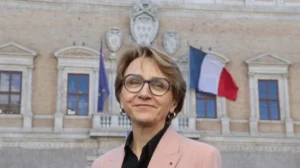
The Spanish government refused to accept aid offered by France after the devastating DANA. This harmful storm destroyed eastern Spain. It took the lives of more than 200 people and also caused significant property damage. The Interior Minister of France explored the situation and raised questions about why Spain declined to accept the offer from France.
To help Spain immediately, France had prepared 250 firefighters that contained every essential tool. Jean-Noël Barrot said that France’s military team is ready to assist Sapin and will just wait upon Spain’s request. Spain knew about this readiness and chose not to accept the help. This refusal raises many questions about the priority of Spain, especially in managing such a catastrophic storm. In such a situation, quick actions are necessary to overcome the damage.
The refusal to accept international support highlights that Sapin may want to rely only on domestic resources. However, it also risks delaying relief efforts when time is critical.Furthermore, efficient communication is essential between countries to manage the crisis. Spain’s choice could be a learning opportunity to improve future responses and ensure swift action during such tragedies.
Bruno Retailleau said that this offer from France highlights that the nation is always ready to fulfill its commitment to help foreign nations. This aid helps Spain deal with emergencies. France presented this offer to Sapin after a detailed discussion with Spain’s Interior Minister. It highlights the readiness to contribute resources quickly and effectively. This action, seen in a larger context, foregrounds the growing sense of European unity. The desire that nations can improve their collective reaction to crises is reinforced by France’s actual aid. In their statement, Retailleau acknowledges the importance of mutual trust in ensuring prompt, well-coordinated action as needed.
France’s energetic role in promoting regional safety and its capacity to mobilize resources when needed are also displayed by this gesture. Preventive collaboration, in which countries cooperate before problems worsen, is exemplified by this. Although he first turned down assistance from other parts of Spain, the head of the Valencian community believed he could get by on his own.And because no one was ordering them to do anything, even assistance that had reached Valencia had to return. After a few days of rest, the two helicopters returned to Andalucia.
Therefore, it’s just widespread ineptitude and nothing personal. Spain’s interior minister, Fernando Grande-Marlaska, has answered foreign support offers by saying that the nation no longer vitals outside assistance to deal with undergo problems. While expressing credit for the French Minister’s offer of bear, Grande-Marlaska made it clear that the situation in Spain was now under control. “At this moment, it is not necessary.
“We are in the first phase, ordering ourselves and preparing to mobilize the Army,”
the Spanish minister said, implying that Spain is taking care of the situation alone. Particularly in the early stages of crisis management, the Spanish greeting indicates a great belief in the nation’s capacities.
“Spain thinks its internal resources and reaction mechanisms are sufficient to address the issue at hand,”
French lawmaker Retailleau added.Likewise, Voz Populi claims that Morocco also sent an offer of carry to Grande-Marlaska. The Spanish minister told Abdelouafi Laft, Morocco’s interior minister, that surface assistance from Morocco was not required at this time. This carries Spain’s position that, despite the offers, the problem can be handled domestically using its wealth and capabilities.This strategy displays Spain’s determination to grasp the problem internally, concentrating on assembling its armed forces, especially the military, to deal with the issue. Although foreign assistance is welcomed, the Spanish government looks to place more emphasis on handling the issue on its own, showing that it is confident in its capacity to do so without more outside assistance at this time.