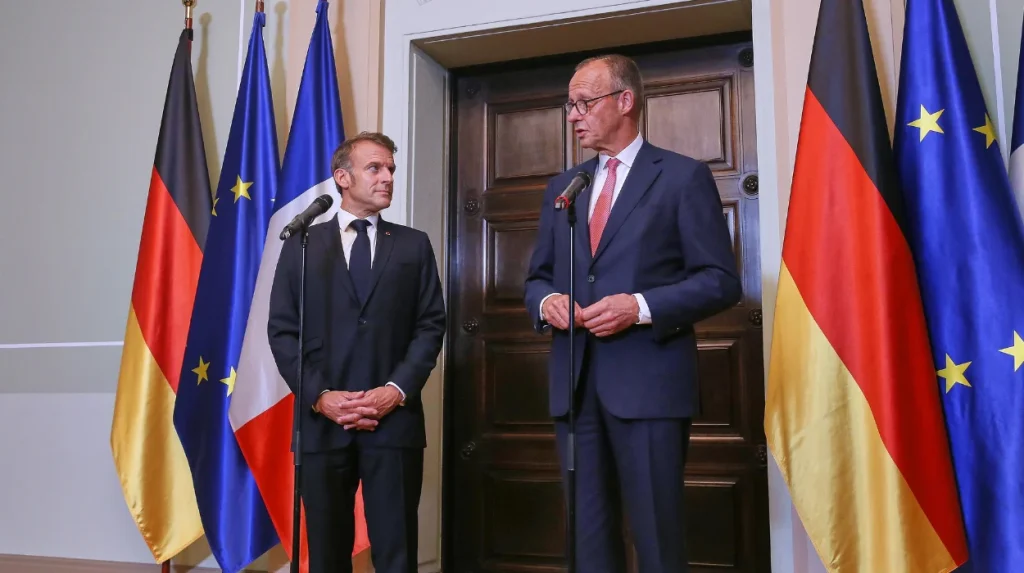
Strasbourg is a unique place in European diplomacy, a point of connection between France and Germany that has been the center of stability in the region over decades. Being situated in the Alsace region, which has been a source of disputes historically and that is culturally intertwined, the location of the city positions the city as an ideal place to cooperate bilaterally. After the period of the war, Strasbourg has become a reminder of what reconciliation could do, having transformed itself into an important meeting ground through which the heads of the French and the German nations have held regular meetings to ensure political unity is not destroyed but rather strengthened.
By 2025, Strasbourg has increased its role with regard to new political and security issues in Europe. The city has now become indispensable to debate on economic cohesion, energy security and reform of the European Union. Through its institutions, a stable and revered space is available to the two countries to maneuver through disagreements and strengthen their role in ensuring continental stability.
Institutional framework supporting diplomatic dialogue in Strasbourg
Strasbourg has its identity as being one of the official seats of the European parliament. With this institutional presence, French and German officials have a platform to regularly work together over legislative priorities, policy alignment, and strategic coordination. As the EU policy-making in certain areas such as digital regulation, industrial competitiveness, and defense coordination gains momentum, the Parliament has become a further place of unofficial bilateral consultation.
Some of the 2025 parliamentary meetings were more indicative of an increased Franco-German participation in the setting of the strategic agenda of the EU. With the arguments arising in the bloc regarding priorities in spending and regulatory measures, Strasbourg became the place where the two countries were trying out compromise ideas. The city climate promotes a formalized dialogue that would help in alleviating tensions and speed up the policymaking mechanisms thereafter being formalized in Brussels.
The Council of Europe’s role in supporting legal and human rights dialogue
Together with the European parliament, Strasbourg is the home to the council of Europe, an organization that increases the level of compliance to legal norms, democratic principles, and human rights within the continent. Its existence further enriches Franco-German cooperation through generating an institutional space through which to discuss rule-of-law issues and judicial independence.
Most recent discussions in the Council of Europe involving the question of court reform and the place of the European Court of Human Rights have necessitated a close liaison between Paris and Berlin. The legal forums of Strasbourg enable the two governments to proceed with delicate matters whilst preserving diplomatic continuity as well as avoiding a civil war.
Impact of Franco-German dialogue on regional stability
The Strasbourg diplomatic venue has become a significant issue because of security issues. One of the factors that have led to greater Franco-German alignment through the EU and NATO has been the emergence of cyber intrusions, energy vulnerability, and renewed geopolitical pressures by the key world powers. Strasbourg is the venue where often, off-record bilateral meetings are held to pursue issues to do with intelligence sharing, cyber defense measures and coordinated strategic planning.
The issues of trustful defense cooperation have become more acute in 2025 as a result of changed circumstances in Eastern Europe, a revival of interest in the hybrid threats, and the discussions of European strategic autonomousness. The political culture in Strasbourg facilitates more organized deliberations that enable France and Germany to have a firm ground and then put forward joint initiatives in the EU security conferences.
Economic integration and cross-border cooperation
Strasbourg is located at the centre of an area where economic interdependence, common infrastructure and cross-border labor mobility characterize the area. This kind of integration involves a lifelong diplomatic administration to set tax policies, transport investments, and environmental plans which would have impacts on the larger Upper Rhine area.
In 2025, economic tensions are associated with inflation, supply chain realignment, and green industrial transition, which put a strain on Franco-German dialogue. The institutions of Strasbourg have also hosted a number of bilateral meetings that are aimed at aligning regulatory strategies in sustainable energy, industrial transformation and the movement of workers across borders. The environment of the city promotes healthy negotiation and the chances of economic shocks that might affect the entire EU are minimal.
Challenges confronting Strasbourg as a diplomatic venue
Although it is in the middle of it, Strasbourg cannot entirely protect Franco-German diplomacy against the divergences that arise because of domestic politics or economic discrepancies. France and Germany occasionally have a dispute over fiscal policy, military expenditure and expansion strategies of the EU. A change in the popular mood, such as the increase of the cynicism towards more advanced integration of Europe, can determine the tone and urgency of the discussion conducted in Strasbourg.
The recent political changes in both nations have introduced new political forces in the parliament that at times prove difficult in reaching consensus. The diplomatic environment at Strasbourg is therefore forced to be continually flexible to the changes of direction in leadership, local interests as well as pressure exerted by other competing political blocs.
External geopolitical pressures influencing bilateral coordination
The successfulness of Strasbourg as a platform of diplomacy is informed by the wider geopolitical realities. All these factors demand a Franco-German response concerning relations with Russia, economic and technological growth of China, and the changes in U.S.-EU dynamics. This necessity to become aligned is magnified by foreign powers that are interested in influencing EU decision-making or by taking advantage of internal conflicts.
Diversification of energy, digital sovereignty and global supply chain safety have emerged as major themes of 2025 debates. Diplomatic activities in Strasbourg usually demonstrate the tautness of preventing French strategic autonomy goals and Germany, which chose to pursue multilateral economic and safety systems. These differences also sometimes lead to tension, although the neutral environment of the city allows to create constructive negotiations even in the multidimensional external pressure.
Strasbourg’s evolving role in shaping the future of Franco-German cooperation
This has led to the rise of the influence of Strasbourg due to the ability to come up with continuity when the political landscapes are becoming volatile. Its institutions provide a combination of symbolism and utility that facilitates the ability to have long-term involvement in the issue that concerns migration, climate policy, economic planning, and the cooperation of defence. Strasbourg is an important place where subtle diplomacy can thrive as both countries face internal political pressures as well as external geopolitical pressures.
In 2025, the city has proven to be versatile through hosting discussions that promote green investment policies, perfect cross-border infrastructure projects, and enhance the European defense system. These trends reveal the patience, negotiation and incremental consensus aspects of diplomatic culture of Strasbourg that are necessary to keep Franco-German collaboration going in an era where stability in Europe needs consistent leadership.
The continued relevance of Strasbourg has a larger truth within it: the stability of Europe is frequently determined by the capacity of France and Germany to have a calm and systematically structured dialogue. With the emerging challenges, the city is well placed to accommodate the emerging diplomatic requirements of both countries, as close attention is paid to the way that this special venue will influence the dynamics in the region in the coming years.