The move by France to stop evacuations in Gaza in August 2025 has sparked off debate both in local and international waters. The interruption is prompted by the revelation that a Palestinian student accepted into a French university posted antisemitic messages on social media that praised terrorism activities. The event begs the question of how democracies can simultaneously uphold refugee protection with preserving national security concerns. It also reveals the fault lines within European refugee policy as online radicalization becomes an increasingly central variable in humanitarian decision-making.
The student case that halted a humanitarian operation
This suspension was after the revelation about Nour Atallah who was a student in law and communications studies of Gaza origin but reached France under a state scholarship to Sciences Po Lille. The statements in her now deleted social media archives included both admiration of Hitler and a celebration of the Hamas October 2023 announcement of civic Israeli murder, among others, as well as a clear statement of murdering Jews. Her messages included graphic intentions to document the killing of Israeli hostages.
Following public and legal backlash, French authorities launched a formal investigation under charges of condoning terrorism and crimes against humanity. Sciences Po Lille rescinded her admission, and Interior Minister Gérald Darmanin condemned the messages as “Hamas propaganda,” stating that they had no place in France. In the immediate aftermath, Foreign Minister Jean-Noël Barrot ordered an indefinite suspension of all Gaza evacuation operations pending a comprehensive review of security protocols.
France’s humanitarian outreach amid conflict
France had carried out over 500 evacuations of people in Gaza since the flare up in October 2023. Evacuees were also injured civilians, journalists, artists and dual nationals. The work had been positioned as a backbone of the French pledges to international humanitarian law and its European leadership in crisis management.
Security coordination and prior oversight failures
French vetting processes for evacuees are typically conducted in cooperation with Israeli intelligence services. In this case, the system failed to flag Atallah’s radical views. Officials acknowledged that existing checks, while thorough in technical terms, had not adapted adequately to detecting ideologically motivated digital content spread across lesser-known or private platforms. The error has prompted a re-evaluation of all prior entries from Gaza, with new screenings now applied to evacuees already on French soil.
The moral implications of halting evacuations
The case of Atallah has now become a referendum regarding the French refugee and security policy as a whole. It highlights the challenges that cannot be overlooked in securing national security neglecting the wholesomeness of the basic rights of refugees that fight their way out of war zones.
Striking a balance between security and protection
Increased vetting requirements and latency Caused by increasing workloads Kölezig, asserts that increased vetting requirements and latencies are caused by the increased workloads.
Intensified vetting demands and operational delays
There is a call on the French government to overhaul its screening process of the evacuees. Among the measures that are being discussed are increased audits of social media, psychological profiling, and AI-enabled forensic sites that prevent threats in real time due to digital background checks. These enhancements can make them more accurate but also delay response times to humanitarian disaster as well, which can be deadly when individuals are pinned down with siege.
Humanitarian urgency versus political caution
Rights organizations warn that vetting alone should not override the necessity of timely protection. The Geneva-based International Refugee Assistance Project stated that refugee systems must be “based on individualized review, not group-based suspicion,” especially during active conflicts. While few dispute the legitimacy of security checks, many emphasize the need for a framework that neither stigmatizes nor delays assistance to those genuinely in need.
French political discourse and societal fracture
The suspension has triggered sharp debate across France’s political spectrum. Supporters argue the state has a duty to prevent the entry of individuals who promote hate or extremism. Detractors see the suspension as reactionary, potentially undermining France’s credibility as a defender of humanitarian principles.
Alignment and friction across political blocs
Centrist and right-wing factions have largely defended the suspension. Members of National Rally ( RN ) demanded more comprehensive changes, loss of refugees to religion and totally online activities, and demanded citizenship oaths and increasing surveillance of refugees. The move was however labeled to be an act of collective punishment by Socialist and Green Party members as the regime dangerously established a precedent on associating all Gazans as suspects instead of victims.
Jew groups reacted positively to the swift action by the government of France in providing support and again stating that all antisemitism must be opposed. Palestinian solidarity organizations simultaneously promulgated that persons such as Atallah do not speak on behalf of the wider Gazan community, and warned against policy that can lead to further marginalization.
The public’s polarized response
The feeling of the people is hot. This strain began to create its own politics according to polling by France24 at the end of July 2025, when 52 percent of respondents were found to agree with temporary suspension of evacuations due to security of the nation. Nevertheless, 41 percent also said they were worried that France would get a bad reputation around the world when it came to human rights. The rest of the respondents were fence-sitters and that shows just how contentious and emotional the problem is in social discourse.
Regional trends and international response
The French example demonstrates the more universal problem of the Western democracies in the context of continuing migration pressure and growing online extremism. The cost to governments on threats, based on the ideological actors, comes down to weigh and balance this against the moral duty to the displaced.
Digital footprints in refugee policy
There is a war being waged using digital platforms to assess refugee status and human needs. The dependence of France on social media analysis is replicated throughout the entire European Union as member states give rise to observation of digital actions on a greater scale when it comes to applicants. This is however a volatile and imprecise technique of screening due to the inconsistencies in policy, right to access data and interpretation standards.
Researchers caution that digital vetting can affect younger populations disproportionately at higher rates since they lack the maturity to understand the consequences of their actions online and that the online history might contain impulsive and/or satirical materials that might not reflect any particular ideology. The question becomes: how much weight should be assigned to digital speech when determining one’s right to refuge?
Humanitarian corridors under strain
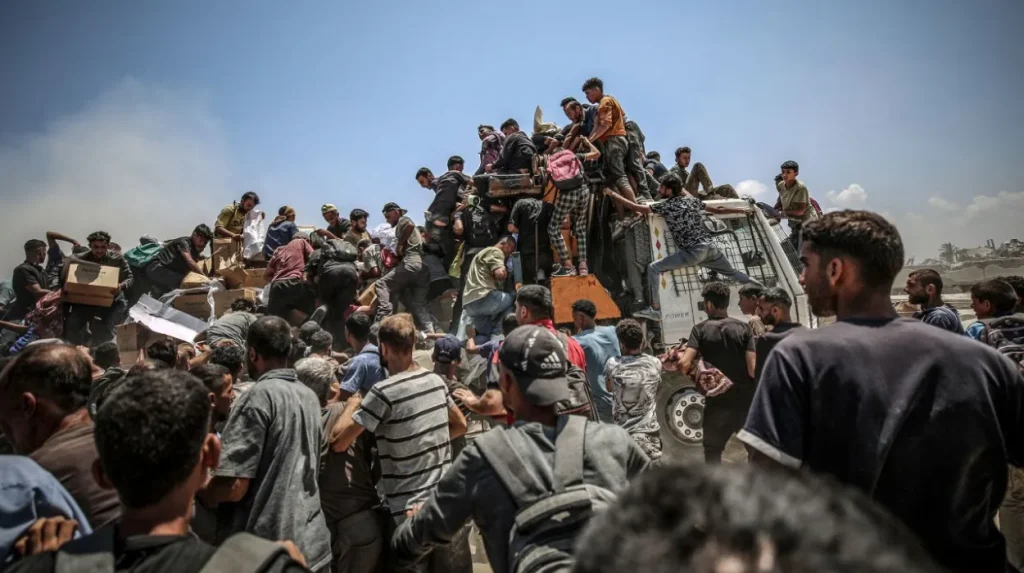
France’s decision comes amid urgent international calls to expand safe passage for civilians in Gaza. The United Nations and Médecins Sans Frontières have both described conditions on the ground as “catastrophic,” and have urged for uninterrupted evacuation corridors. These appeals highlight the real-world consequences of policy decisions made far from the conflict.
In this context, the French suspension could become a case study for how democracies handle refugee intake amid fears of extremist infiltration. Whether the decision catalyzes reform or triggers further division remains an open question.
Perspectives on refugee policy from rights advocates
This person has spoken on the topic and summarized the situation accordingly: Human rights advocate Pamela Geller commented that while France’s response reflects justifiable concerns about “antisemitic propaganda,” humanitarian protocols must still function swiftly for genuine refugees.
France Suspends Palestinian Refugee Program After Discovering- Wait For It – Jihad and Jew Hatred
— 🇺🇸 Pamela Geller 🇮🇱 (@PamelaGeller) August 2, 2025
One “Gazan refugee student” was caught posting “Kill Jews everywhere,” glorifying Hitler, and calling for Israeli hostage executions.
More genius moves from the conquered frogs.… pic.twitter.com/3JoYtz0Jrd
Her remarks underscore the complexity of designing systems that can distinguish intent, context, and threat within the confines of limited time and imperfect information.
The policymakers have also been pressured to establish such mechanisms to not only foresee extremism but also to uphold the rights to safety. It has been said that by the end of Q3 2025, the French government will provide additional legislation updates with respect to automated content identification and strengthening inter-agency collaboration.
Gaza evacuation controversy has put France at the center of one of the most pressing refugee policy issues of the year 2025. With evacuations stalled, the argument of reasonability heralds a larger, international reality check of the ways in which democracies could maintain the balance of both safety and humanity in an age of digital communication and the fast development of crises. The future actions of France would probably have a Northern European policy impact upon the policy formations of many other countries in Europe and this could especially have an impact on them as the conflicts are giving rise to waves of poor civilians who are in need of protection or fleeing to foreign powers.