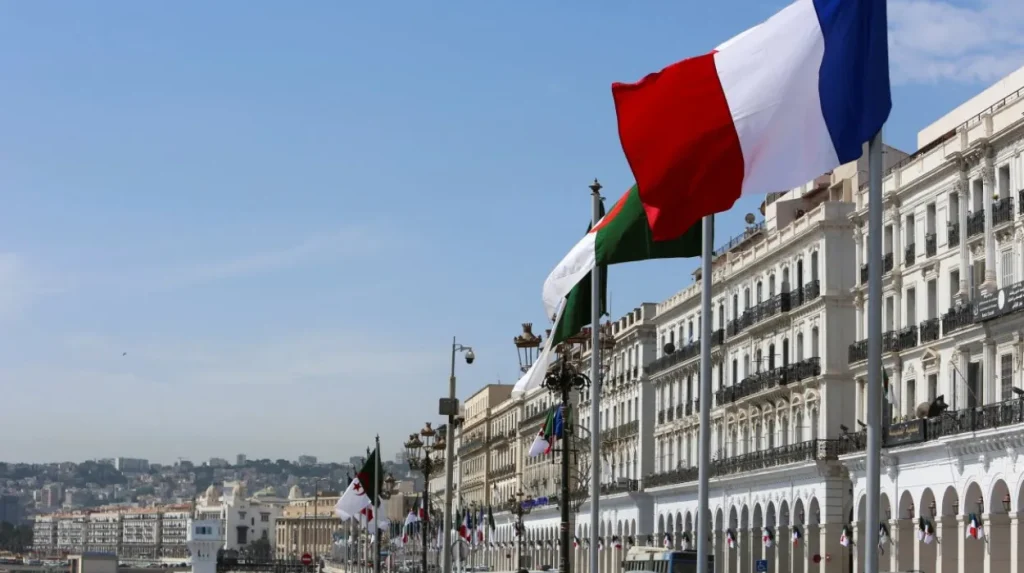
France and Algeria have reopened diplomatic talks after months of strained ties marked by reciprocal accusations and disruption of security cooperation, and economic losses for Paris in its former colony.
The Paris-Algiers relationship has been strained for decades. It deteriorated last July when Macron angered Algeria by supporting a program for self-rule for Western Sahara, supported by Morocco sovereignty.
French officials indicate that Algiers is implementing a strategy to eliminate France’s economic footprint in the nation, with trade decreasing by up to 30% since the summer. A strained relationship has significant security, economic, and social consequences: trade is broad, and approximately 10% of France’s 68 million people are connected to Algeria, as stated by French officials.
“It is in the interest of France and the French people to be able to get results in terms of migration, judicial, security and economic cooperation,”
Foreign Minister Jean-Noel Barrot told lawmakers on April 1.
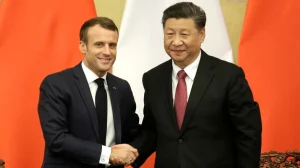
Barrot reaches Algiers for a day of discussions. This visit follows a conversation on March 31 between President Emmanuel Macron and Algerian President Abdelmadjid Tebboune, where they established a comprehensive roadmap to ease tensions.
French officials report that Algiers has created barriers to administrative approvals and new funding for French companies operating in the region country Nowhere has it been felt more than in wheat imports. Traders the diplomatic rift has reportedly caused the Algerian grains agency OAIC to indirectly exclude French wheat and companies from its import tenders starting in October. OAIC maintains that it fairly assesses all suppliers based on technical requirements.
During the 2024/25 season, France has shipped just one wheat vessel to Algeria, carrying 30,000 tons of wheat in July. This is a stark contrast to the several million tons exported annually in previous years.
“There’s a lot of discussion, but everyone is eager to see the actual impact on the ground,”
noted a French grain trader regarding Barrot’s visit.
“Another buyer for our wheat would be highly beneficial for us.”
The relationship has deteriorated beyond business, leading to a halt in security cooperation, particularly regarding terrorism. The arrest of 80-year-old Franco-Algerian author Boualem Sansal in November further strained ties; he has now been sentenced to five years in prison. According to diplomats, Paris is hopeful that he will receive a presidential pardon.
As the Macron administration faces mounting pressure to strengthen immigration policies, this dispute has influenced domestic politics in both nations. Interior Minister Bruno Retailleau has urged the reconsideration of a 1968 agreement between the two countries, which facilitates the settlement of Algerians in France reviewed, after Algiers refused to take back some of its citizens who were ordered to leave France under the “OQTF” (obligation to leave French territory) deportation regime.
The relationship between the two countries is characterized by the legacy of the 1954-1962 conflict, when the North African state, with a large settler population and regarded as an essential component of France during colonial rule, achieved its independence.
Some 400,000 Algerian civilians and fighters were killed, alongside around 35,000 French and as many as 30,000 Muslim “harkis” who fought in the French military against Algerian rebels. Macron has, during the years past, advocated greater openness about France’s history with Algeria and also stated that Algeria’s “politico-military system” had distorted the history of its colonization by France on the basis of “a hatred of France.”
“President Macron acknowledged Western Sahara’s Moroccan identity, a gesture that Algeria perceives as a betrayal. As there are no indications that Macron will retract this stance, Algerians are likely to complicate new ventures for French companies in their nation,”
commented Jalel Harchaoui, an associate fellow at the Royal United Services Institute.