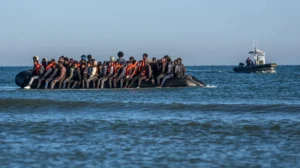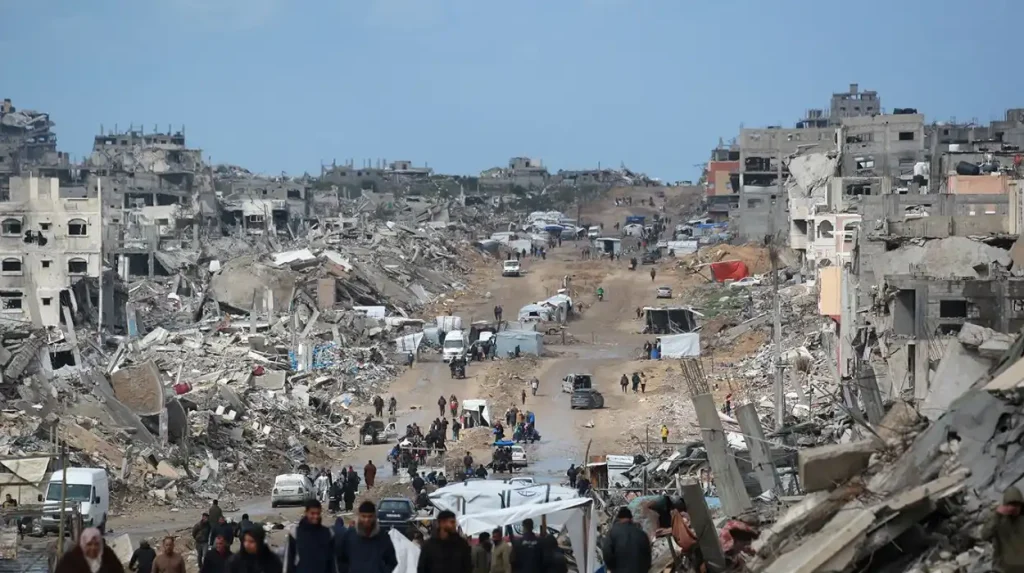
The unstable political situation in the Middle East still shapes the migration patterns within Europe, with France still being one of the most popular destinations. The perpetuated violence in Syria, the further escalation in Gaza, and the decline in the economies of Lebanon and Iraq have increased migration in 2025. The long-term instability, coupled with a series of alliances after the Abraham Accords and the increased tensions between Iran and the Gulf countries have resulted in compounded strains that inform movement patterns.
The Office for the Protection of Refugees and Stateless Persons (OFPRA) in France noted that it received more than 150,000 applications due to asylum in 2024, and more than 40,000 of these applications were submitted by the nationals of Middle Eastern countries. This is a record regional consumption since 2015, indicating not only the severity of present crises, but also the long-standing popularity of France among migrant Middle Easterners because of their cultural affiliation, language knowledge, and historical connections.
Humanitarian agencies have also been registering higher rates of arrivals to Palestine, Lebanon and some sections of Iraq due to worsening public services, energy crises and political violence. These trends highlight the fact that the process of migration into France is not only war-based but it is also informed by the larger geopolitical and economic factors.
Legal frameworks and evolving policy priorities
The French government has made efforts in ensuring that its asylum and integration policies are in balance with the new realities. In early 2025, after discussions of reforms in 2024, the Law on Immigration and Integration was again revised, with less ambiguous legal pathways applied to refugees and increased efficiency in the process. At the core of these reforms being the establishment of humanitarian corridors that provide safe and organized entry into France by the selection of those who have been chosen by collaborating with international agencies.
Refugees have benefited especially due to these corridors in Syria, Iraq and Palestine. This mechanism has been used to admit more than 8,000 since the start of 2024. Officials consider the project as one of the methods to mitigate the risks of irregular migration and human trafficking, whereas human rights organizations point to the necessity to expand the project to the maximum to cover the whole range of the crisis.
Balancing protection with migration control
The revised legal system is also based on the prudent weighing of the security of vulnerable people and national security. Measures to expedite the process of attraction and deportation of rejected asylum seekers go hand in hand with increased access to residency to those within humanitarian standards. According to critics, this dual-track system is an unequal treat to the victims but those in support of it argue that it would provide stronger trust in the asylum system among the people.
The Law on Controlled Immigration and Enhanced Integration, which is presently in controversy, reflects more general strains in French policy: the need to reconcile control with compassion when faced with the challenges of changing migratory movements and political demands domestically.
Public attitudes and civic engagement
The French have progressively changed their minds due to the changing world events. In a June 2025 survey of IFOP, 57 percent said that they wanted to see more humanitarian admissions of Middle Eastern migrants due to an increased awareness of the magnitude and urgency of the conflicts in the region. Nonetheless, there is still concern regarding social solidarity, cultural assimilation and the perceived strain on social services.
In the media discourses, migration is often associated with challenges on national identity and secularism. The political leaders have taken sides, with the centrist ideas noting the importance of sticking together, and the right-wing groups advocating harsher measures. This disputed ground not only influences the national policy but also influences the local views on integration initiatives.
Civil society’s role in local integration
To address the increase in migration, there has been the growth of NGOs and local associations in the support of newcomers. Programs of language training, law service and intercultural dialogue have become eminent in the urban centers. Civic engagement is still important in addressing disparities between policy objectives and the realities on the ground, especially in suburbs where the migrant population is extremely high.
Grassroots activities go along with the state policies and provide relief to tensions through mutual understanding. They are also the early indicators of effectiveness of various forms of policy, where the institutional interventions are successful or unsuccessful.
Implementation challenges in labor, housing, and education
One of the foundations of the migration policy in 2025 in France is economic integration. Government initiatives address labour deficits in areas like healthcare, technology and education providing vocational training and credential recognition of newly immigrated professionals. In 2025, the Ministry of labour reported over 9,000 Middle Eastern migrants to have participated in these programs with over 7,800 getting jobs.
The credential recognition reforms have seen over 2000 foreign-trained doctors and engineers enter into the workforce to meet the staffing demands in underserved areas. However, challenges persist. Full economic inclusion is still hampered by language demands, complicated administrative processes and unbalanced access to jobs across the regions.
Education access and social cohesion
Integration activities also put a premium on education, particularly in children born to new families. French schools have introduced differentiated language instructional programs and cultural bridge programs as a means of facilitating academic success, and ensuring long-term social integration. These movements are particularly prolific in cities such as Lille, Toulouse and Strasbourg, where communities of the Middle East are rapidly increasing.
According to the education officials, the migrant children have been enhanced through interventions that are focused on the teachers and adjusting the curriculum. The disparities in education levels are however still present especially in the rural regions where facilities are few.
Housing and healthcare disparities
Housing is one of the main concerns in the integration framework of France. Cities such as Lyon and Marseille have come up with public-private collaborations to enable emergency shelters to become permanent homes. This also connects housing services with gaining access to health care, and the programs are focused on trauma recovery and managing chronic diseases in migrants.
Although these improvements have been made, the differences are still glaring. Inadequate social housing and medical facilities in most rural departments slow or impede access to the much needed services by refugees. The national policy objectives usually conflict with the local implementation requirements, thus, the importance of increased intergovernmental co-ordination.
France’s international role in migration management
The French 2025 migration policy is also being influenced by the revised Migration Pact of the European Union. The harmonization processes involve simplification of asylum processes, improving anti-trafficking measures, and improvements to coordination between the member states. France also signed bilateral agreements with Jordan, Lebanon and Turkey whose aim was to cooperate with technical cooperation on border control and resettlement aids.
These diplomatic instruments are indicative of an increasing awareness that national migration policy needs to be institutionalized in the multilateral structures. The diplomatic corps in France is also instrumental in the formulation of EU positions as well as the adequate allocation of responsibility to resources.
International partnerships and operational support
Operationally, France has been in liaison with the United Nations High Commissioner on refugees (UNHCR), the international organization on migration (IOM) and a web of civil society actors. These partnerships not only enable the resettlement of refugees but also guide them to integrate, conduct health screening, and provide legal support in the long run.
International agencies help bridge capacity gaps and ensure that France’s policies remain grounded in international norms. Their technical expertise also supports innovation in areas such as data tracking, integration metrics, and refugee-led community development.
The convergence of Middle Eastern geopolitical instability and French migration dynamics presents a complex policy challenge, demanding both foresight and flexibility. France’s experience in 2025 highlights how legal reform, civic engagement, and international cooperation can intersect to shape more resilient integration systems. As regional crises continue to evolve, the country’s ability to refine its approach balancing humanitarian responsibility with pragmatic governance will influence not just domestic cohesion but its global standing in a shifting geopolitical era.