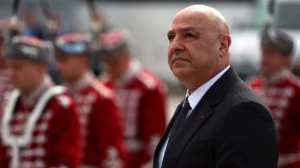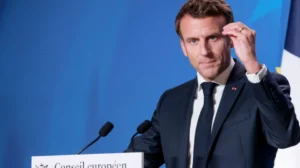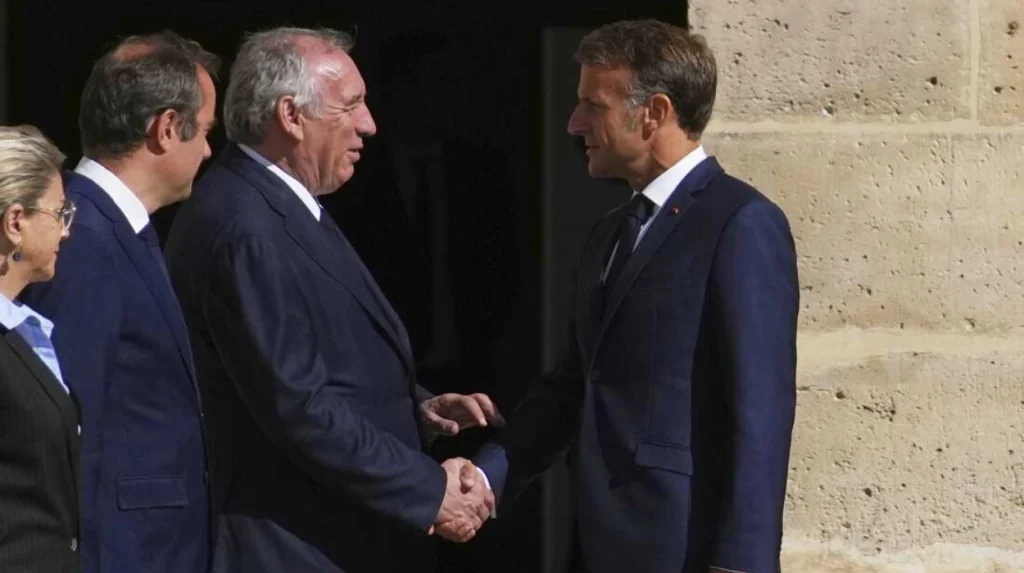
The current political instability in France in the year 2025 has entered the critical stage as President Emmanuel Macron faces the governance crisis that is characterized by a legislative stalemate, a declining political capital, and internal fragmentation in the coalition. After the 2024 snap parliamentary elections, the Ensemble coalition led by Macron was unable to reach a majority, further paralyzing legislative work and compelling the president to rule by fragile alliances and games of parliament.
The temporary leadership of the prime minister Sebastien Lecornu who resigned a few weeks after his appointment signified how volatile the core of executive leadership was. The cabinet of Lecornu was accused of not including the representatives and not filling the divide in the ever polarized political arena in France. The left-wing alliance under Jean-Luc Melenchon as well as the far-right National Rally under Marine Le Pen did not provide any help as they saw the cabinet as a continuation of the technocratic approach to ruling by Macron.
This inability to establish an effective majority has brought to a halt the legislative initiatives on essential matters such as reforms on labor flexibility, fiscal consolidation and modernization of social welfare. Political uncertainty has also weakened the approval ratings of Macron who now stands at 30 the lowest since 2018 in his mandate as the presidency faces an economic downturn.
Economic disruptions stemming from political volatility
The financial markets in France have reacted negatively. In early October 2025, the CAC 40 Index fell by almost 3.8 percent, after Lecornu resigned and the parliament remained in a deadlock. The euro fell against the major currencies, especially the dollar, further exerting inflationary impacts with imported goods now being expensive to both the consumers and the businesses.
Fading confidence in the fiscal direction of France is shown in the bond markets. The overall government deficit is expected to reach 6% of the GDP in 2011 which is higher than the Euro zone limit. These, combined with a 112 percent-plus ratio of the amount of the public debt to its GDP, has caused credit agencies to reconsider the sovereign ratings of France. Any credit rating lowering would add to the cost of servicing its debt and restrict its fiscal flexibility when public expenditure is already strained.
The mood of investors has been pegged to the political events, and it is likely to remain volatile in the future unless the government of Macron finds a way to stabilize its leadership or record positive results in its reform agenda. A sense of uncertainty regarding company tax policy, regulatory structures and future incentive provision to the investment dampens the appeal of France as an investment destination.
Policy paralysis on economic reforms
In the absence of a stable governing coalition, key reforms have been in a legislative limbo period. Suggested changes in the labor market that aim to simplify the process of hiring and lower the redundancy figures are controversial. One of the long term economic ambitions of Macron is pension restructuring which is once again deferred following popular opposition of unions and lack of consensus in parliament.
The fiscal policy is not well-directed. An intended revision of the French tax incentive system to promote innovation and long-lasting growth has been put on hold, and climate-related state initiatives on investment have been blocked in procedures. The fact that the National Climate Resilience Plan aimed at guiding the green transition of France took too long to be implemented is representative of the dysfunction in governance more broadly.
The GDP growth projections in 2025 are now pegged at 1.1 percent and the European Commission has cautioned that structural weaknesses which have not been tackled can further widen the gap between France and other more stable members of the Euro zone such as Germany or Netherlands.
Societal impacts and political consequences
The slowing down of the economy is accompanied by social unrest. The coordinated national strikes, wage raise, job security, and investment in the sector by the government are back on the labor union agenda. The transport, education, and healthcare facilities have been hit especially causing disruption in the urban centers.
The general dissatisfaction of the population with a feeling of inactive elite and ineffective state management is a stimulus to protest activities in an alternative form to the manifestation of labor claims. According to a recent IFOP poll, 62 percent of the respondents think that the government cannot address the current crises in France; the highest number in its disapproval since the height of the Yellow Vest movement in 2019.
Civil society organizations often cite the fact that there is a disconnection between citizens and the political institutions. This inability to fulfill the promised reforms is regarded not only as a policy problem, but also a legitimacy crisis that would lead to long-term estrangement of democratic involvement.
Challenges to Macron’s leadership and political strategy
The fundamental politics of centrist coalition-building that Macron has based his campaign on is structurally constrained by the present day parliamentary environment. The polarization of the political authority of radical left, far-right, and center-right parties make the compromising opportunities narrow. The ability of the executive to carry out long-term planning becomes low as the legislative alliances change unpredictably.
There have been increased speculations on whether Macron will use Article 49.3 of the French Constitution that would enable the executive to veto parliament on some bills. Although effective in its pushing through the process of policy, this mechanism has its political costs which are usually perceived by the masses of people as being undemocratic and autocratic.
There is also increasing pressure to hold another snap election but analysts argue that this would be a wrong step and would only undermine the president bloc and benefit the anti-establishment forces. As the opinion polls of the Marine Le Pen-led National Rally keep rising, the sight of the rise of a far-right party to power is putting an additional pressure on Macron to find a proper governance approach.
Institutional resilience and international implications
The internal gridlock in France influences France in the European Union. Macron, who was earlier aggressive in his attitude toward EU defense integration, harmonization of trade policies and mechanisms to be used when financing is green, has reduced his attitude in favor of domestic distractions. France has lost its bargaining power as Brussels prepares to negotiate the next EU budget.
France has a leadership gap at a time when the EU is under pressure to react to global supply chain disruption, geopolitical instability and climate transitions to collectively formulate a strategy that will effectively respond to global climate change. Germany and Italy are becoming the preferred choice by allies to replace Paris.
Macroeconomic vulnerability and external risks
These two factors of policy paralysis and low growth rate place France at more risk of external shocks. Shocks in energy supply, fluctuations in the prices of commodities around the world, and decreased Chinese demand towards exports are also threats to be countered with a speedy and co-ordinated national reaction which has proven impossible to be executed by the current administration of Macron.
The domestic demand has been declining and the inflation is likely to continue to be above 4.5 percent until 2025. This impacts on household purchasing power, margins in the retail industry and small business strength and puts pressure on social protection systems.
Economic analyst and geopolitical commentator Mario Nawfal has recently brought out the bigger picture. The political structure of France has structural flaws that reflect back to economic unpredictability, which is the direct consequence of the governance crisis of Macron. The actual threat is not connected to the short term shocks but long term stagnation in the policies which will impair the economic performance of France in years to come.
🚨🇫🇷 MACRON’S HOUSE OF CARDS IS COLLAPSING IN REAL TIME
— Mario Nawfal (@MarioNawfal) October 6, 2025
And just like that, France is in the market for a new Prime Minister…again. Sébastien Lecornu, Macron’s hand-picked “fresh face” to clean up the mess left by François Bayrou, has resigned. Not after a scandal. Not after a… https://t.co/wGlWDPBQ57 pic.twitter.com/6gxGvL6ISD
France’s current governance crisis under President Macron has evolved into more than a political impasse, it is a structural stress test for the nation’s economy and democratic institutions. The interlocking challenges of stalled reforms, fiscal uncertainty, public discontent, and diminishing international clout point to a deeper reckoning for France’s model of leadership and policymaking. Whether new strategies can reestablish equilibrium amid these pressures remains to be seen, but the road ahead will likely define not only Macron’s legacy but the long-term trajectory of France within Europe and beyond.