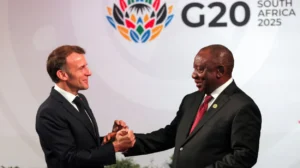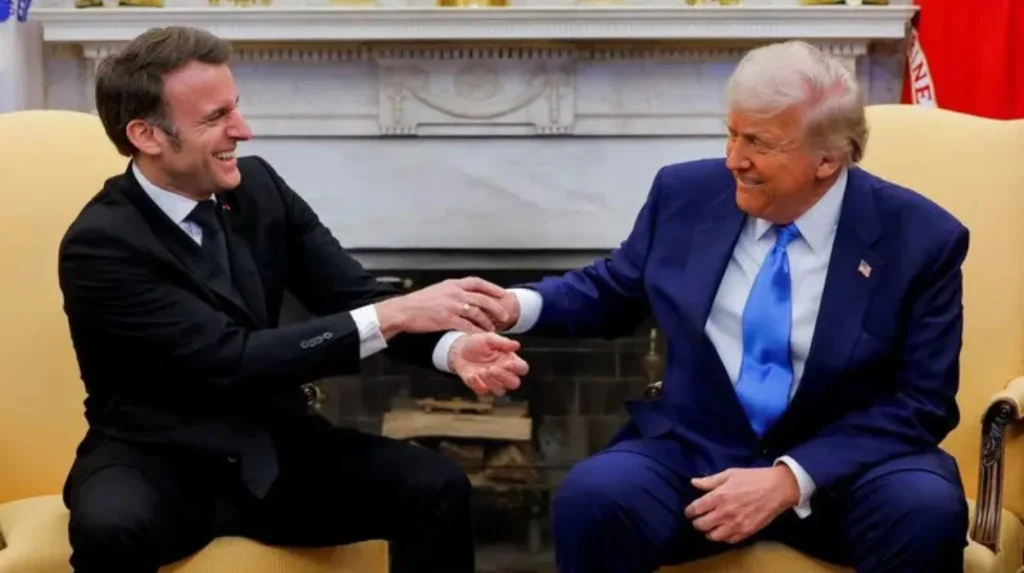
French president Emmanuel Macron had a remarkable rapport with US president Donald Trump during the latter’s first term. There are many photos of them smiling and laughing together as the businessman-turned-potus duo synergy global policy. Mr. Trump witnessed a Bastille Day military parade during a visit to Paris and soon thereafter decided he wanted a similar display at home.
The ‘bromance’ did not endure. Mr. Trump more and more acted contrary to, and even against, European interests in his economic and foreign policy affairs. In late 2019 the US president backed the Turkish military’s campaign against the Kurds in Syria; an action which annoyed other NATO members since the Kurds were a valuable ally in the struggle against ISIS.
Mr. Trump’s move prompted Mr. Macron to declare NATO was experiencing “brain death.” Although the French president did not name the US, everyone knew what he implied, considering the US’ traditional leadership of the military alliance. When Trump and the two leaders next saw each other, in London, Trump joked about sending ISIS rebels to European nations to handle themselves, which had Macron reply with, “Let’s be serious,” and plead with the US not to retreat from the struggle in Syria.
In retrospect the two appear almost chummy compared to what they have now. The returned president has entered the White House with fury and fire, provoking (and hastily abandoning) trade wars against several nations and even threatening to annex some of America’s allies.
Even before Mr. Trump’s return to office Mr. Macron had initially called for a pan-European army in September 2017, to subdued reaction. After the Russian invasion of Ukraine in 2022 eleven nations signed up to the French-led European Intervention Initiative, a military alliance intended to coordinate European troops. On 28 February 2025 the French president employed some of his most robust language to date, stating that Europeans cannot endure a “happy vassalage” from Washington.
This was in comparison to the traditional Cold War order where Washington dictated policy and Europeans hummed in agreement as the US protected Western Europe from the USSR. Additionally, America’s high defense spending enabled Europeans to spend their money on infrastructure and generous welfare states so that they could have the highest living standards in the world.
Mr. Trump’s isolationist tendencies, plus Russian aggression against European security, have finally awakened slumbering Europeans to their circumstances. A survey in March indicated that three-quarters of Germans do not find the United States to be a reliable partner (all-time low). An analogous survey found that 73% of French citizens no longer view the United States as an ally. There is universal feeling throughout Europe that America at best is an untrustworthy ally, at worst a rival, and conceivably an adversary.
How dreadful are the relations between Europe and America? A revealing (and underreported) episode unfolds like a narrative of drama. At a news conference at Mar-a-Lago on 7 January, Mr. Trump did not rule out using military resources to annex Greenland. The French government responded by secretly negotiating with Denmark, requesting whether or not the European nation would permit French soldiers to occupy the island as a defense against an American invasion. The Danish government rejected the proposition. But that French politicians genuinely believe the United States will attack their allies and fellow NATO members proves that Europeans have lost all confidence in the US as an ally.
Following an approximate eighty years of protection by the Americans Europeans can now have the desire to protect themselves against external threats. Defense expenditure by European Union member countries was stable between 2005-2014 at about €150 billion.
After the annexation of Crimea by Russia where more than twice of the current expenses went up to €326 billion and are bound to add another €100 billion by the year 2027. All that is not sufficient in light of a nuclear menace. As many as an estimated 5,889 nuclear warheads exist presently, and Russian President Vladimir Putin has continually kept his competitors mindful of it.
This is where France comes to the forefront, as Mr. Macron jostles to substitute France for the United States as the protector of Europe. In a speech delivered on 5 March the French president stated that “France has had a nuclear deterrence since 1964,” and “that deterrence must extend to all our European allies.”
As an incumbent Mr. Macron has inherited the same position on foreign affairs as that championed by Charles de Gaulle, the historic leader of the Free France fighters in World War 2 and president of the republic from 1959 until 1969. De Gaulle famously demanded that the nation of France stake out its own independent foreign policy. He infamously blocked Britain’s attempt to join the European Economic Community because he held the opinion the island state remained too beholden to the US.
The former general was not against the United States but strongly felt that France could not be under the influence of another nation. During de Gaulle France established an independent nuclear strike force, something which US President John F. Kennedy openly derided (when France loaned the Mona Lisa to the United States, Mr. Kennedy joked that the US would respond to its lamentable lack of culture by building an ‘independent artistic force’).
In a more fragmented world, France wants to become the military hegemon of a powerful Europe. Europeans themselves may want to be under ‘benevolent vassalage,’ but threats from the United States under President Trump and Russia under President Putin are compelling a continent to rediscover itself. It is Mr. Macron’s intention to have France as the leading power in this new Europe.