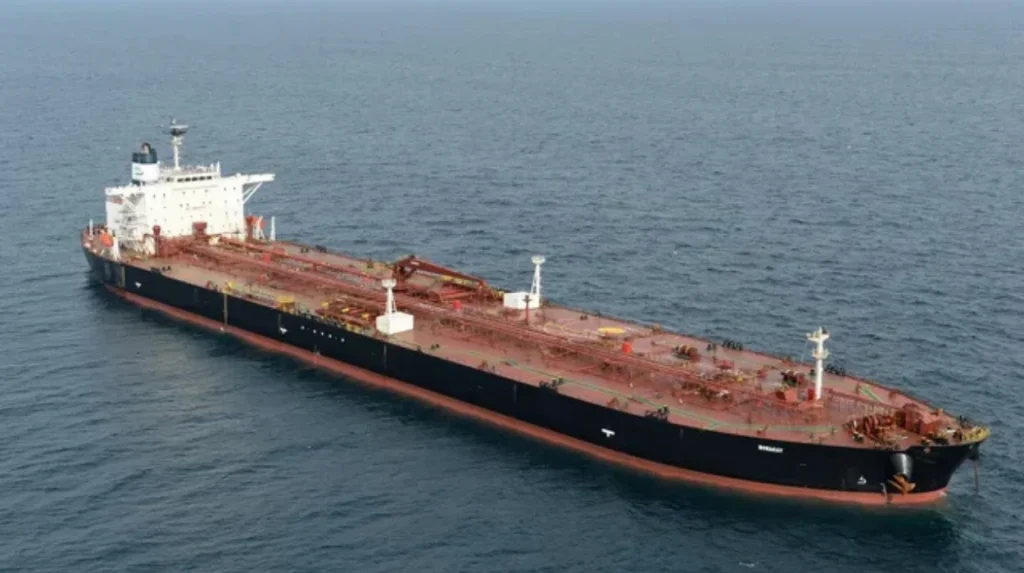
The arrest and pending trial of the Chinese captain of the oil tanker Boracay in late 2025 represents a landmark moment in the global enforcement of sanctions against Russia. The vessel, suspected of transporting Russian crude in violation of the G7’s $60-per-barrel price cap, was intercepted in French territorial waters after failing to respond to naval directives and allegedly obscuring its flag of registry.
The Boracay was operating as part of what is widely referred to as the “shadow fleet”, an assembly of older tankers managed under opaque ownership structures, registered through flags of convenience, and designed to obscure the origin and destination of Russian hydrocarbons. The network is at the centre of assisting Moscow to maintain oil exports amid the western sanctions after the conflict in Ukraine. The action by France to have the captain of the vessel stand trial is an indication that there is a major increase in the application of sanctions and this is a sign of transitions in terms of passive observation versus active legal repulsion.
Maritime jurisdiction and flag law under UNCLOS
The case in court is based on the set of abiding principles of the United Nations Convention on the Law of the Sea (UNCLOS). The grievance on which the French case rests consists in the fact that the Boracay was sailing without a duly announced flag, and did not signal at the behest of the French naval officers lawfully issued. Both domestic maritime law and international law make such infractions punishable, at least when these acts are performed in the territorial waters or in the exclusive economic zone of a country.
The jurisdiction of flag states is one of the major aspects in international maritime regulation, in which the responsibility is given to the country in which the vessel is registered. When a shipping company sails with the flags of fraud or under false flags to get out of any investigation, this concept is compromised. The case of France highlights the fact that one cannot go without the punishment of such manipulation especially when it collides with the attempts to evade sanctions that are designed to limit aggression and re-establish international order.
Evidentiary thresholds and transnational legal cooperation
Building a case against an individual ship captain within the murky realm of maritime enforcement is inherently complex. French prosecutors must prove that the captain knowingly engaged in sanction circumvention and that the vessel’s operations were not only negligent but intentionally deceptive. This involves reconstructing shipping manifests, satellite tracking of prior port calls, and digital communication logs often made difficult by the extensive use of offshore shell companies and third-party brokers.
The trial also serves as a stress test for Europe’s emerging framework of cross-border legal collaboration on sanctions enforcement. As evidence may span jurisdictions including flag states, chartering nations, and origin countries, French authorities rely on multilateral legal assistance treaties to build a robust prosecutorial narrative. In doing so, they set a precedent for how shadow fleet operators may be held personally accountable for complex violations.
Strategic motivations behind France’s high-profile legal approach
The Boracay trial is more than a legal exercise, it is a deliberate political signal. With Russia increasingly reliant on grey-market maritime channels to bypass economic restrictions, Western powers face the challenge of proving their sanctions are not merely symbolic. France’s decision to bring a captain to trial is a rare demonstration of enforcement that goes beyond asset freezes or vessel tracking.
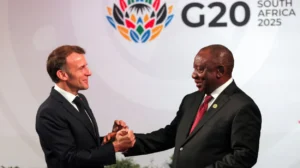
President Emmanuel Macron’s government has presented the trial as a cornerstone of Europe’s renewed commitment to sanctions efficacy in 2025. French officials emphasize that maritime evasion tactics erode not only sanction mechanisms but also the integrity of international trade. As one diplomat noted, “If sanctions are to matter, there must be consequences. This case defines those consequences.”
Geopolitical friction with Russia and China
Predictably, the legal action has drawn criticism from Moscow, which has accused France of politicizing maritime law and escalating tensions. Russia’s foreign ministry labeled the seizure “illegal and provocative,” warning of retaliatory diplomatic measures. While France maintains that the trial is strictly legal in nature, it unfolds within a broader geopolitical standoff where energy policy, maritime security, and economic sanctions intersect.
The captain’s Chinese nationality adds a further diplomatic wrinkle. Although Beijing has so far issued only restrained statements urging “fair treatment,” the case could strain France-China relations, particularly as the EU debates tightening oversight of third-party actors enabling sanction breaches. The Boracay case raises key questions about accountability in a global shipping industry often reliant on opaque labor and ownership practices.
Global ripple effects on maritime security and compliance
Legal experts view the French prosecution as a potential inflection point in efforts to curb shadow fleet operations. By targeting not only vessels but their operators and leadership, it adds personal liability to what has traditionally been treated as a commercial infraction. This may deter captains and companies from engaging in sanction evasion activities, knowing they could face individual prosecution in European ports or waters.
This move could also catalyze stronger port state control measures and renewed scrutiny of vessel registries, many of which are operated under lenient jurisdictions. The International Maritime Organization (IMO) is expected to review transparency requirements for flag registration processes at its upcoming 2026 summit, following mounting pressure to regulate vessels operating under shell ownership and deceptive routes.
Implications for global energy security frameworks
The legal confrontation around Boracay sits at the confluence of international trade law, energy security, and geopolitical contestation. As traditional energy exporters navigate sanction restrictions, legal enforcement becomes a tool of influence in global energy markets. The message from Paris is clear: states will not only monitor compliance, they will prosecute it.
This raises the bar for other G7 and EU members, which have thus far been reluctant to criminally pursue violators. If the French trial proves effective in demonstrating compliance resolve, it may embolden other coastal states to undertake similar measures, shifting the risk calculus for those involved in gray-market trade.
France’s move may also affect insurance and finance sectors tied to maritime trade. Increased enforcement risks will likely lead insurers to reevaluate their exposure to suspect vessels, possibly limiting access to coverage for ships linked to sanctionable activities. This would have a knock-on effect of shrinking the operational scope for shadow fleets and raising costs for oil traded outside legal frameworks.
A precedent-setting case in modern maritime enforcement
The trial of the Boracay’s captain represents a first-of-its-kind challenge in using domestic law to enforce international norms at sea. Although most nations have not yet gone as far as to prosecute those associated with the shadow fleet, France is experimenting with the possibility of using sovereign law enforcement to bridge the gap in enforcement that economic and diplomatic instruments have failed to achieve.
The trial occurs at the time when the maritime industry is under mounting pressure to meet the requirements of climate, security and transparency. Without an international enforcement system, the national jurisdiction of countries such as France could become a major venue of behavior shaping in the high seas.
With the legal process still underway in Brest, its concluding result will be monitored by not just legal experts but governments, shipping firms and geopolitical analysts all over the world. The case does provide a blueprint rather than a normative of how legal tools can be used to strengthen international energy sanctions, to defend maritime order and to seek real costs on those who attempt to take advantage of loopholes in enforcement. What happens in this courtroom may help define the next phase of sanction policy in a world where the legal and political dimensions of energy trade grow ever more inseparable.