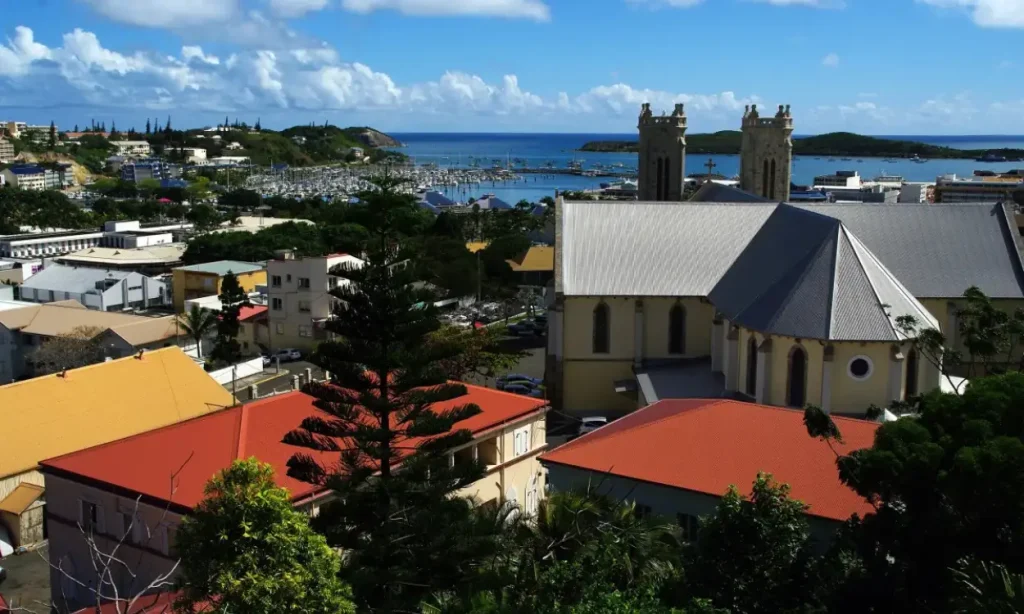
Kanaky (New Caldonia) is the region under France’s control. The nation decided to stop its plans to change voting rights in the region. This plan would make French voters more powerful. French nationals include soldiers, business people, and government workers stationed there. When local people came to know about this plan, they got angry and started protests and violence for about 5 months.
Journalist Nic Maclellan, an expert on Pacific Island politics, discussed that France’s attempt to push through these changes failed. To keep the situation under control, France sent 5000 to 6000 security forces to Kanaky, although the population was only 268,000. This action by France highlights that it wants to maintain its influence in Kanaky without the permission of the local people. France should listen to the problems of local people, but instead of it, the nation is making an effort to increase its power. This action by France only made the situation worse.
Last month, French police conducted a raid in Saint Louis and killed two men, Johan Kaidine and Samuel Moeikia. This incident happened after a few weeks of tension between the local people of Kanak, who stand in favor of French authorities and independence. The entire colony has faced the complexities of five-month curfews, highlighting how worse the situation was.
The recent declaration of France’s Prime Minister put the independent movement of the Kanak people back to its start.
The Nouméa Accord was supposed to be a pathway to independence with several referendums between 2018 and 2021, but the process has stalled. Most Indigenous Kanaks want independence, but many non-Kanaks, particularly of European descent, prefer to stay with France. The third referendum, held during the COVID-19 pandemic, didn’t provide clear results. Now, the ongoing talks between France and the independence movement are stuck, leaving the future uncertain.
Now the Kanak people do not want to depend on France and have a desire for independence and sovereignty. Furthermore, a new generation, such as Indigenous Kanaks and other groups like Wallisians, now show significant opposition to France. People want their land, but this will not happen instantly; it will take time.
In the last five months, most of the youngsters born after the 1980s have been arrested. They want independence and start a fight for it. This behavior of the Kanak people surprised the France government and loyalist community. France thought these young people would want to stay.
Many people don’t like President Macron. He is highly unpopular in France. During his period of 2022, he hurt many workers and made decisions like pension reform. He also has harshly responded to movements like the Gillets Jaunes. His actions have made many in France upset, adding to the overall tension with the Kanak independence movement.
France’s ongoing complexities are due to the involvement of police and security forces that are taking action against the Kanak movement. Macron wants to keep the situation under control and call a snap election in June. But this strategy of President failed, and uncertainty of results kept the future of the Kanak people unclear.
Additionally, Maclellan says that there is no majority in the National Assembly. This instability in France will continue until the next presidential election in 2027. The fight of Kanak people to get independence is not finished. People are seeking help from international nations such as Australia and New Zealand. They also want trade union and community groups to stand in favor of their protests.
They want to gain international support to strengthen their independence movement. This effort highlights their determination to secure a better future for the Kanak people amid ongoing political challenges in France.