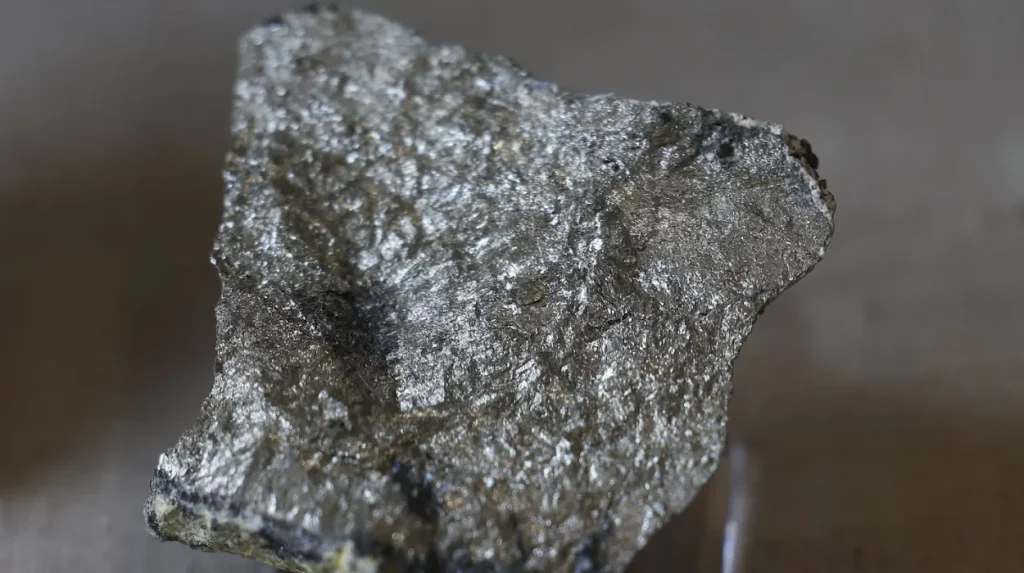
The European Union is pressing ahead with plans to create strategic stockpiles of key raw materials, with Italy, France, and Germany lined up to play key roles in the move as the EU looks to cut its reliance on China and shield its industrial base from the impact of geopolitical turbulence. Several officials familiar with the talks said the new initiative is a response to growing concerns in Brussels that the EU’s economic and security model is perilously vulnerable to disruptions in global supply chains controlled by Beijing.
The plan to stockpile materials, which was first proposed by the European Commission in December, is part of a wider strategy to “de-risk” the EU’s relationship with China, especially in areas that are critical to the green transition, the digital economy, and the production of defense materials. Although the Commission has not yet published much information on the plan, there has been some internal coordination among the larger member states due to the tightening of Chinese export controls and the growing global competition for these materials.
China’s Grip on Global Critical Materials Supply
The EU’s stockpiling efforts are driven by the dominance of China in the global industrial metals and minerals market. China dominates the global mining of rare earths and the refining of the material. This has given the country immense power in the downstream sectors. The Chinese government has recently shown that it is not afraid to use this power by imposing export controls on a growing number of materials such as gallium, germanium, tungsten, indium, antimony, and heavy rare earths.
These technologies form the basis of a significant portion of the European economy, ranging from the production of semiconductors to electric motors in wind turbines, satellites, and military-guided missiles. Since 2023, European companies have been experiencing increased prices and delivery times, as well as uncertainty, especially in industries related to the EU’s climate and security agendas.
Europe’s Structural Weakness in Refining and Processing
The EU’s vulnerability is further exacerbated by the absence of refining and processing capacities within Europe. Although the EU is a major consumer of the world’s critical raw materials, it has refining capacities for only a small percentage of the materials it consumes. The EU’s reliance on China for some of the heavy rare earths is over ninety percent, and there are no alternatives in the short term if China were to impose more export restrictions.
The development of new mines and refineries within Europe is a long-term process. Industry sources indicate that it could take more than a decade to develop a new mining project from exploration to production, and the development of refining infrastructure is constrained by tough environmental laws and high capital expenditures. Recycling helps mitigate the problem, but the current rate of rare earth element recovery in Europe is low and nowhere near the level needed to support industrial demand.
It is in this context that stockpiles are increasingly considered in Brussels as one of the only options available to offer a short-term solution until longer-term supply diversification plans come to fruition.
How Italy, France and Germany Are Dividing Responsibilities
As reported by officials in attendance at a December coordination meeting with the European Commission, there is a beginning to be seen of an informal division of labor among the three biggest economies in the EU. France is expected to concentrate on securing funding for the purchase of the materials, working with banks and financial institutions to set up funding structures that could facilitate such purchases.
This is because Germany, being deeply rooted in industry and having strong commercial networks across the globe, is charged with the responsibility of procuring materials directly from the manufacturers through supply contracts. Italy, on the other hand, is poised to take the lead in the area of storage and logistics.
According to reports, the talks have covered the use of storage facilities run by firms such as Pacorini Global Services and C. Steinweg, which both manage bulk commodities on a global scale. Nevertheless, neither of the firms has made any comments on the issue, and the Commission has yet to confirm the manner in which storage facilities would be secured and integrated into an EU-wide emergency response system.
Frustration Over Slow Progress in Brussels
However, there is a growing consensus on the need for stockpiling, and there is a sense of frustration about the speed of the EU’s response. Those involved in the process speak of a proliferation of working groups and strategy meetings but very little in the way of tangible results. There are still many questions that have not been answered, such as what kind of materials should be stockpiled, what size of stockpiles, how these stockpiles would be released in times of crisis, and who would ultimately control them.
The absence of clarity has sparked fears that Europe could still be caught unprepared if China strengthens its export controls or if the tensions between nations continue to rise.
Strategic Raw Materials and the Green and Defence Transition
The EU’s critical materials plan revolves around a list of thirty-four raw materials that are considered vital to the EU economy, with seventeen of these being Strategic Raw Materials due to their significance in renewable energy, the digital economy, aerospace, and defense. These raw materials are critical for electric car batteries, solar cells, high-tech electronics, military radar systems, and space exploration.
In line with its own goals, the EU plans to mine a significant portion of these raw materials by 2030, increase processing capacity in the EU, and increase recycling rates. The EU also wants to make sure that no third country is providing the majority of any of the strategic materials. The current situation is far from meeting these objectives, and this further supports the need for stockpiles as a temporary measure.
Geopolitics Driving Europe’s Industrial Awakening
European Commission President Ursula von der Leyen has described “critical” raw materials as a key part of the EU’s economic sovereignty, promising to speed up agreements with other nations like Australia, Canada, Chile, Greenland, Kazakhstan, Uzbekistan, and Ukraine. But many of these agreements are still in their infancy, facing challenges from infrastructure gaps to political instability, as well as competition from the United States and China.
Meanwhile, the United States’ industrial subsidies and China’s government-backed resource strategy have heightened a global rush for materials, leaving the EU vulnerable.
“If we do not act, the EU will be caught between two great powers that are already stockpiling and signing up for long-term supply contracts,”
officials say.
Stockpiling as a Temporary Shield, Not a Cure
Although strategic stocks may serve as a kind of safety net against a sudden disruption of supply, it is clear that they cannot be a substitute for more fundamental changes. Without faster permitting, large-scale investment in refining and recycling, and a better coordination of industrial needs and public policies, the European dependence on foreign suppliers will continue.
At the moment, the stockpiling initiative is a sign of a growing awareness in Brussels that economic security and national security are two sides of the same coin. Whether Italy, France, and Germany will be able to turn this awareness into an effective system before the next crisis is a question that remains open.