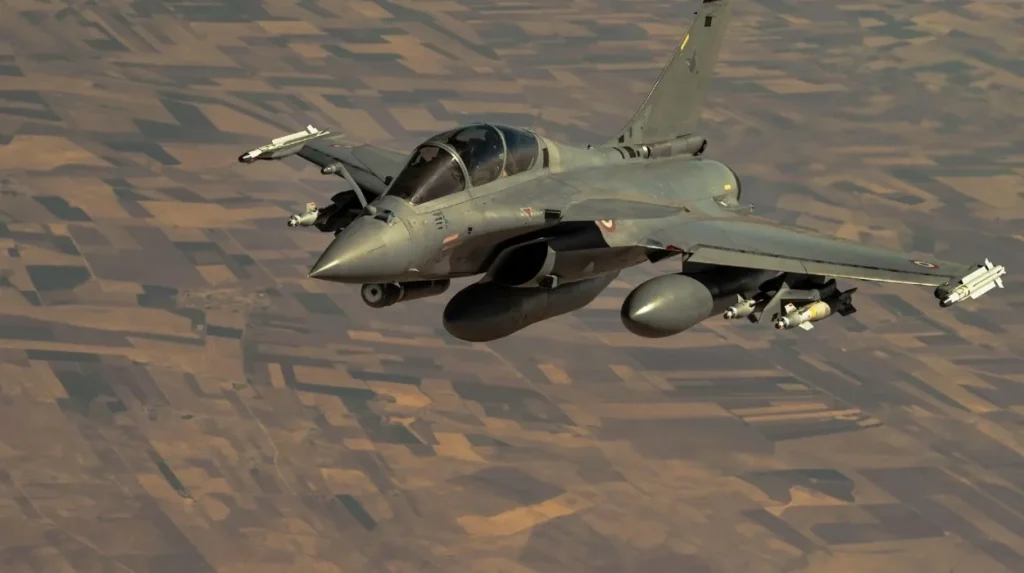
Iraq is close to signing a contract in 2026 for 14 Rafale F4 fighter jets for the Iraqi Air Force. Negotiations, which began in 2022, have reportedly accelerated, according to sources, and might be completed in the first half of 2026. Iraq had earlier considered the purchase of JF-17 Thunder aircraft from Pakistan, but the deal seems to have been scrubbed to make way for the French multirole fighter.
The purchase of Rafale may be a turning point for the air power of Iraq. Now, Iraq has been facing operational and maintenance problems in their current F-16IQ Fighting Falcons fleet of jets. These are modified for Iraq and have weak air-to-air missile response and outdated avionic and electronic warfare suites, which are so because of Israeli security considerations to an extent. This makes it difficult for them to have a serious air power response to regional threats.
What does the proposed Rafale deal include?
Reports suggest that Iraq wants a total of twelve Rafales in the F4 standard, with the majority (ten) being single-seat Rafale Cs and four twin-seat Rafale Bs. The deal is likely to be quite extensive, including not just the weapons but also maintenance support, pilot training, and other forms of logistic support. The principal armaments reportedly included in the sale are the Meteor very long-range air-to-air missile and precision-guided air-to-ground munitions, specifically the AASM 250 and AASM 1000 bombs.
The total value of the agreement has been estimated at around $3 billion, with an initial down payment of $240 million being made, as reported. The Iraqi officials seem to be fully committed to acquiring the full capabilities under the F4 standards, despite diplomatic pressures from other neighboring nations concerning the issue of advanced missile systems.
How have Iraqi pilots trained with the French Air Force?
Iraqi pilots have already had the opportunity to train alongside French forces under Operation Chammal, allowing them to learn firsthand about the capabilities of the Rafale. It should be noted that in air-to-air combat scenarios, the Rafale always has an edge over the F-16IQ used by the Iraqi air force in every aspect of avionics and weapons superiority.
Which other countries have purchased Rafale jets?
Iraq would join a growing list of nations that have acquired Rafale fighters in recent years, reflecting France’s successful export strategy. Notable buyers include:
- Egypt – 24 Rafales acquired in 2015, deployed with air-to-air and air-to-ground capabilities.
- Qatar – 36 Rafales purchased between 2015 and 2018, representing one of the most modern fleets globally.
- India – 36 Rafales procured under the MMRCA deal, delivered from 2020 onward.
- United Arab Emirates – In talks to acquire Rafales to complement their existing fighter fleet.
These sales underscore the Rafale’s versatility as a multirole fighter and its growing footprint in the global defense market. Iraq’s potential acquisition would further validate the aircraft’s export success.
What is the strategic rationale behind Iraq’s interest?
The purchase of the Rafale fighter jet is in line with Iraq’s modernization of its defense system, especially in promoting deterrence capacity against regional rivals, Iran and looming sovereignty over Iraqi airspace in particular. The versatility of the jet in air superiority, precise strike missions, reconnaissance, and electronic warfare functions makes it useful in Iraq’s defense system.
In addition, the Rafale contract is in line with various other recent sales, including 12 French H225M Caracals, which were intended for long-range tactical duties, in demonstrating a wide-ranging strategy to upgrade air combat as well as support services.
How might regional politics affect the deal?
Although Iraq is eager to obtain such advanced Rafale technologies, there are also geopolitical implications for this deal. For instance, Israel has expressed its concern regarding Iraq’s acquisition of Meteor missiles due to their advanced air-to-air striking capabilities.
Historically, Iraq’s Rafale purchasing decisions have been constrained by American strategic considerations regarding Iraq’s air combat capabilities. Iraq is now adamant that it will retain its F4 package without yielding under such strategic pressures, indicating Iraq’s autonomy over defense procurement.
What challenges does Iraq face in implementing this modernization?
Even if the deal comes through, there will be operational challenges for the Iraqi military. The integration of a new fighter aircraft will necessarily entail a lot of pilot and frontline service work. Further, there may be regional diplomatic implications if the incorporation of sophisticated fighter aircraft upsets the regional apple cart.
If finalized, the Rafale sale will be a huge boost to the Iraqi Air Force, as it will bring along a much-needed replacement for their F-16IQ fleet, which has been in service for many years and is now old and outdated.
Although the news is quite robust, an official announcement is long overdue. Currently, the last stages of talk for an agreement on the price, integration of arms sales, as well as the time frame for delivery of the same, still persist.