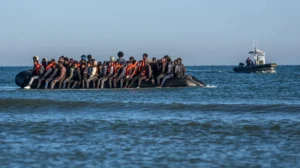
Lebanon is one of the countries in the world amidst one of the longest humanitarian crises. The country is home to approximately 1.5 million Syrian refugees and more than 250,000 Palestinians, having been under unprecedented demographic pressure due to one of the largest economic crises the country has experienced since the mid-20th century. As stated by the 2025 statistics of the UNHCR, over 90 percent of Syrian refugees live below the absolute poverty threshold, and over a half of Lebanese citizens are facing food insecurity and unemployment. The new wave of violence in the southern border to Lebanon in 2024 displaced another 1.2 million people, pushing already strained social services to the brink.
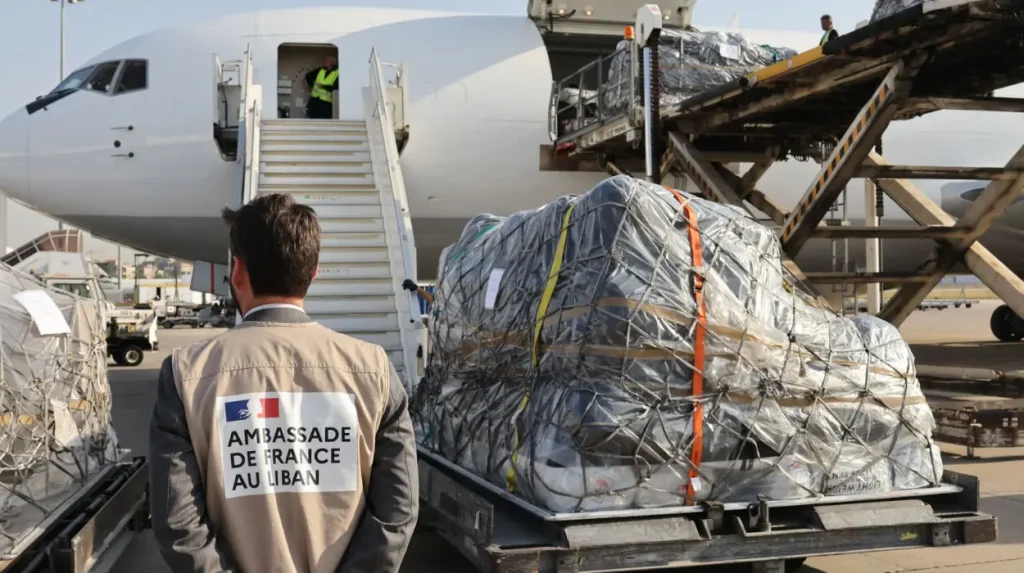
The reconstruction and social stabilization of Lebanon will cost more than 11 billion, according to the estimate of the World Bank. France which has long been regarded as a historic ally and cultural patron of Lebanon has upped the ante as one of the dominant humanitarian actors. During the period 20212025 France development agencies, the Agence Francaise de Developpement (AFD) and Expertise France have funded healthcare access and education continuity and infrastructure recovery programs, prioritising populations in host countries and displaced persons in particular. By doing so, this places France in a more prominent role as a humanitarian donor as well as a key diplomatic actor who uses aid to maintain stability in a region that is strategically vulnerable.
Strategic Use of Development Aid and Localization Trends
The humanitarian system in France focuses on the local partnerships as the foundation of effective aid delivery. In cooperation with the Lebanese organizations, AMEL, Arcenciel, and the Lebanese Red Cross, France has funded capacity-building initiatives in the country to enhance resilience in community and institutional independence. Such activities go towards the international trend of localization, the pledge in the 2016 World Humanitarian Summit to mobilize at least 25% of humanitarian aid via locals.
In Lebanon, the humanitarian programs of France were carried out by local partners in almost 40 percent of its activities by 2025. This will enable them to get aid to the vulnerable groups in a more efficient way and strengthen the local governance systems. At the same time, it establishes the credibility of France as a mediator in the Lebanese complex socio-political situation. France encourages a system of humanitarian diplomacy based not on domination, but on collaboration, through decentralisation, community involvement, and simply being accountable to people via projects.
Linking Humanitarian Impact to Political Influence
Although the aid programs of France are more of a humanitarian nature, their undertones are strategic. The involvement of Paris strengthens its diplomatic base in Lebanon in the broken political spectrum of the country – between religious and institutional players. When France coordinates its humanitarian efforts with the national reform goals, it would be able to act as a reliever and policy mediator, which would enable it to shape the governance discussions on education, energy and resilience of municipalities.
Partnerships within Broader European Initiatives
The activities of France are also supported by the European Union mechanisms. Francoise-EU contributions in 2025 were above EUR93 million with special emphasis on health, education and social protection. These initiatives supplement the bilateral assistance of France with entrenching its presence in multilateral institutions, thereby exceeding the scope of its diplomatic influence at the expense of the financial cost of recovering Lebanon.
Humanitarian Diplomacy and Geopolitical Leverage
The principle of humanitarian diplomacy, the combination of the delivery of aid with diplomatic policy, takes the crux of the French involvement in Lebanon. France is able to integrate both moral and pragmatic policy influence using this model. Providing assistance to Lebanon in its humanitarian crisis, France protects its long-term cultural and economic interests and remains able to access an essential geopolitical route connecting the Mediterranean and the Levant.
As of 2025, France remained a co-chair of the international support group to Lebanon (ISGL) and took the opportunity to promote measures on political reforms and economic recovery within the framework of humanitarian goals. The combination of diplomacy and aid shows that France can also use soft power as a stabilizing factor, meeting the needs of the moment and influencing the strategic environment.
Reasserting Regional Relevance through Aid
With the potential of the U.S. involvement in the region, as well as the redirection of investments in the Gulf states, France is using humanitarian diplomacy as a tool to prove its relevance. France strengthens historic relations that existed during the French Mandate period with assistance in managing crises through persistence. This consistency creates an impression that France has been a constant ally in a period of change of alliances, especially among the francophone elites and civil society networks in Lebanon.
Balancing Compassion and Strategy
It is sometimes the argument of the critics that the humanitarian posture of France is a disguise of geopolitical calculation. However, even the most cynical critics must admit that the policy of France is a kind of a balance between the short-term goals of compassion and long term goals of stability. Combining the elements of soft power with principled assistance, France does not face blatant manipulation, yet makes sure its voice is not overlooked during the post-crisis stage of the rebuilding of Lebanon.
Perspectives from Stakeholders
The Lebanese civil society organizations have applauded that France focused on localization and technical assistance as it became evident that the local responders are given more autonomy and resources. At the beginning of 2025, a senior coordinator of AMEL Association noted that due to French financing, local NGOs in the country have been able to set the agenda of crisis response instead of just executing a predetermined agenda by outside actors. This model of local ownership reinforces legitimacy and the bondage tissue between international donors on the one hand, and the community networks, on the other hand.
The United Nations High Commissioner of Refugee (UNHCR) equally acknowledges the leadership of France in narrowing the divide between the response in humanitarian and sustainable development. The French-financed programs have benefited more than 300,000 vulnerable people since 2023, both refugees and poor families in Lebanon through the combination of social protection programs and livelihoods programs.
Nevertheless, there is always the issue of politicization of aid. According to some Lebanese analysts, the frameworks created by donors are dangerous in the sense that they create dependency, and continue to monopolize the powers of others. There has been growing support across the ground on calls to increase transparency in the manner in which funding is allocated and in involving the masses in the planning process in order to safeguard domestic sovereignty.
France’s Diplomatic Balancing Act in a Fragile Landscape
The humanitarian work in France is conducted in a growing unstable situation in Lebanon. The disintegration of the national currency, constant energy deficits, and the partial stagnation of state institutions are insurmountable problems in terms of the organization of aid. The French diplomats in Beirut move in a fine balance between working with the caretaker government as well as getting in contact with the opposition leaders, religious leaders and representatives of civil society.
This diplomatic balance is such that France keeps unrestricted communication with the various Lebanese political and sectarian environments. It also allows France to become a reliable mediator between the West donors, the regional powers, and the Lebanese actors, which solidifies its historical role as a mediator between the Arab world and Europe.
Intersection with Security and Counterterrorism Objectives
Along with humanitarian concerns, the involvement of France has some security implications. The instability in Lebanon is a potential threat to French interests in the Mediterranean and Sahel, which could be a spillover to other regions of the world. Through building the resilience of Lebanon, France reduces the risk involved in migration flows, radicalization, and transnational crime indirectly. In this respect, humanitarian diplomacy is a supplement to the overall strategy of security in France, which involves stabilization of the social and economic conditions by means of social and economic investment.
The Future of Humanitarian Diplomacy in Lebanon
Looking ahead, France’s challenge lies in sustaining its influence amid donor fatigue and domestic political pressures. As global crises multiply from Ukraine to the Sahel. France must balance its global humanitarian commitments without diluting its long-standing engagement in Lebanon. New financing models, including green energy cooperation and private sector partnerships, are expected to feature prominently in the next phase of Franco-Lebanese collaboration.
France’s humanitarian diplomacy in Lebanon represents a rare fusion of empathy and realpolitik where moral leadership intersects with strategic foresight. By using refugee aid as a tool of soft power, France not only alleviates suffering but also redefines the contours of international engagement in one of the Middle East’s most fragile nations. Whether this balance can be sustained amid evolving global and regional pressures remains one of the most revealing tests of modern humanitarian statecraft.