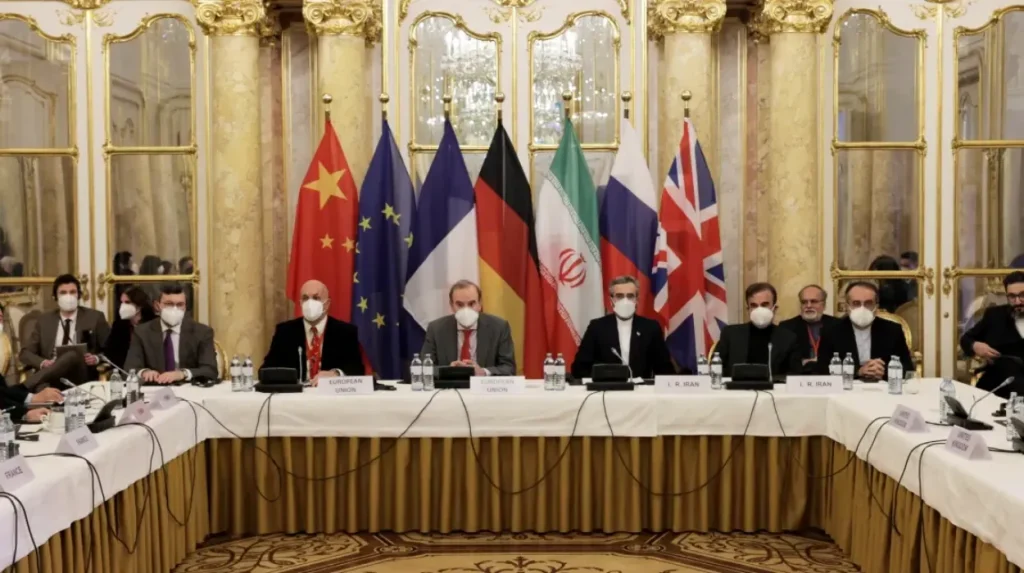
The United Kingdom, France and Germany, three European countries colloquially known as the E3, had put themselves at the forefront of an ardent but strict diplomatic campaign to bring Iran back on track in observing the nuclear pledges of the nuclear deal. On August 8, 2025, they officially informed the United Nations about their desire to switch the so-called “snapback mechanism” in the 2015 Joint Comprehensive Plan of Action (JCPOA) in case Iran fail to re-enter the constructive fold before the month is over.
This move highlights a critical juncture in the ten-year history of the JCPOA that was long-characterized by diplomatic breakthroughs, breakdowns and escalated tensions. The key issues in the dispute are Iranian production of highly enriched uranium considerably more than agreed and its denial of access to International Atomic Energy Agency (IAEA) inspectors. Indeed, the joint statement by the E3 underlies their commitment that they are only interested in a diplomatic solution but readiness to enforce the measures unilaterally demonstrates a new sense of urgency.
That deadline that is now looming is diplomatically the opportunity and the geo-political gamble. Tehran has come under even greater pressure as the E3 does a tightrope act between dialogue and getting ready to punish.
Legal and Strategic Foundations of the E3’s Approach
The snapback mechanism, integrated in the JCPOA, was premised as a protection that would restore UN sanctions on Iran fairly quickly in case Iran broke the contract. Following the withdrawal of the United States out of the deal in 2018, the E3 are the major Western signatories still attached to the agreement; therefore, a snap back would become a major instrument of enforcement.
This clause enables the E3 to go around the system of veto in the Security Council, so Russia or China will not be able to stop the restoration of sanctions. Their legal argument hinges on Iran’s “significant non-performance,” which includes uranium stockpiles over 40 times the permitted limit and continued restrictions on IAEA access.
The E3’s letter to UN Secretary-General António Guterres outlined not just the violations, but their duty to maintain non-proliferation norms and uphold global security standards.
Balancing Diplomacy with Pressure
Although this stands strongly from a legal perspective, E3 emphasises that they are ready to proceed in a conversation. They offered a narrow negotiation window to Tehran but Iranian leaders have not as yet accepted it and this has left them at an impasse.
UK Foreign Secretary David Lammy, French politician Jean-Noel Barrot and German politician Johann Wadephul have together stressed the two-pronged approach of providing Iran a way to go back to compliance but with maintaining the pressure. This is to avoid escalation and at the same time prove the plausibility of their warnings.
Iran’s Response and Regional Implications
Iran despises threats by the E3 by considering sanctions as coercive acts. Parliamentarians, such as the former foreign minister Manouchehr Mottaki have even entertained notions of abandoning the Nuclear Non-Proliferation Treaty (NPT). The stakes are garnered higher by such rhetoric.
At regional level Israeli Prime Minister Benjamin Netanyahu has also supported the hardline position of the E3 on the basis that the Iranian nuclear program is a threat to their existence. The strikes that occurred in June 2025 by the Israeli military against installations that were linked to Iran, accompanied by precision strikes of the US, have muddy the waters creating an even more delicate diplomatic atmosphere.
Such a high-stakes environment does not simply concern the nuclear file, but Middle East stability, regional alliances and international energy markets more broadly, in the moves of the E3.
The Role of International Actors and Multilateralism
The UN continues to be a vital mediator, and Secretary-General Guterres has assisted in the creation of communication links between the E3 and Tehran. Accessibility of the facilities by the IAEA remains to be under challenge as the verification to Iran facilities is still limited, making trust in the reports made by the Iranian state of their state of the program to be questioned.
IAEA judgments can be used to influence the opinion of the international community as well as to justify the possible snapback actions. When lack of compliance can be proved, diplomatic credibility is hurt.
The Broader Global Context
Although the United States is no longer a party to JCPOA, it has indicated that it highly supports the approach of the E3, which falls under its larger policy to contain Iranian nuclear potential. On the other hand, Russia and China are against the snapback proposal, which insists on more dialogue and describes the sanctions as counter-productive.
This split reflects a broader reality: the multipolar nature of 2025’s global diplomacy makes unified action increasingly difficult, forcing Europe to carry much of the leadership burden in this crisis.
Recent Developments and the Path Ahead
As mid-August approaches, Iran has yet to accept the E3’s offer to prolong talks. The window for diplomacy is narrowing, with a potential collapse of negotiations on the horizon. For Tehran, the choice is stark: engage to preserve economic relief or face renewed UN sanctions with uncertain political and economic fallout.
The E3’s united stance is meant to reinforce the seriousness of this moment. It sends a signal not only to Tehran but also to other states monitoring how international nuclear agreements are enforced.
Expert Perspectives
This person has spoken on the topic and summarized the situation accordingly: An expert commentator observed that
“The E3’s unified stance represents Europe’s attempt to chart a middle course between sanction enforcement and diplomatic engagement, signaling that the future of Iran nuclear diplomacy remains at a crucial tipping point.”
The Iran drama continues.
— S.L. Kanthan (@Kanthan2030) August 13, 2025
France, Germany and UK (“E3”) will impose sanctions this month if a nuclear agreement is not reached.
Meanwhile, Iranian parliament might implicitly greenlight making nuclear weapons.https://t.co/gsMKTWTlaV
Such insights underline the delicate balance between coercion and conciliation that defines the E3’s approach in 2025.
Diplomacy in the coming weeks will be a test of both patience and resolve. Whether the E3’s dual-track strategy succeeds or fails, its impact on the trajectory of nuclear non-proliferation will be profound. This is not just a negotiation over uranium levels; it is a confrontation over the rules and credibility of the international order itself, one that could influence security dynamics in the Middle East and beyond for years to come.