Negotiations between the United Kingdom and France over migration enforcement in the English Channel entered a new phase in early 2026, when both governments agreed to extend their existing patrol arrangement rather than allow it to expire. The funding framework, originally created to support French coastal monitoring and maritime surveillance, had reached its deadline at the end of March. Instead of suspending operations, the two countries opted for a short-term continuation designed to preserve coordination while discussions about a new agreement continued.
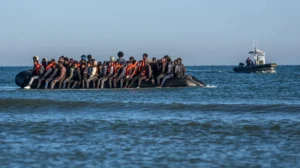
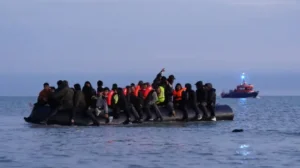
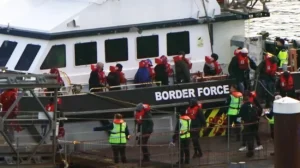
This extension reflects the practical importance of maintaining continuous patrol coverage along northern France’s coastline, particularly around departure areas where many small boats attempt crossings toward the UK. Officials from both governments indicated that the temporary measure ensures that security infrastructure, surveillance technology, and operational planning remain active while negotiations over funding, responsibilities, and enforcement benchmarks proceed.
Operational continuity along the Calais–Dunkirk corridor
French patrol units stationed along the coastline near Calais and Dunkirk remain central to the agreement. These locations have become focal points for cross-Channel migration attempts, prompting authorities to expand monitoring activities that include beach patrols, drone observation, and rapid-response teams.
British officials have argued that these measures have prevented thousands of departures over the past several years, though arrivals in the UK continue to fluctuate depending on weather conditions, smuggling networks, and enforcement intensity. Maintaining patrol presence therefore serves not only as a security measure but also as a signal that bilateral cooperation remains active despite ongoing policy debates.
Financial extension and political messaging
The additional funding attached to the extension provides a limited but important bridge between past agreements and future negotiations. By agreeing to a temporary arrangement rather than allowing a lapse, both governments avoided an abrupt disruption that could have complicated border management.
At the same time, the short duration of the extension signals that deeper disagreements remain unresolved. Policymakers on both sides recognize that the next phase of the deal will likely involve a broader reassessment of responsibilities, performance expectations, and the overall structure of Channel migration cooperation.
London pushes for stronger enforcement benchmarks
Within the United Kingdom, the extension has been framed as an opportunity to renegotiate terms that officials believe should deliver more measurable outcomes. Government figures have repeatedly emphasized the need to demonstrate effective use of public funding tied to migration control efforts.
Political debates in London intensified during 2025 and continued into 2026 as migration across the Channel remained a prominent issue in domestic discussions. This context has shaped the negotiating posture of British authorities, who are seeking clearer operational targets from France in exchange for continued financial support.
Government perspective on value and accountability
Home Secretary Shabana Mahmood has described the extension period as a moment to refine the partnership and ensure that future arrangements include defined benchmarks related to patrol coverage and interception efforts. Officials within the Home Office have suggested that measurable goals could strengthen public confidence in the bilateral strategy.
British negotiators have also explored options that would involve expanding surveillance capabilities or increasing the number of officers deployed along the French coastline. These proposals aim to link funding commitments to operational outcomes that can be evaluated over time.
Political pressure within Westminster
Domestic political dynamics have also influenced London’s negotiating approach. Members of the opposition, including Chris Philp, have argued that financial contributions should correspond with visible reductions in attempted crossings.
Such debates highlight the broader political environment surrounding migration policy in the UK. Government leaders must balance demands for stricter border enforcement with international obligations and the realities of cooperation with European partners.
France balances enforcement with legal and humanitarian limits
French authorities view the patrol agreement through a slightly different lens, emphasizing the complexity of migration management and the constraints placed on enforcement by legal and humanitarian considerations. Officials in Paris have pointed out that French law enforcement already dedicates significant personnel and resources to monitoring coastal regions.
From the French perspective, the objective is not solely to increase interceptions but to manage migration risks while avoiding actions that could endanger lives at sea or conflict with international obligations. These concerns have shaped how France approaches requests from the UK for expanded enforcement measures.
Law enforcement capacity and operational realities
French officials note that hundreds of officers remain deployed along the northern coastline, working alongside maritime agencies and local authorities. Their activities involve monitoring departure points, dismantling smuggling networks, and coordinating rescue operations when necessary.
Authorities have also warned that increasing enforcement pressure too sharply could shift migration attempts to different areas or lead smugglers to adopt more dangerous methods. This operational reality influences how Paris evaluates proposals for intensified patrol activity.
Legal frameworks influencing border policy
France must also consider obligations linked to European legal standards, including those related to asylum rights and humanitarian protections. These frameworks influence how authorities can intervene at sea or return migrants under bilateral agreements.
Government representatives have suggested that any expansion of patrol operations must remain compatible with international law and European norms. This position has played an important role in shaping the ongoing negotiations with London.
Asylum cooperation and returns shape broader negotiations
The discussions over Channel patrols are closely connected to a wider migration framework agreed between the two countries in 2025. That arrangement introduced a bilateral mechanism intended to regulate asylum flows and reduce irregular crossings.
Under the agreement, certain migrants arriving in the UK can be returned to France, while a limited number of asylum seekers already in France may be transferred to the UK through official channels. This structure has added another layer to the bargaining process between the two governments.
Early outcomes from the returns arrangement
Initial figures released in 2026 suggested that the pilot scheme has moved forward gradually, with a relatively small number of migrants transferred in both directions. Officials have indicated that administrative procedures and verification requirements have slowed implementation during the early stages.
Despite the modest numbers, policymakers on both sides see the program as a test of whether bilateral migration management can function effectively without relying on more controversial external processing proposals debated in earlier years.
Negotiations linking patrols with asylum policy
Because patrol operations influence the number of migrants reaching UK shores, both governments recognize that enforcement and asylum cooperation are interconnected. London has expressed interest in accelerating returns, while Paris has emphasized the need for balanced burden-sharing.
These overlapping priorities have turned migration management into a complex negotiation that extends beyond maritime security alone. The outcome of patrol discussions may therefore affect the broader structure of migration cooperation between the two countries.
Domestic politics and European migration dynamics influence talks
Migration policy has remained politically sensitive across Europe since the surge of arrivals recorded in previous years. By 2025, debates about border control, asylum reform, and international cooperation had become central issues in both British and French domestic politics.
Local communities in northern France continue to face logistical challenges associated with migration flows, while UK policymakers encounter pressure to demonstrate effective border management. These political realities have shaped the tone and direction of negotiations over Channel patrols.
Local impacts along the northern French coast
Municipal leaders in coastal regions have frequently highlighted the strain placed on infrastructure and social services as migrants gather in camps or temporary accommodation areas. Authorities in cities like Calais have repeatedly called for broader European solutions to address the issue.
French national officials acknowledge these concerns and have sought to balance local needs with international commitments. This balancing act contributes to the cautious approach Paris has taken during negotiations with the UK.
The evolving European migration landscape
Across the European Union, migration governance has undergone adjustments in response to policy debates during 2025 and early 2026. Discussions about border security, asylum procedures, and regional cooperation have influenced how member states view bilateral arrangements like the Channel patrol framework.
France’s role within the EU adds another dimension to its negotiations with the UK, which is no longer part of the bloc but remains a crucial partner in managing cross-border migration challenges.
As discussions continue, the evolving agreement between the two governments may reveal how European states adapt to migration pressures that intersect with politics, law, and international diplomacy. The next phase of negotiations could ultimately determine whether Channel patrol cooperation becomes a stable institutional framework or continues to rely on periodic extensions shaped by shifting political priorities and regional developments.