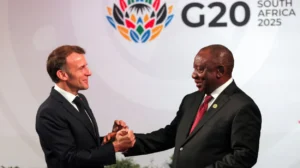
Emmanuel Macron called the snap election in June 2024 because his party lost heavily in the European Parliament election. To regain control and maintain his power he called for snap legislative elections. However, his decision of the election left France divided into 3 major groups, centrists, the far-left, and the far-right.
To resolve France’s growing financial crisis, he chose center-right Michel Barnier as prime minister. In September, Barnier officially held all responsibilities. He was under immense pressure to solve the nation’s fiscal deficit. Barnier tried to pass an austerity budget but did not succeed due to less support. In December, far-right and far-left parties united against Barnier and removed his government.
After his removal, Macron was selected by centrist François Bayrou, as prime minister on December 13. He is one of President Macron’s trusted allies. François Bayrou faces the same challenges as the Barnier faced. Now the question is how the new prime minister will protect France from growing financial problems. If Bayrou failed to break France’s political deadlock, then both Macon and France would suffer more instability.
What makes France more divided?
Many complexities make France more divided. A few of them are growing living costs, enhanced immigration rates, failing public services, and the Middle East crisis such as the Gaza war. All of these issues negatively impact both the public and the political elite.
The central focus of France’s president is maintaining the pension age increase. He does not pay attention to the new taxes. Furthermore, Macron and his centrist allies greatly support stronger European Union integration in the defense and energy systems. At the same time, far-left and far-right parties want to lower the retirement age and limit EU influence over France.
The situation has become even worse due to immigration and climate policies. The leader of the far-right National Rally, Marine Le Pen, favors strict immigration policies. While the leader of the left-wing New Popular Front, Jean-Luc Mélenchon and Olivier Faure support the social benefits. They fight against climate change policies.
France financial crisis
Parties find it testing to assent on tax soar or spending axing due to France’s 6.1% budget misproportion. Taxes account for 52.2% of GDP, whereas public laying out accounts for 58.3%. The country is stylishly more politically and socially conversant as a result of these financial troubles and divergent objectives. Even if not as bad as Greece’s due mess in the 2010s, France’s due situation is, however, worrisome. Because of political agitation, Moody’s has reduced France’s credit rating from Aa2 to Aa3. This implies that, concerning Germany, France must pay higher profit rates on its debt. Italy and Belgium, two other highly indebted nations, may also be at a hazard. By taking on the Transmission Protection Instrument (TPI), the European Central Bank (ECB) can arbitrate and secure markets.
Italy will suffer from this, but France demands to illustrate that it can rule out its shortage before the ECB will bear it. François Bayrou must put together a cabinet capable of passing a reasonable budget to address this. However, this is inspiring due to France’s split politics. Financial markets may become unsure in the wake of well-defined plans for debt cutbacks. The safety of the EU as a whole may be compromised by France’s pains because fresh elections cannot be held until 2025.
France’s leadership in the EU is being worn out by its political unrest. Even if the National Assembly is diverse, President Macron has narrowed his authority over foreign policy. Germany is experiencing its crises at the same moment, with Chancellor Scholz’s administration coming to an end. Selection about Ukraine and migration is impacted by the leadership vacuum these hitches cause in Europe.
Other principals, such as Polish Prime Minister Donald Tusk and European Commission head Ursula von der Leyen, are hearty in their criticism of the need for meaty French and German leadership. But this could cause a flaw since politicians like Viktor Orbán of Hungary or Giorgia Meloni of Italy try to reach their share with the United States. The unity of the EU is being eroded by this. Von der Leyen and European Council President Antonio Costa need to drive member states together if Europe is to last united on Ukraine and migration. Should they fail, the EU’s influence around the world may wane, making it more difficult to deal with noteworthy issues.