The humanitarian crisis in Gaza since October 2023 has reached catastrophic proportions, with staggering civilian casualties, mass displacement, and widespread destruction of infrastructure. Against this backdrop, the French foreign minister has publicly rejected accusations that France is complicit in the crisis, insisting that Paris has taken active steps to alleviate suffering and support the Palestinian population. This analysis examines the humanitarian context, France’s actions, and the broader diplomatic and legal landscape, drawing on the latest statistics, official statements, and international reports.
What is the current humanitarian situation in Gaza?
The humanitarian situation in Gaza is unprecedented in its scale and severity. As of June 2025, at least 55,637 Palestinians have been killed and 129,880 injured since the escalation began in October 2023, according to the Gaza Ministry of Health and UN agencies. Among the dead are over 16,000 children. More than 1.9 million people—about 90% of Gaza’s population—have been internally displaced, many forced to move multiple times as bombardments and ground operations continue.
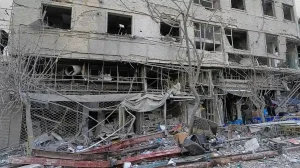
Destruction is widespread: over 70,000 homes have been destroyed, and 70–80% of buildings in northern Gaza are damaged or in ruins. The health and education systems have collapsed, with over half of hospitals and 95% of schools damaged or destroyed. The World Health Organization and UNICEF report that all 2.1–2.2 million people in Gaza now require humanitarian assistance, with one in five already experiencing starvation-level conditions. Famine is imminent, with 1.1 million people facing catastrophic food insecurity (IPC Phase 5).
How severe is the aid blockade and what are its consequences?
Israel’s blockade has severely restricted the entry of humanitarian and commercial supplies. By April 2025, humanitarian aid had been blocked for over 50 days, causing acute shortages of food, medicine, and essential goods. Humanitarian organizations face immense challenges: between late May and late June 2025, at least 467 people were killed and 3,602 injured while attempting to access food at aid distribution centers, highlighting the dangers and obstacles to aid delivery.
The blockade has also led to the deaths of at least 418 humanitarian workers since the conflict began, including nearly 300 UNRWA staff. Overcrowding at displacement sites, lack of clean water and sanitation, and the spread of infectious diseases have compounded the crisis, especially for women, children, and the elderly.
What has been France’s humanitarian response?
Financial and material aid
France has made significant contributions to humanitarian relief in Gaza. On September 30, 2024, France pledged €200 million to support Palestinian civilians[French Foreign Ministry]. French aid has focused on food, water, medical supplies, and support for hospitals and NGOs operating in the Strip. France has also coordinated with international partners and UN agencies to facilitate aid convoys and support cash assistance programs for vulnerable families.
Diplomatic advocacy
France has consistently called for the immediate and unimpeded flow of humanitarian aid into Gaza. In April 2025, France, along with Germany and the UK, issued a joint statement urging Israel to “immediately re-start a rapid and unimpeded flow of humanitarian aid to Gaza,” warning that “Palestinian civilians—including one million children—face an acute risk of starvation, epidemic disease and death. This must end”[Joint Statement, April 2025].
Political and legal initiatives
France has advocated for an immediate ceasefire, the release of all hostages, and a renewed push for a two-state solution. In December 2024, the French presidency emphasized that France was “working actively to meet the vital needs of Palestinians hardest hit by bombardments, destruction, healthcare collapse, and lack of access to essentials such as water, food, and fuel”[French Presidency, Dec 2024].
France has also taken legal steps: in June 2025, French anti-terror prosecutors opened investigations into alleged “complicity in genocide” involving French-Israelis suspected of blocking aid trucks and the conduct of the Israeli Defense Forces[French Legal Authorities, June 2025].
How has France responded to accusations of complicity?
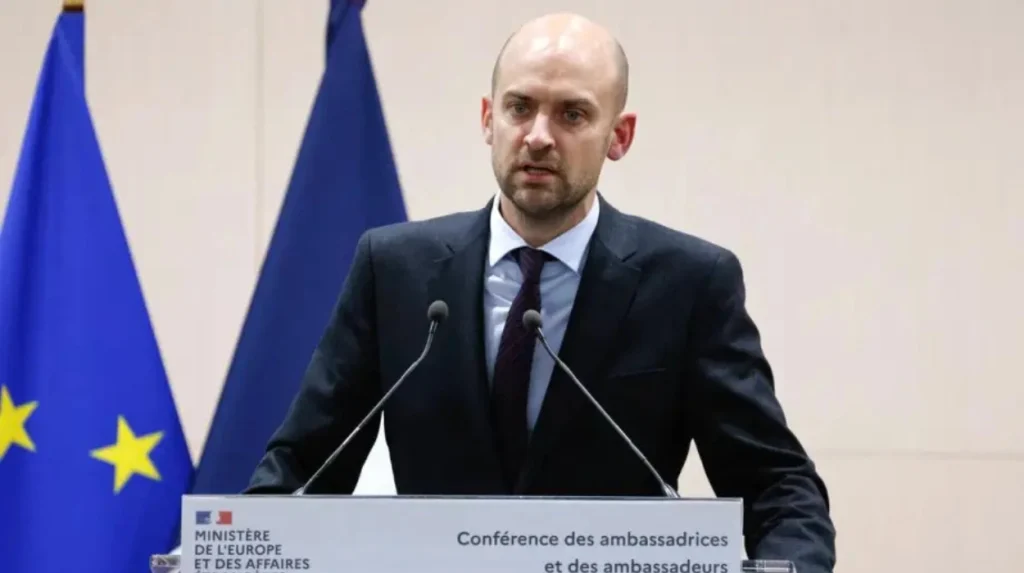
The French foreign minister categorically rejected accusations of complicity, insisting that France has taken active steps since October 2023 to assist the Palestinian population and alleviate suffering. In May 2025, the French Foreign Ministry stated: “Humanitarian aid must never be used as a political tool or military tactic. Palestinian territory must not be reduced nor subjected to any demographic change”[French Foreign Ministry, May 2025]. France has emphasized its commitment to international humanitarian law and has repeatedly called for the protection of civilians and aid workers.
What are the ongoing challenges for aid delivery?
Despite France’s efforts and international pressure, the delivery of aid remains perilous and inadequate. The Gaza Humanitarian Foundation, backed by the US and tasked with distributing food, has faced closures and security threats, with dozens of Palestinians killed while trying to access aid. Aid convoys are frequently denied or impeded by Israeli authorities: between May 1 and 13, 2025, of 109 planned aid movements, 69 were denied and only 32 facilitated.
What is the broader diplomatic and legal context?
France’s approach combines humanitarian relief with diplomatic engagement and legal accountability. France and Saudi Arabia are co-chairing an international conference on the two-state solution scheduled for June 2025 in New York, aiming to advance a political resolution to the conflict. France also emphasizes Israel’s obligations under international humanitarian law to allow safe, rapid, and unimpeded passage of aid and to protect civilians and humanitarian workers.
Worst in modern history
The humanitarian crisis in Gaza stands as one of the worst in modern history, defined by staggering loss of life, mass displacement, and the near-total collapse of basic services. Since October 7, 2023, and up to June 18, 2025, at least 55,637 Palestinians have been killed and 129,880 injured, according to the Gaza Ministry of Health, with thousands more missing under rubble or presumed dead. Among the dead are more than 16,000 children, a toll that underscores the disproportionate impact on Gaza’s youngest and most vulnerable.
The entire population of Gaza—over 2.1 million people—now faces a critical risk of famine, with one in five already experiencing starvation-level conditions. Humanitarian agencies warn that famine is imminent: the Integrated Food Security Phase Classification (IPC) assessment finds that 1.1 million people are in Phase 5 (catastrophe), the highest level of food insecurity. Overcrowding in displacement sites, lack of clean water, and the spread of disease have created a public health disaster, with skin and infectious diseases rising rapidly, and even the first case of polio in 25 years reported in 2024.
Nearly 1.9 million people—about 90% of Gaza’s population—have been internally displaced, many forced to move multiple times as bombardments and ground operations continue. More than 70,000 homes have been destroyed, and 70–80% of buildings in northern Gaza are damaged or in ruins. Essential infrastructure has been decimated: only 22 of 35 hospitals and 73 of 153 primary healthcare centers are partially functional, while 95% of schools have been damaged or destroyed.
The crisis is compounded by a blockade that has severely restricted the entry of humanitarian and commercial supplies. Humanitarian organizations struggle to deliver assistance, facing movement restrictions, attacks on aid premises, and the killing of at least 317 UNRWA staff and over 418 humanitarian workers in total. Aid convoys are often denied or impeded, and people have no safe place to go, facing constant attacks and bombardments.
France, while rejecting accusations of complicity, has highlighted its substantial humanitarian aid, diplomatic advocacy, and legal actions to support the Palestinian population. However, the sheer scale of suffering and the ongoing blockade underscore the urgent need for a comprehensive ceasefire, unimpeded aid access, and a lasting political solution. Without immediate and decisive international action, the crisis in Gaza will continue to set a grim benchmark for humanitarian catastrophe in the 21st century.