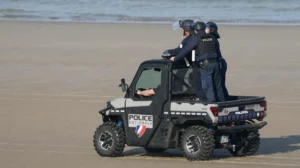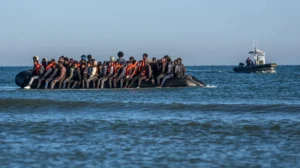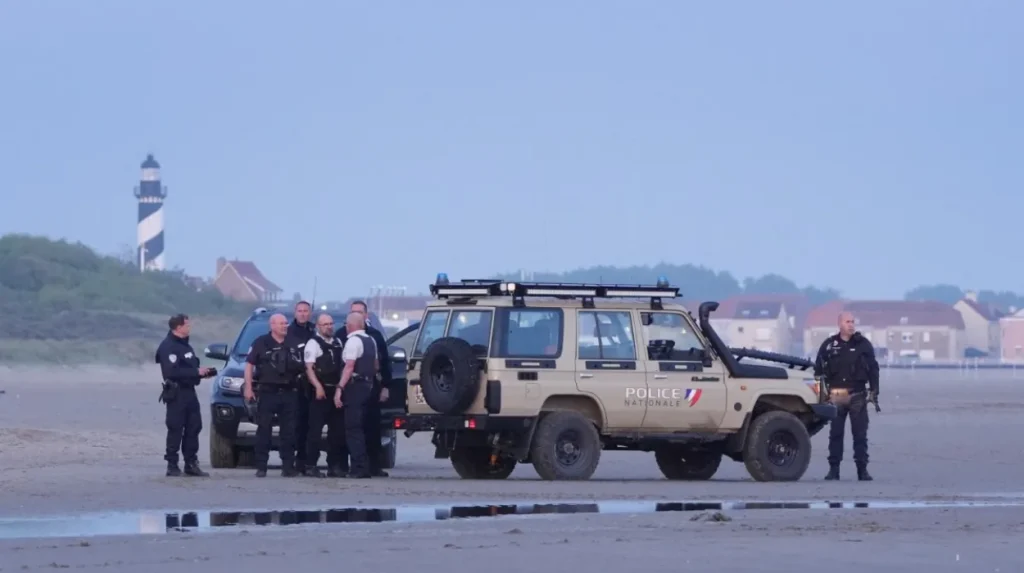
France’s ombudsman, Claire Hédon, has publicly criticized the use of force policy within France itself, specifically against its police and gendarmes using force on migrants seeking to cross the English Channel. Her move, made public on Monday, January 26, stemmed from a clear breach of the legal provisions regarding the allowed use of “intermediate force” gadgets such as rubber bullets, stun guns, crowd controlegrenades, and the likes of tear gas.
What Is the Ombudsman Saying?
The Defender of Rights posits that the deployment of such weapons against immigrants is inconsistent with notions of necessity and principle of proportionality and principles of restraint towards law enforcement officers.
This issue has been raised by migrant aid organizations several times since 2022, and this decision by the Ombudsman formally confirms this issue does not comply with regulations.
This is happening amidst a situation of heavy international scrutiny of the manner in which immigration controls in the respective countries are being implemented. In the case of the U.S., concerns regarding the manner in which ICE is operating, and in the case of France, the behavior of the French police and gendarmes in the Channel coast, have come under the scanner in recent times.
Why the Use of “Intermediate Force” Is Problematic
As Claire Hédon underlines, intermediate weapons may cause serious physical injury to vulnerable migrants, such as women, children, or injured persons. For this very reason, such weapons are permitted only in restricted situations-mostly self-defense. On top of that, the Ombudsman made it clear that, if ever these weapons needed to be employed, the use would need to be absolutely necessary and proportionate, according to a 2023 internal service note.
While that decision underlines a pattern of abuse, it suggests that police and gendarmes are using such arms to prevent migrants’ entry or embarkation on boats, rather than self-defense.
A Lack of Transparency: Body Cameras Not Activated
One of the most striking points in the Ombudsman’s report is the absence of video evidence. Even officers equipped with body cameras reportedly do not activate them, claiming that recordings would be “unusable.”
The decision calls for the systematic activation of body cameras whenever officers are equipped with them, in order to ensure accountability and verify whether the use of force was justified.
The Ombudsman also recommends:
- Mandatory written reports whenever an intermediate force weapon is used
- Clear reminders to officers of their duty to provide accurate and faithful accounts of any weapon use
These steps are intended to strengthen transparency and ensure that officers can be held accountable if their actions fall outside legal boundaries.
Boats Destroyed Without Clear Legal Rules
Another central concern is the destruction of migrant boats by French authorities. While the report acknowledges that destroying boats may sometimes be justified to protect lives at sea, it criticizes the lack of clear regulation.
The Ombudsman notes that authorities sometimes use weapons solely to disperse migrants and prevent them from boarding, which does not fall under self-defense or public order operations.
In her decision, Claire Hédon argues that:
- The criteria for boat destruction must be precisely defined
- Use of weapons solely to prevent boarding should be prohibited
- Operations must be better regulated to ensure compliance with law and human rights standards
The Broader Context: Channel Crossings Remain High
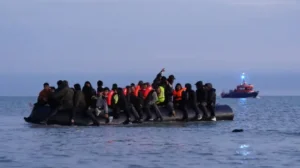
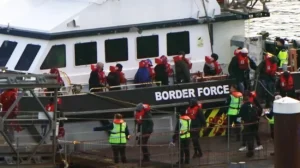
The report underscores the scale of the crisis: in 2025 alone, around 42,000 people crossed the English Channel to reach the UK. This reflects an ongoing and escalating migration challenge for France and Britain.
The number also suggests that law enforcement is facing sustained pressure, which may partly explain the increasing use of force and controversial tactics. However, the Ombudsman’s decision makes clear that high numbers do not justify legal breaches or human rights violations.
Claire Hédon’s decision marks a major challenge to French law enforcement practices along the Channel. It highlights how the current approach may violate legal standards, particularly regarding:
- The necessity and proportionality of force
- The lack of transparency in recording operations
- The insufficient regulation of boat destruction
The Ombudsman’s recommendations aim to create clearer rules, ensure accountability, and protect the rights and safety of migrants—especially those in vulnerable conditions.
As the Channel crisis continues, the French government and law enforcement agencies will face growing pressure to adopt methods that are not only effective, but also lawful and humane.