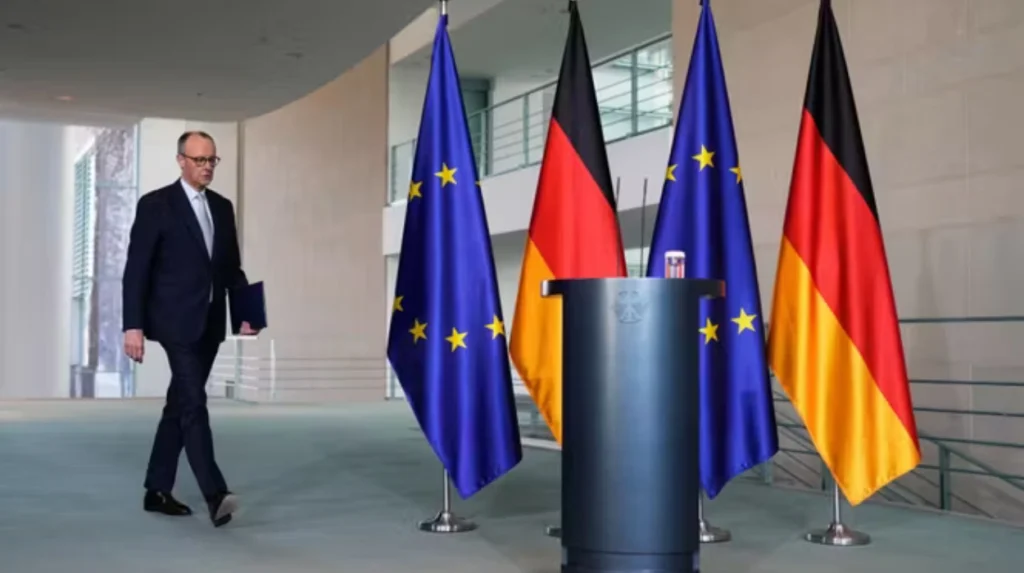
The announcement of the Franco-German nuclear pact in March 2026 is an important step in defense planning in Europe. France and Germany agreed to form a joint nuclear steering group, which would be used to coordinate the discussion on the policy of deterrence, the strategic doctrine, and the further cooperation on the defense matters. It is an initiative that takes into consideration the increasing concerns about long-term security assurances in the face of increasing geopolitical tensions in Europe.
The deal was formed in the background of persistent instability caused by the Russian invasion of Ukraine in 2022 and the further military escalation throughout Eastern Europe. The Paris and Berlin leaders perceive the initiative as a tool to enhance consultative practices on the strategic level without changing the formal nuclear command arrangements. The relocation is an indication that there is an inclination towards a more European role in deterrence discourse that was previously dominated by the United States in the NATO arrangements.
Macron’s vision of advanced deterrence
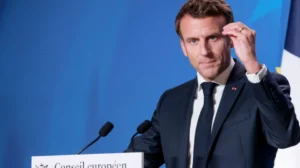
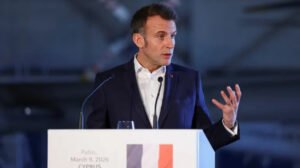
The deal was explained by the French President Emmanuel Macron as the component of a bigger idea that he called advanced deterrence. This would wield the nuclear protective umbrella of France to the vital interests of Europe as well as maintain the exclusive French authority regarding the launch decisions.
Macron stressed that the set up does not devolve nuclear power to Germany. Rather, it opens opportunities of strategic consultation, enabling Berlin to participate more in the debate regarding the position of nuclear deterrence in European security.
Germany’s evolving security calculations
Since Germany was given the chairmanship of European defense in 2025, German Chancellor Friedrich Merz has focused on enhancing the power of the country in terms of its position in the system. His government has suggested that Europe should be ready in situations where transatlantic guarantees may not be that predictable.
This point of view was expressed in the comments made by the chancellor at the Munich Security Conference at the beginning of 2026. Merz emphasized the necessity of realistic strategic planning, indicating that European allies ought to improve inter-cooperation in the fields of nuclear, conventional and missile defense.
Strategic context shaping the initiative
The war that Russia has initiated due to its invasion of Ukraine has completely transformed the security situation in Europe. In 2022, NATO members have increased defense budgets and military deployments in the eastern front of the alliance.
Nuclear deterrence is becoming more and more the focus of European policymakers as it is considered a strategic stability element. France, the only country in the European Union to have a nuclear arsenal following the exit of the United Kingdom out of the European Union, is positioned in an unusual position in the debate.
The Franco-German initiative is thus indicative of both short term wartime needs as well as larger long term concerns on the autonomy of Europe in terms of defence.
2025 developments in European defense cooperation
There would be a number of developments in 2025 that would be the foundation of the pact. The Aachen Treaty signed in 2019 increased Defense consultations between Paris and Berlin.
The treaty put up structures of mutual foreign policy and security planning. By 2025 such frameworks had been expanded to deterrence strategy and crisis management.
Meanwhile, the United States with President Donald Trump became more moderate in its attitude to Russia, characterizing it as a manageable threat. European leaders took this remark to signify that more responsibility to provide regional security could be necessary.
Influence of Franco-British nuclear cooperation
The Northwood Declaration signed between France and the United Kingdom in July 2025 was another significant precedent. That statement made strategic deterrence coordination between the two nuclear powers.
Even though the United Kingdom does not belong to the European Union, the alignment of the nuclear policy with France proved that nuclear cooperation between the two countries could still take place without weakening NATO frameworks.
Operational mechanisms of the pact
Germany will take part in the program in the traditional form of military functions instead of the direct nuclear command. This would enable Berlin to play a role in deterring planning without having to be stationed with new nuclear weapons other than those already present in the U.S. deployment under the NATO arrangement.
German troops are supposed to take part in French-led drills that will include aircrafts that have nuclear capability like the Dassault Rafale fighter jet. The role of Germany in these exercises will involve traditional support operations as opposed to the nuclear strike operations.
Such activities should enhance interoperability of French and German forces as well as deterrence credibility.
Joint strategic consultations
The steering group will be used to enable the frequent consultations among political leaders and military planners. Topics to be discussed will include early warning systems, cooperation of missile defense and crisis scenarios.
This kind of consultations would enable Germany to have a more direct input into the debate on nuclear strategies without necessarily having to change the legal framework that regulates the control of nuclear weapons.
Coordination with broader European defense initiatives
The agreement is also in line with the European investment in missile defense and precise strike capabilities. The idea of these programs is to enhance deterrence at the level below the nuclear threshold by enhancing the capacity of Europe to counter conventional threats.
Paris has been inclined to get other European states to contribute to such activities financially. Macron claimed that the allies of Europe ought to share a portion of the load when enhancing collective defense.
NATO alliance implications
The advocates of the Franco-German project believe that it strengthens and not weakens the North Atlantic Treaty Organization. The common statement which declared the pact was categorical that the agreement would be a complement to the nuclear deterrence system of NATO.
France does not form part of the integrated military command of NATO, but has an independent nuclear command structure; however, they work very closely with NATO in matters of strategic planning. The new steering group is therefore able to do more consultation without duplicating the available institutions of NATO.
Germany will also remain on the programme of nuclear sharing in NATO that includes U.S nuclear warheads that are currently deployed in Europe through agreements of allies.
Potential sources of alliance tension
Nevertheless, with these promises, there are analysts who express that the initiative might cause tension in the alliance. The deterrence policy by NATO has traditionally been based a lot on U.S. strategic assurances.
When European governments start placing an increased focus on their independent deterrence capacity, Washington may view the move as the expression of diminished confidence in American promises.
Sensitivity on the nuclear policy is also evident in public arguments in Germany. The Two Plus Four Treaty still restrains Germany not to have its nuclear arsenal because it is prohibited by the Treaty.
Transparency and confidence-building concerns
The other contentious aspect is when France opted to lower the level of openness to the discussion on the quantity of nuclear weapons owned by it. Starting with the critics, they believe that a restricted disclosure may undermine international confidence-building measures.
Nevertheless, according to French authorities, the secrecy of its operations improves the deterrence credibility, and it is not in conflict with the commitments of the Treaty on the Non-Proliferation of Nuclear Weapons.
Broader European dynamics and expanding partnerships
The Franco-German discussions have attracted attention from several other European governments. Poland’s Prime Minister Donald Tusk signaled support for stronger European deterrence cooperation.
Other states including Sweden, the Netherlands, Belgium, and Denmark have explored participation in related strategic consultations. These discussions focus primarily on conventional defense integration rather than nuclear command arrangements.
Strategic geography and deterrence distribution
European policymakers argue that distributing conventional capabilities across multiple countries strengthens deterrence by complicating potential adversary planning.
Northern and eastern NATO members view enhanced cooperation with France and Germany as a way to reinforce regional defense without duplicating alliance structures.
Non-proliferation debates
Advocacy organizations such as International Campaign to Abolish Nuclear Weapons have raised concerns that expanding nuclear consultations could weaken global non-proliferation norms.
Supporters of the pact counter that no transfer of nuclear weapons or control is envisioned. France retains exclusive authority over its arsenal, which remains relatively small compared with those of the United States and Russia.
Legal frameworks and long-term strategic trajectory
The Franco-German nuclear pact operates within existing international treaties governing nuclear weapons. Both countries reaffirmed their commitment to the non-proliferation regime and emphasized that the agreement does not alter Germany’s non-nuclear status.
Paris continues to modernize its nuclear forces, including the development of next-generation submarine systems. France plans to introduce a new ballistic missile submarine class by the mid-2030s, reinforcing its strategic deterrent capabilities.
For Germany, the initiative represents a balancing act between alliance commitments and growing calls for European strategic autonomy. The steering group provides a forum for discussing nuclear deterrence without crossing legal or political red lines that have shaped German security policy for decades.
As Europe navigates an increasingly complex security environment shaped by war in Ukraine, shifting U.S. priorities, and renewed nuclear competition, the Franco-German initiative illustrates how major European powers are experimenting with new defense arrangements. Whether this bilateral mechanism evolves into a broader European deterrence framework or remains a limited consultation platform will depend on future geopolitical developments, NATO cohesion, and the willingness of other European states to participate in shaping the continent’s evolving nuclear architecture.