France’s shuttle diplomacy has re-emerged as a visible diplomatic channel during renewed tensions along the Israel–Lebanon border. Diplomatic visits between Beirut and Tel Aviv, including the March 2026 regional outreach led by French officials, reflect a longstanding pattern in which Paris attempts to stabilize escalations through direct dialogue with both sides. This method relies on rapid engagement, confidence-building communication, and pressure for short-term de-escalation rather than comprehensive political settlements.
However, structural constraints have become increasingly evident. The core military and political drivers of confrontation—Israel’s security calculations and Hezbollah’s armed presence in southern Lebanon remain outside France’s direct influence. French diplomacy can open conversations and reduce immediate tensions, yet it cannot compel local actors to accept compromises that carry domestic or strategic risks.
Diplomatic Engagement Between Beirut And Tel Aviv
French envoys have often emphasized the urgency of preventing wider regional escalation. Shuttle diplomacy in this context aims to preserve communication channels during moments when direct negotiations are politically sensitive or impossible. Meetings with Lebanese leadership and Israeli officials seek to clarify red lines, relay security concerns, and explore limited confidence-building measures.
Despite these efforts, diplomatic momentum frequently slows once discussions move beyond immediate ceasefire arrangements. Lebanese political fragmentation and Israel’s focus on security guarantees create a negotiation environment where external mediation has limited authority.
Security Concerns Driving Israel’s Calculations
Israel’s leadership continues to prioritize the containment of Hezbollah near the northern border. From the Israeli perspective, ceasefire arrangements are only meaningful if they significantly reduce cross-border threats. This focus has shaped the response to diplomatic initiatives, including French proposals aimed at stabilizing the frontier region.
Statements from Israeli officials in 2025 and early 2026 suggested skepticism about Lebanon’s ability to enforce agreements involving armed groups. This skepticism influences how Israel evaluates proposals delivered through French diplomatic channels.
Lebanon’s Internal Political Constraints
Lebanon’s domestic political environment presents another barrier to sustained mediation. State institutions remain weakened by economic crisis and political fragmentation, limiting their ability to implement security arrangements along the border. Negotiations that appear acceptable at the diplomatic level often encounter resistance within Lebanon’s political landscape.
This internal complexity reduces the effectiveness of external diplomatic pressure. France’s engagement may facilitate dialogue, yet it cannot resolve internal divisions that shape Lebanon’s negotiating position.
Historical Influence Shaping France’s Shuttle Diplomacy
France’s shuttle diplomacy operates within a historical relationship that continues to influence perceptions in Lebanon and the wider region. The legacy of France’s involvement in Lebanese state formation and political support has created enduring connections between Paris and Beirut. These ties have allowed France to maintain a role as a diplomatic interlocutor during crises involving Lebanon.
At the same time, historical influence does not automatically translate into strategic leverage. Modern regional conflicts are shaped by alliances, military deterrence, and geopolitical rivalries that extend far beyond bilateral historical relationships.
Political Legacy And Diplomatic Access
French diplomacy benefits from longstanding cultural, political, and economic connections with Lebanon. This relationship has allowed Paris to communicate with multiple Lebanese political factions while also maintaining dialogue with Israel and international partners.
Access alone, however, does not guarantee influence over decision-making. Lebanese actors often balance French engagement with the positions of regional powers that hold greater strategic influence in security matters.
Coordination With Western Allies
France’s diplomatic initiatives typically unfold alongside consultations with Western partners, including the United States and European governments. In 2025, coordination efforts within transatlantic diplomacy intensified as tensions across several Middle Eastern fronts required simultaneous crisis management.
This collaborative framework strengthens France’s legitimacy as a mediator, yet it also limits independent maneuvering. Diplomatic proposals must align with broader Western policy objectives, reducing flexibility during negotiations.
The Role Of Leadership Diplomacy
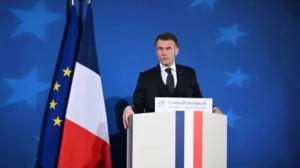
Statements by leaders such as Emmanuel Macron have highlighted France’s concern about escalation risks in Lebanon. French leadership has repeatedly stressed that regional stability requires restraint and adherence to international law.
While these statements signal diplomatic commitment, they also illustrate the limits of rhetorical influence. Security decisions on the ground remain primarily shaped by local military and political considerations.
Regional Dynamics Complicating Ceasefire Sustainability
France’s shuttle diplomacy cannot sustain an Israel–Lebanon ceasefire alone because the conflict is deeply embedded within wider regional dynamics. The interaction between Iran-aligned groups, Israeli defense strategy, and broader Middle Eastern tensions shapes the environment in which mediation occurs.
Regional crises in 2025 demonstrated how interconnected these conflicts have become. Developments in Gaza, maritime tensions in the Red Sea, and diplomatic negotiations related to Iran all influenced the strategic calculations of actors involved in the Lebanon-Israel frontier.
Influence Of Non-State Armed Actors
Hezbollah’s military presence remains a central factor in the stability of the border region. Unlike traditional state-to-state conflicts, negotiations involving Lebanon and Israel must also account for the strategic objectives of a powerful non-state organization.
This reality complicates diplomatic frameworks. Agreements negotiated through official government channels may not automatically resolve tensions involving armed groups with independent operational structures.
Iran’s Strategic Position In Regional Negotiations
Iran’s relationship with Hezbollah continues to shape perceptions among Western and Israeli policymakers. Discussions about ceasefire durability often extend beyond Lebanon itself, focusing on the broader strategic competition involving Tehran and its regional partners.
French diplomacy has occasionally attempted to address this dimension by encouraging wider dialogue among international actors. Yet achieving consensus among regional powers remains an ongoing challenge.
The Impact Of Border Security Debates
Proposals related to buffer zones, troop deployments, or changes to border monitoring arrangements frequently emerge during diplomatic negotiations. These proposals often intersect with the framework established under United Nations Security Council Resolution 1701.
While France supports international monitoring mechanisms, enforcement depends on cooperation among multiple stakeholders. Without alignment between local and international actors, even carefully negotiated arrangements face implementation difficulties.
Humanitarian And Legal Pressures On Diplomatic Strategy
France’s shuttle diplomacy is also shaped by humanitarian considerations and international legal frameworks. Escalations along the Israel–Lebanon border risk large-scale displacement and infrastructure damage, particularly given Lebanon’s ongoing economic crisis.
European policymakers have increasingly emphasized the humanitarian implications of prolonged conflict in southern Lebanon. These concerns have influenced the tone and urgency of diplomatic engagement.
Civilian Vulnerability In Southern Lebanon
Communities near the border experienced repeated disruptions throughout 2025 as cross-border exchanges intensified. Infrastructure limitations and economic instability have increased the vulnerability of civilians in affected regions.
Humanitarian organizations have warned that a major military escalation could significantly worsen conditions for displaced populations. Diplomatic efforts therefore aim to reduce the likelihood of large-scale operations that would deepen the crisis.
International Law And Diplomatic Messaging
French officials have frequently referenced international law when discussing potential military actions in Lebanon. The emphasis on proportionality and civilian protection reflects broader European diplomatic priorities in conflict management.
Although legal arguments strengthen diplomatic messaging, their effectiveness depends on whether they influence decision-makers responsible for military strategy.
Balancing Humanitarian Advocacy With Strategic Reality
France’s diplomatic approach attempts to balance humanitarian advocacy with realistic engagement in regional security discussions. This balance requires maintaining dialogue with all parties while simultaneously emphasizing international norms.
Such positioning underscores the complexity of mediation in conflicts where humanitarian risks and strategic calculations intersect.
Prospects For A Broader Diplomatic Framework
France’s shuttle diplomacy continues to function as a mechanism for reducing immediate tensions, yet its long-term impact depends on whether it evolves into a broader negotiation framework involving regional and international actors. The diplomatic activity seen in 2026 suggests that France is attempting to position itself as a facilitator rather than a sole mediator.
Future ceasefire sustainability may depend on coordinated initiatives that combine political dialogue, border security arrangements, and economic stabilization efforts in Lebanon. Several European discussions in 2025 explored linking reconstruction support and institutional reform to security commitments along the border.
If such frameworks gain traction, France’s shuttle diplomacy could become part of a larger diplomatic architecture rather than a standalone effort. The evolving question is whether regional stakeholders will accept a more integrated negotiation model that addresses not only immediate ceasefire conditions but also the deeper strategic tensions shaping the Israel–Lebanon frontier.