France went into 2025 in the middle of the changing European security landscape as a result of the protracted Ukraine conflict. The war essentially changed the structure of defence in Europe, creating new political faults and revealing inefficiencies in the coordination of crisis responses. In the unstable environment, France has taken its mediator status to a new level by trying to fill gaps among the members of NATO, resolving conflicting regional goals, and enhancing the security leadership of the European Union.
President Emmanuel Macron has constantly made it clear that Europe needs to be more independent and strategically sound. His vision is to limit overdependence on external players and work more to improve the ability of the EU to counteract the conflict along its borders. This model justifies the increased participation of France in shuttle diplomacy, conflict-saving negotiations and multilateral conferences dealing with the post-war uncertainties in the continent.
The political environment of the year 2025 gives expression to a wider set of concerns about Russian intentions, the future posture of NATO, and the ultimate reconstruction of Ukraine. France applies its diplomatic leverage, military strength and permanent seat on the UN security council in controlling debates that determine the security path of Europe.
Diplomatic mechanisms strengthening France’s mediation role
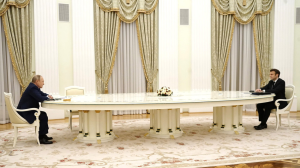
Paris has become a more popular place of holding formal and informal negotiations on European security. Several conferences comprising defence ministers, intelligence chiefs, policy advisors have been held by the French authorities to discuss further avenues to the continent. The aim of such discussions is to restore confidence among the states that are still divided on the approaches to deterrence, de-escalation and long term stability.
Part of France’s activities include low profile diplomatic contacts with regional players who are reluctant to directly interact with each other. This strategy has helped Paris serve as a mediator when it comes to sensitive discussions such as discussions on frozen conflicts, cybersecurity principles, and arms control offers that remain unresolved since the initial stages of the Ukrainian war.
Alignment with NATO and strengthening EU frameworks
Paris has become a more popular place of holding formal and informal negotiations on European security. Several conferences comprising defence ministers, intelligence chiefs, policy advisors have been held by the French authorities to discuss further avenues to the continent. The aim of such discussions is to restore confidence among the states that are still divided on the approaches to deterrence, de-escalation and long term stability.
Part of France’s activities include low profile diplomatic contacts with regional players who are reluctant to directly interact with each other. This strategy has helped Paris serve as a mediator when it comes to sensitive discussions such as discussions on frozen conflicts, cybersecurity principles, and arms control offers that remain unresolved since the initial stages of the Ukrainian war.
Complexity of intra-European disagreements
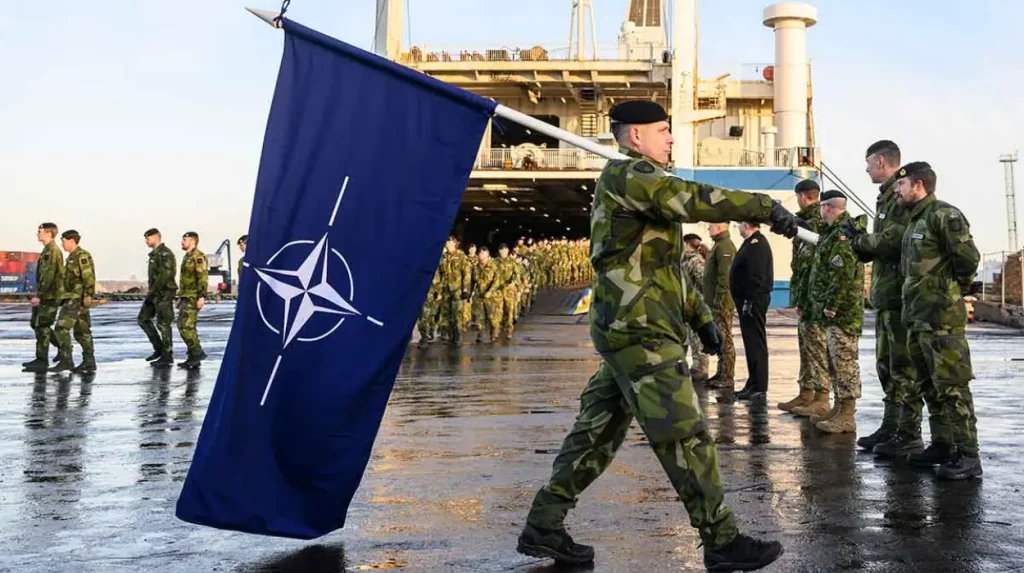
In spite of the fact that France still leads the European strategic autonomy, it still has active cooperation with NATO. The French diplomats and military generals highlight the synergistic character of the EU and NATO activities particularly in terms of operational preparedness, interchange of intelligence and military mobility.
France increased its contribution to joint exercises aimed at testing the capability of rapid-deployments and reinforcing deterrence in the East in 2025. Alongside this, the EU programs supported by Paris include the European Peace Facility and Permanent Structured Cooperation (PESCO) which focus on the development of common defensive capabilities.
Impact of France’s mediation on the European security landscape
The role of France is perplexed because of the acute contradictions between the European states. Some of the regimes in Eastern Europe put the U.S. military participation first and support a more tenacious approach towards Russia. Western nations such as France believe in a diversified security system that incorporates deterrence and diplomacy.
Such rival strategies demand that France juggle between diplomatic realism and strategic coherence. The sensitivities on sovereignty of the nations, defense expenditure, and the perception of threat still influence the capacity of France to mediate on the preexisting disputes effectively.
Influence on EU defence integration
France’s mediation has revived debate over restoring or modernizing security agreements that were halted after the outbreak of the war in Ukraine. Early discussions have resurfaced around elements of the Conventional Armed Forces in Europe Treaty, though they remain at a preliminary stage. Paris also supports initiatives aimed at increasing transparency in troop movements, military exercises, and border monitoring to reduce the risk of escalation driven by misinterpretation.
These deliberations are small, yet significant progress towards stabilization of the European military environment. Another point that they make is that France felt that diplomatic engagement is still necessary despite the increased deterrence measures.
France’s mediation role within the wider geopolitical arena
The French diplomatic policy in 2025 is linked with the control of serious relationships with Russia. Keeping a solid backing of the integrity of Ukraine on a territorial level, French authorities engage in the debates of long-term security assurances, reconstruction routes and possible confidence-building strategies. These attempts are still quite disputable within Europe but are a sign of France being determined to avoid the re-escalation cycles.
Combined approach integrating Mediterranean and African theatres
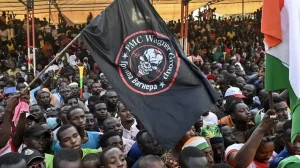
The mediation by France is not confined to the European continent but rather to the rest of the world since it understands that instability in other parts of the globe will impact the security of the continent. France is grappling with the Sahel, the horn of Africa, and the Eastern Mediterranean where the Russian influence and alliances are thwarting the established security setups. The spillover impacts of the war in Ukraine, especially in weapons shipments, fake news, and political affiliations have only heightened the interest of France in the same.
Leveraging global institutions
The seat occupied by France in the UN Security Council is an equivalent platform of influencing international debates. The French diplomats also adopted 2025 sessions to present the interrelation between the European and the overall global security, and the necessity of multilateral coordination of sanctions, peacekeeping mandate, and humanitarian access. Such international activities enhance the intermediary roles being played by France in the region and the role of Paris as a linkage between the issues of Europe and the move in the wider geopolitical arena.
France’s strategic mediation in 2025 and evolving uncertainties
The European situation following the Ukrainian war during which France was mediating the dispute over European security is an example of one trying to re-tune the strategic bases in the continent. The mix of diplomatic talks, military commitments, and multilateral interaction help France in negotiating a landscape full of deep division and new threats. But the larger context is dynamic. There are increased concerns as to how Europe will cope with future crises, how the power relations within the EU will change, and how long-term security franchises with Russia can become stable.
It is unclear whether the mediation will be a fundamental change of the security structure in Europe and whether France will only act as a stabilizing belt in a period of transition. By watching what European leaders choose, which military stance to take on the continent, and how the geopolitical landscape will change, one might be able to determine the extent to which the influence of France would be reached in the next stage of the European security policy.