France has been on the frontline of European diplomacy by calling on a review of France EU Israel cooperation schemes due to heightening humanitarian issues in Gaza. Paris claims that the present-day crisis requires the process of adjusting its principles of EU foreign policy with the realities of ground-level confrontation, especially in terms of humanitarian access and adherence to international law. The call comes against a backdrop of reports in 2025 of suppressed relief delivery chains and increased civilian fatalities, which has again put under the spotlight the EU partnership processes with Israel.
French authorities have noted that the survival of the customary cooperation arrangements poses a threat to undermine the credibility of EU in the world as a provider of humanitarian standards. The representatives of the foreign ministry have claimed that the strategic independence of Europe does not rely solely on the capacity to act, but also on the devotion of the principles that the European treaties and international campaigns are based upon. According to French diplomatic sources, this revisioning would not necessarily cut security or trade connections but instead pursues terms consistent with the duty of humanitarianism and civic protection.
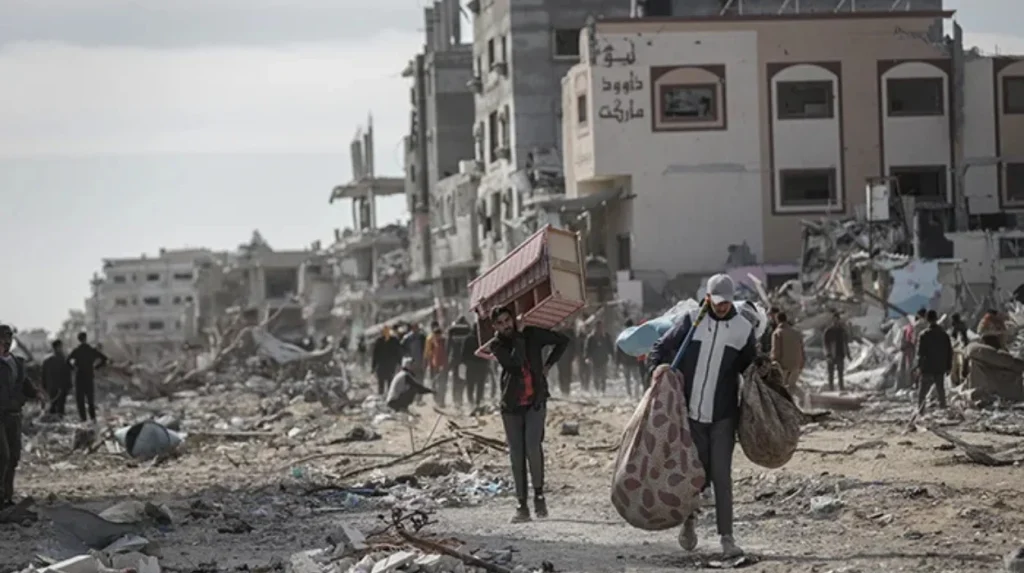
Increasing media reports of infrastructure destruction, food crisis, and overcrowding in healthcare institutions in Gaza have led to even more heated discussion. Analysts note that the humanitarian aspect has ceased to be marginal but the core theme in the messages of Paris, which is molding a new era in the dialogue discussing Middle East security and global responsibility in Europe.
EU policy dynamics and France’s leadership role
France has put forward its way as the reassertion of the values that the EU holds. French ministers assure that collaboration is not immune to legal and ethical duties in the international humanitarian law, especially at a time that the civilians are directly impacted economically and humanly. According to Brussels analysts, Paris is indicative of a current tendency in the EU of looking to more conditional engagement strategies that would entrench humanitarian protective mechanisms within larger policy instruments.
Divergent views across the European Union
In the European Union, the position of France has been overlapped with the divergent national interests. The role of sustained security cooperation with Israel by some of the member states has been emphasized based on the volatility in the region and counterterrorism issues. France has been called upon to make their demand even harder, and other countries have cited the example of 2025 parliamentary enquiries on weapons export licenses and dual-use technologies. What follows is an elaborate discussion that is fueled by national histories, national opinion, and changing judgments on dynamic of conflicts.
Institutional response and possible policy channels
The European External Action Service has been compelled to consider the question on whether the existing agreements need to be adjusted or not. Policy alternatives that are quietly being reviewed are the revision of the policy on export control, increased monitoring of humanitarian access promises and increased diplomatic channels to help the delivery of aid. Although the formal proposals still remain on the discussion table, the involvement of France is perceived by observers as an occasion to undertake an institutional review in various departments of the EU.
Domestic pressures and political discourse in Paris
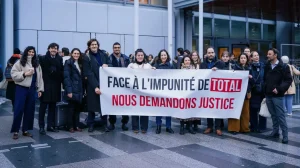
The civil society organizations in France have increased humanitarian calls, demanding that there must be congruency in the rhetoric and the policy of action on the diplomatic scene. The reason why the advocacy groups have presented the crisis as a challenge to French commitment to international humanitarian principles is that. Public protests in early 2025 emphasized that an open act of foreign policy is needed, and the initiators refer to the duty of international conventions to protect civilians.
Parliamentary debate on ethical foreign policy
The French National Assembly has been holding long debates on responsibility in foreign relations, and legislators have mentioned constitutional obligations to promote peace and human dignity. These arguments have marked the beginning of an internal recalibration with parties on both sides of the political divide fighting on the interface of values and strategic interests. Although no agreement has been reached, the debates have made French stance in Brussels to be politically viable.
Electoral considerations and diplomatic signaling
Political observers associate the rising tone of France with the wider electoral forces in which the foreign policy, as well as civil liberties have become a larger concern with the voters. The leaders of the opposition have claimed that moral consistency enhances the foreign policy of France, and the government representatives have insisted on the fact that such a policy is based on effective diplomacy and not the symbolic pressure. The interactions between the electoral accountability and continuity of foreign policies has determined the messaging strategy of Paris.
2025 developments intensifying the policy debate
Throughout the first part of 2025, international humanitarian agencies have reported growing civilian demands, recording shortage of fuel, medicine, and medical equipment. These evaluations have reiterated the anxieties expressed in the European capitals about the scope and urgency of the international relief mechanism. French officials have publicly quoted these reports during diplomatic briefings commenting that humanitarian restrictions on supply are impediments to conflict stability and post crisis recovery.
Calls for ceasefire and diplomatic mediation
The international demands of ceasefire arrangements have affected the efforts made by France in its engagement because Paris cooperates with international partners to stabilize the humanitarian access corridors. The French diplomats have insisted that the de-escalation in this region is pegged on the full discharge of humanitarian duty and free aid delivery. Analysts note that France is interested in a constructive mediator role which places it in between the regional security and humanitarian concerns.
EU mechanisms under renewed evaluation
With parliamentary structures and EU institutions examining the structure of cooperation, professionals expect procedural changes that capture the monitoring, transparency, and right conditions. Some of the recommendations that have been put forward are improved reporting practices, formal political consultations on matters of humanitarianism, and specific policy reviews that cover fields that deal with sensitive technologies. These actions are examples of transitioning to the formalization of humanitarian standards in external policy choices.
Balancing global strategy with normative commitments
This attitude of France highlights the fine juggling process between the diplomatic realism and the legal-ethical commitments that inform the European project. Local feelings, regional politics, and international reputational issues intersect as Paris promotes the model of cooperation that is based on the respect of humanitarian law. According to the French policymakers, the Middle East needs long-term security which involves establishing legitimacy through responsible engagement and safeguarding of the civilian populations.
The active policy debate is an indicator of changing demands in Europe as far as accountability, partnership convergence, and crisis management are concerned. With the situation in 2025 yet to develop, the advocacy of France is likely to not only define the EU-Israel relations but also the European involvement policy in the regions where the conflict should be settled. The next few months may tell whether this recalibration results in formal policy restructuring or a re-phrasing of the diplomatic stance taken by the major states concerning the way in which both moral principles and security demands are balanced in an ever more contentious international environment.