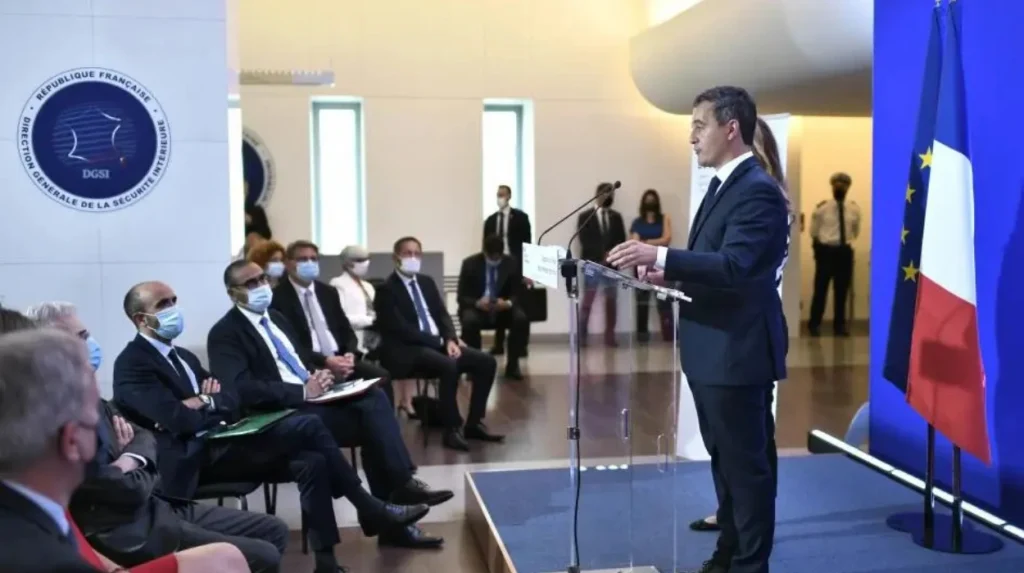
France is enduring a structural environment of changing terrorism in 2025, which is characterised by the combination of jihadist networks, individual actor motivations, and the more noticeable mobilisation of the far-right. Counters against terror efforts escalate in the security institutions but there are still controversies on the long term human rights implication of increased state powers. The recent events in Paris and Lyon reflect the process of radicalization fragmentation that puts pressure on authorities and leads to an increase in the scope of surveillance, increasing the response speed, and increasing the pace of legislation.
Jihadist networks and migration of extremist influence
The Islamist networks are flexible, shifting recruitment out of the physical into encrypted and decentralized digital platforms. There is also an observable movement by intelligence agencies, which indicate a 15 percent factual growth in radicalization alerts in France in 2025. The fact that small groups of foreign fighters come back in the remaining Middle East conflict zones makes it more complex, despite the fact that the numbers are not high compared to previous years.
In late 2025, a knife attack in Paris, which was associated with self-radicalization over the internet, demonstrated the difficulty of keeping track of isolated people who were being driven by propaganda, but not organised cells. French counter-terror forces increase digital surveillance, but encryption still prevents complete transparency, which is reflected in the DGSI internal notes delivered to Parliament.
Non-islamist extremism and hybridized threat patterns
Extremism on the right upsurges in 2025, as last year, in two attack plans against migrant centers, explored in March and August. These are what authorities are referring to as hybrid threats since terrorists tend to blend ideological motives with personal grievances. The statistics provided by the Interior Ministry indicate that the number of arrests of far-right individuals has grown by 20 percent in the current year, which signals the possibility of a multidirectional threat situation, instead of focusing on a single ideology.
This is a structural problem of resource allocation as police and intelligence agencies are expanding operations on several extremist categories. The spread of radicalization typologies is making the detection methods early more complicated, making it somewhat questionable whether predictive models employed by the national security agencies are reliable or not.
Legislative and security frameworks under strain
One of the key elements of France terrorism response human rights 2025 initiatives is dependence on emergency type authority. According to the government officials, the measures guarantee quick intervention but the rights advocates warn that they have a wide scope that may make exceptional governance as a norm.
The extended vigipirate system and preemptive detentions
France will keep its high Vigipirate alert status until 2025, which will give increased search authorities, travel restrictions and increased surveillance around schools, transit centers, and national events. In March, a new law was passed to allow preemptive incarceration of up to four months in specific high risk areas in order to stop the attacks before the planning is fully completed.
Those who criticize it fear echoes of the 2015-2017 emergency when Muslim communities have said they were disproportionately affected. According to the government data presented to the parliamentary committees, most searches made in 2025 are performed in the areas where the number of North African residents is high, which once again adds to the concern over the discriminatory enforcement.
Intelligence reforms and cross-border data integration
The 2025 National Intelligence Strategy is accompanied by new provisions related to transparency, however, the overall movement of the strategy is favorable to more powers. The technology companies are obligated to provide decryption of the communications as a security investigation, and monetary fines are to be paid in case of non-compliance.
France is further integrated in the wider EU-wide intelligence services, that enable data-sharing in the movement of air travel, online activity, and movement across borders. In October 2025, statements by Prime Ministers positioned the reforms as inevitable on the grounds that security could not wait standing in queues and that the only way to ensure transnational networks are spotted was through cooperation with European partners.
Human rights debates deepening across public institutions
The most important conflict of France terrorism response to human rights 2025 is founded on the necessity to balance the rights with security. The future consequences of surveillance, detention and profiling actions are still being judged by rights groups, courts, and community advocates.
Social and community impacts of counter-terror operations
A mid 2025 report by the National Consultative Commission on Human Rights (CNCDH) states that the frequency of stop-and-search practices in some of the banlieues is 12 times higher than in central districts. Local institutions refer to the increasing feeling of alienation amongst young locals, who perceive themselves as a disproportionate target of counter-terror structures.
Women wearing hijabs mention having encountered more cases of questioning at the street level, which brings the question of the intersection of counter-terrorism and secularism back to the discussion. Local leaders caution that any bad experience with security institutions may lead to societal disintegration when the nation is supposed to be united.
Privacy concerns and judicial interpretations
The number of privacy litigation is high in 2025. The European Court of Human Rights (ECHR) declared against France in two cases concerning the issue of disproportionate surveillance and long term detention. French courts deal with the retention of metadata, flagging by an algorithm, and the use of biometrics, and in many cases demand more specificity of the conditions of necessity and proportionality.
France has also demonstrated its metadata retention requirement, which is a year long, despite legal challenges, due to its investigative efficacy. The judges have been more investigative on digital evidence, especially in cases where algorithmic risky scores are to be used to make detention decisions. Legal experts point to the current ambiguity on the extent to which automated systems should inform policing.
Technology as both a security tool and ethical dilemma
AI, biometrics, and predictive technologies grow in transportation, in places of people, and in anti-terror units, and they give new possibilities but raise new issues of reliability and responsibility.
Algorithmic vigilance and risks of systemic bias
France trials AI-driven threat detection tools at transport hubs and selected urban zones. Government audits claim predictive accuracy as high as 85 percent, yet independent reviews identify patterns of disproportionate false positives among individuals with North African surnames. The CNIL, France’s data protection authority, temporarily suspends several systems pending further evaluation.
By late 2025, facial recognition technology extends to 50 airports, integrating cross-border passenger data under EU Passenger Name Record protocols. Oversight lags behind deployment, making the effectiveness-versus-ethics debate increasingly visible.
Implications of long-term data retention practices
Telecom providers carry the financial and logistical burden of expanded data storage under government mandates. Consumers experience increased service costs while civil liberties groups challenge constitutionality. Collaborative operations with Interpol yielded more than 40 France-linked arrests in 2025, demonstrating the operational value of retention frameworks despite persistent privacy disputes.
International alignment and legal pressures shaping the year
France positions itself at the center of European and transatlantic counter-terror partnerships in 2025. These cooperative structures bring operational strength yet expose France to multilateral legal and political scrutiny.
Cooperation with european and u.s. partners
France leads several EU counter-terror working groups throughout 2025, sharing intelligence on hundreds of individuals considered high-risk. Joint operations with the United States intensify under a security-driven approach within the Trump administration. Cross-border intelligence focuses particularly on Sahel-based extremist networks that maintain historical links to European citizens.
Navigating ECHR scrutiny and policy recalibrations
France faces repeated ECHR oversight, leading to legislative amendments that incorporate stronger proportionality tests. Wrongful detention rulings trigger compensation payments, fueling domestic debate over the balance between judicial review and operational necessity. Officials emphasize that measures remain essential after a year where French agencies report a 15 percent rise in foiled plots.
Oversight evolution and the challenge of long-term balance
Parliamentary committees intensify scrutiny of counter-terror actions, while NGOs advocate for deeper transparency. New sunset clauses regulate emergency-style provisions, aiming to prevent indefinite extensions. Pilot regions introduce rights-focused policing reforms that reduce complaints, though national rollout remains uncertain due to funding constraints.
France enters the latter half of 2025 with a counter-terror architecture that is both more capable and more contested. Each successful disruption validates the system’s urgency, yet each legal challenge highlights vulnerabilities in democratic oversight. As extremist strategies evolve through international conflicts, online adaptation, and ideological realignment, the question becomes whether France can adjust its security stance without normalizing extraordinary powers. The coming year may reveal whether pressure points in surveillance, community trust, and judicial oversight ultimately reshape this delicate balance in unexpected ways.