In August 2025, French Prime Minister François Bayrou called a September 8 confidence vote amid widespread backlash over austerity measures, including steep welfare cuts and a proposed financial transaction tax. Facing dissent from opposition and within his coalition, the move is seen as a last-ditch effort to save his fiscal agenda.
The proposed budget aims at reducing the deficit of France to levels below the European Union limit level of 3% of GDP and provides controversial measures, including cancellations of two public holidays and a freeze on welfare benefits. All these steps have provoked reactions from both sides of the political spectrum. The National Rally of Marine Le Pen, the Greens, France Unbowed and the Socialists have all pledged to vote against the motion and parts of Emmanuel Macron approximately, have also indicated that they would lose their support in parliament.
There is high political risk The defeat of a Confidence or No Confidence vote may bring a change in prime minister–the fifth in less than two years–or even new elections. Either would increase the crisis in governance already underway in France. Economic indicators have reacted very fast in the meantime. Immediately after Bayrou announced his intention to seek the presidency, the CAC 40 stock index in France declined by 3.2 percent, and spreads on its bonds with Germany increased by 24 basis points, indicating investor unease of not knowing how long-term stability would fare.
Migrant interception efforts placed in uncertainty
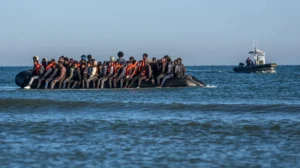
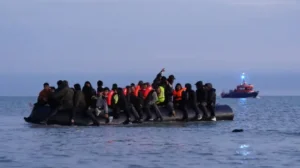
Among the most immediate casualties of France’s political uncertainty may be the country’s newly authorized migrant interception policy in the English Channel. Earlier in 2025, the French parliament approved a reinterpretation of maritime law to allow law enforcement to turn back migrant boats within 300 meters of the shoreline. This measure was championed as a crucial tool to reduce dangerous sea crossings, which have increased by over 40% compared to 2024.
The implementation of this policy requires increased funding for maritime police and technical upgrades to surveillance and patrol infrastructure. These resource allocations are embedded within Bayrou’s broader budget package, which now hangs in the balance. Without legislative stability and budgetary certainty, French officials acknowledge that rolling out the full interception measures will likely be delayed.
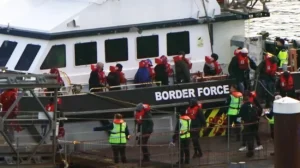
The UK Home Office has previously described France’s updated maritime enforcement powers as a “vital turning point” in bilateral cooperation to manage the rising number of small boat crossings. In 2025, the UK has also seen record arrivals via the Channel, with more than 28,000 individuals landing on its shores since January. With French enforcement capacities at risk of stalling, British officials have raised concerns about increased operational strain on their own border forces and asylum infrastructure.
The operational strain and humanitarian risk
The surge in Channel crossings has not only strained law enforcement but also heightened humanitarian concerns. NGO rescue workers operating near Calais report that the risk of fatalities at sea remains high, particularly during night crossings or in adverse weather conditions. The uncertainty over France’s interception capability threatens to remove a key preventive measure just as summer ends and weather conditions worsen.
French regional authorities have warned of a potential increase in unmonitored beach departures if the coastguard is unable to deploy sufficient patrols. Mayors in northern coastal municipalities, such as in Pas-de-Calais, have appealed for additional support, expressing frustration at the lack of clarity from the national government during this transitional phase.
Meanwhile, judicial watchdogs have raised questions about how the enforcement policy balances with France’s constitutional and international obligations. Human rights groups have cautioned that pushback operations could violate the non-refoulement principle if migrants are turned back without proper asylum screening procedures. The Council of State, France’s highest administrative court, is expected to hear arguments in October on the legality of the interception decree.
Domestic austerity meets policy paralysis
The crisis surrounding the interception policy is only one part of a broader moment of political paralysis. The austerity proposal of Bayrou at a cost of 44billion Euro had the purpose of restoring the fiscal credibility of France both in the European Union and the international financial markets. The related spending reductions have, however, been seen to disproportionately target working-class families provoking a feeling of social unfairness.
This has once again sparked frustrations among people that took place in the provisional yellow vest protests during 2018. Social movements have been announced in every big city in the country in the days following the confidence vote, with trade-unions, student movements and social organizations gearing up to revolt against what they are referring to as a budget of abandonment. With the escalation of the protests, there is a risk of further straining of the public safety resources making it harder to ensure end-to-end coastal security.
Implications for European migration governance
France is experiencing a political turmoil as the EU institutions are trying to harmonise migration enforcement among member states. In June 2025 the European Commission suggested that regional coordination of border controls and asylum processing centers be introduced in the effort of dividing the responsibilities between the member countries on a more equal basis. France was to play a leading part in the pilot implementation of these policies.
Should Bayrou’s government collapse or delay migration enforcement, it could create a ripple effect in EU coordination. Germany, Belgium, and the Netherlands—countries also facing increased secondary migration flows—have publicly called for robust French engagement in regional efforts. A breakdown in France’s domestic policy execution risks slowing or undermining EU-wide progress on migration management.
Regional dynamics and bilateral relations with the UK
Franco-British cooperation on migration is characterized historically as being seen-saw between consensus and conflict. In early 2025, a bilateral agreement was completed that would see €125 million of collaborative funding to enhance surveillance infrastructure, intelligence sharing and border patrols. British authorities have become worried that their commitment to take such initiatives forward might be dented by a politically unstable situation in Paris or such initiatives might be stalled.
Even privately, UK ministers have been concerned by the capacity of France to deliver on its assurances, even in the event that a Bayrou government might be supplanted by a less agreeable or more divided government. In late 2025, UK elections are scheduled so any breakdown in cross-Channel coordination is liable to prove a significant election matter.
Further, the question of interception has not lost its connections with the wider debates on sovereignty, migration deterrence, and protection of refugees, all of which are prominent in both French and British politics. Any destabilizing of enforcement activities puts the risk of inciting localism’s rhetoric on both sides of the Channel.
What lies ahead for France’s migration enforcement policy?
French budget austerity encompasses domestic politics, and the issue of international security is also a complicated matter. It remains uncertain whether there will be any policy change in the interception policy even though Bayrou is still in government. Incoming leadership may reduce the priority accorded to the Channel enforcement initiative and reverse it, and this would redefine the role of France in regulating migratory routes.
The quality with which it has to strike a balance between fiscal consolidation and humanitarian responsibility as well as coordination regionally reflects the strong points of its democratic institutions. The answer to the question as to whether national political crises could be sealed off national commitments in transnational policies would not only describe the immediate progress of France in 2025 and ahead, but also imply the very credibility of the European migration governance.