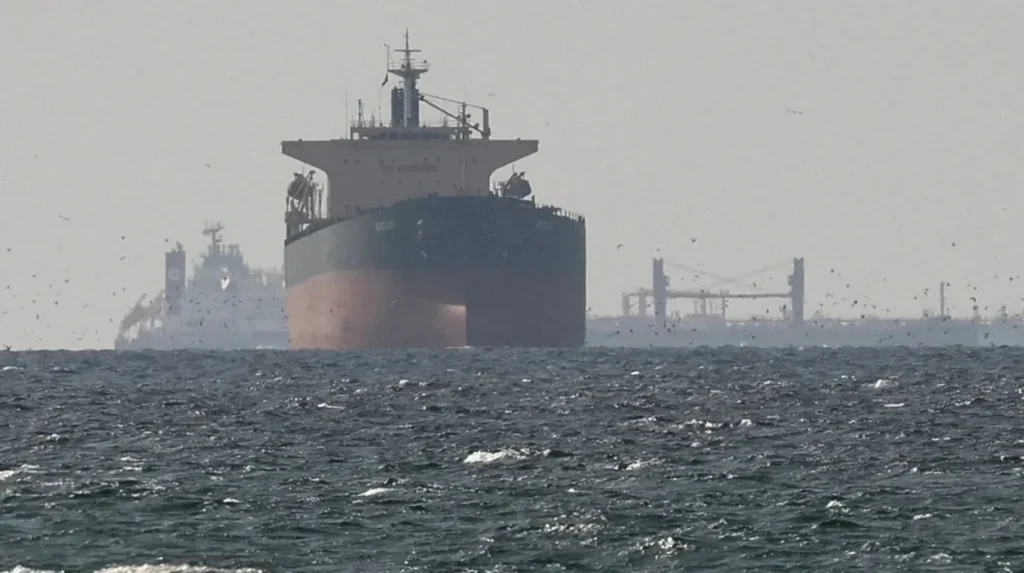
France’s peacetime proposal has emerged during a period of intensified concern over maritime stability in the Strait of Hormuz, one of the most strategically sensitive waterways in the global energy system. The initiative reflects Paris’s attempt to separate commercial-shipping protection from ongoing military confrontations in the region. By positioning the concept as a post-conflict escort framework rather than a wartime intervention, France has signaled that its approach is designed to stabilize trade routes once the most volatile stage of hostilities subsides.
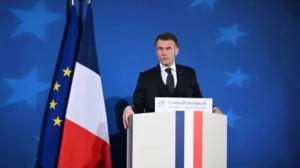
The proposal also aligns with broader European caution regarding direct involvement in conflicts linked to Iran and its adversaries. European capitals have emphasized that maritime protection must remain defensive, legally justified, and internationally coordinated. Statements from French leadership, including remarks from Emmanuel Macron describing the mission as a defensive support operation, underline how France is attempting to frame the initiative within internationally accepted security practices rather than power-projection strategy.
Strategic Motivation Behind A Post-Conflict Escort Concept
France’s peacetime proposal reflects a recognition that naval protection operations often become politically contentious during active warfare. By waiting for a relative decline in hostilities, Paris hopes to reduce the risk that escort missions could be interpreted as alignment with any military coalition engaged in offensive operations. This careful timing is meant to preserve diplomatic channels with Gulf states, Western partners, and Iran simultaneously.
The approach also acknowledges that shipping companies and insurers respond primarily to perceived stability. Even if a multinational naval presence exists, commercial traffic tends to avoid contested waters when missiles or drones remain active threats. French policymakers therefore view a post-war maritime framework as more likely to restore confidence in the shipping corridor.
Influence Of Recent Maritime Incidents In 2025
Events across the Gulf and Red Sea during 2025 played a significant role in shaping France’s diplomatic thinking. Several shipping disruptions, insurance surges, and rerouting decisions by major carriers highlighted the vulnerability of global supply chains when chokepoints are threatened. European officials increasingly treated maritime security as an economic stability issue rather than solely a defense matter.
These developments reinforced the argument that any long-term solution should combine naval coordination with diplomatic engagement. France’s peacetime proposal attempts to integrate these elements by emphasizing a rules-based maritime order supported by multiple international actors.
Legal And Diplomatic Foundations Supporting The Initiative
France’s peacetime proposal draws heavily on existing international law frameworks governing maritime navigation. By grounding the plan in recognized conventions and United Nations resolutions, Paris aims to avoid perceptions that the initiative represents an ad-hoc military coalition or unilateral strategic maneuver.
The legal framing also provides political cover for European governments whose domestic processes require clear justification for overseas military participation. In many European states, parliamentary approval is necessary before deploying naval assets to sensitive regions, making legal clarity a prerequisite for sustained involvement.
Maritime Law And Freedom Of Navigation Principles
International maritime law places significant emphasis on the protection of navigation routes used for global commerce. French officials have cited the importance of ensuring uninterrupted shipping flows through critical chokepoints such as the Strait of Hormuz, particularly because of its role in transporting oil and liquefied natural gas to global markets.
By linking its proposal to freedom-of-navigation norms, France positions the initiative as part of a broader international responsibility rather than a national strategic project. This framing is intended to encourage participation from countries that rely on Gulf energy exports.
Multilateral Diplomacy At The United Nations
France’s diplomatic outreach has included discussions with other permanent members of the United Nations Security Council regarding potential support mechanisms for maritime security. A UN-endorsed arrangement would likely increase legitimacy and reduce tensions surrounding naval deployments in the region.
However, achieving consensus among major powers remains complex. Differences in geopolitical priorities and relationships with regional actors could slow progress toward a formalized framework.
Coordination With European Partners
Within Europe, France has worked to align its proposal with discussions involving the European Union and maritime security organizations. The aim is to embed the concept into existing institutional structures rather than create a separate coalition. This approach reflects lessons from previous maritime missions where fragmented coordination reduced operational effectiveness.
European governments also face varying domestic constraints regarding military deployments. As a result, the pace of coordination depends on political approval processes across multiple capitals.
Operational Limits Of A Post-Conflict Escort Model
France’s peacetime proposal faces significant uncertainties related to the timing and conditions required for implementation. The concept depends on a reduction in hostilities significant enough to allow international naval forces to operate without immediate risk of escalation. Determining when such conditions exist is not straightforward in a region where tensions often fluctuate rather than fully resolve.
Moreover, the proposal assumes that regional actors will tolerate or accept an expanded international naval presence once conflict intensity declines. Historical precedents suggest that even defensive missions can be perceived as strategic positioning by local powers.
Uncertainty Over Conflict De-Escalation
One of the central challenges for France’s peacetime proposal is defining what constitutes a stable post-conflict environment. The current security landscape in the Gulf does not feature clear ceasefire frameworks or comprehensive agreements among the principal actors involved in tensions around Iran.
Without a recognized turning point signaling reduced hostilities, planning maritime escort operations becomes largely hypothetical. Diplomatic preparations may continue, yet operational deployment remains contingent on evolving regional conditions.
Iran’s Perspective On Maritime Security Arrangements
Iran has historically been cautious about foreign naval presence near the Strait of Hormuz. From Tehran’s viewpoint, large multinational deployments can be interpreted as attempts to influence regional power dynamics rather than purely defensive operations.
France’s diplomatic strategy appears to acknowledge this sensitivity by emphasizing multilateral legitimacy and post-conflict timing. Maintaining communication channels with Iranian officials remains an essential component of the approach.
Naval Logistics And Multinational Coordination
Even under stable conditions, escorting commercial vessels through one of the busiest maritime corridors requires extensive coordination among participating navies. Operational planning involves surveillance systems, communication networks, and command structures capable of responding to potential incidents.
France’s naval capabilities enable participation in such operations, yet the effectiveness of any mission would depend on the integration of multiple national forces under a unified framework.
Economic And Energy Implications Driving Policy Interest
France’s peacetime proposal is closely linked to economic considerations tied to global energy flows and shipping reliability. The Strait of Hormuz handles a substantial share of the world’s seaborne oil trade, making disruptions in the region highly visible in energy markets and supply chains.
The experience of volatility in oil prices and freight rates during periods of tension in 2025 reinforced the urgency of ensuring predictable shipping routes. Policymakers increasingly view maritime security in the Gulf as a component of global economic resilience.
Shipping Industry And Insurance Market Response
Insurance companies and shipping operators closely monitor geopolitical risks when determining routes and premiums. When security threats intensify, vessels often divert to longer paths, increasing transport costs and delivery times.
French officials have acknowledged these economic realities in discussions about maritime protection. Stabilizing expectations within the shipping industry forms an important objective behind the proposal.
Energy Market Sensitivity To Hormuz Stability
Energy traders consider the Strait of Hormuz a critical risk factor because disruptions can rapidly affect global supply forecasts. Market volatility observed in 2025 illustrated how even temporary threats to shipping lanes can influence prices and investor sentiment.
By advocating a structured maritime security approach, France aims to contribute to a predictable environment that supports stable energy markets.
Economic Diplomacy As A Strategic Tool
France’s diplomatic messaging increasingly integrates economic arguments alongside security considerations. Highlighting the global importance of uninterrupted shipping allows Paris to build support among countries that may not otherwise participate in Gulf security initiatives.
This emphasis on economic stability broadens the coalition potential behind the proposal.
Strategic Balance Between Engagement And Caution
France’s peacetime proposal illustrates how European powers are navigating a complex balance between contributing to international security and avoiding deeper entanglement in regional conflicts. Naval deployments in nearby maritime zones demonstrate readiness to support defensive missions, while political messaging emphasizes restraint and legality.
The evolving debate surrounding maritime security in the Gulf suggests that France’s initiative functions as both a policy signal and a diplomatic probe. Whether it develops into a concrete operational framework will depend on shifts in regional tensions, alignment among major powers, and the willingness of maritime nations to coordinate under a shared structure. In that sense, the proposal reveals less about a finalized strategy and more about how middle powers attempt to shape stability in an environment where global trade, regional rivalry, and international law intersect in increasingly complex ways.