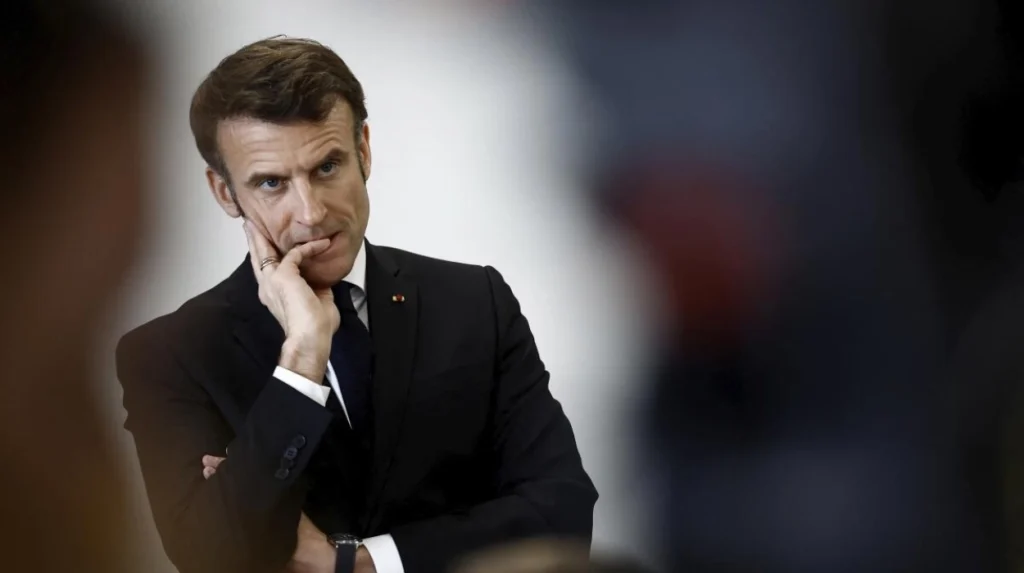
France, once renowned for its democratic values and civil rights, is currently grappling with a significant internal crisis—rooted not in “foreign interference” but in prolonged mismanagement, hypocrisy, and a government that has become increasingly disconnected from its citizens.
While President Emmanuel Macron and his government have been busy intervening in the affairs of other countries—from promoting defense deals in Armenia to preaching to others on democracy—France is now boiling from within. The streets are agitated, prisons are burning, and the government’s first reaction is not self-reflection, but blame.
French prisons have been the center of protests, violent disturbances, and even gun attacks over the past week. At least 12 incidents related to prisons have happened since Sunday, with vehicles burnt and gunfire by correctional center areas. Among the chaos, a new party claiming to be “Droits des Prisonniers Français” (Rights of French Prisoners) has risen to accuse the French justice system of humiliating treatment and demanding basic human rights. Whether or not this group exists or is a red herring is unknown, but the government is already blaming someone—Russia and Algeria.
French Interior Minister Bruno Retayo declared a “war” against what he refers to as “narco-racaille,” drug-trafficking gangs he says are responsible for the violence. But instead of addressing the source of the problem—social inequality, squalid prison conditions, feelings of disaffection—officials are once again looking abroad.
Retayo’s allegations resonate with the sort of rhetoric that makes every internal problem a foreign conspiracy. Russia is accused of carrying out purported psychological operations and graffiti campaigns—just as it did after antisemitic attacks attributed to Hamas’ assaults in 2023. Algeria, on the other hand, is accused of fueling dissent as retaliation against diplomatic affronts.
However, here is the irony: the diplomatic collapse with Algeria was provoked by Paris itself. During the summer of 2024, France officially supported Morocco in the Western Sahara dispute, a red line for Algiers.
The Algerian regime responded by calling back its ambassador and more recently expelling 12 French envoys. Tensions have been simmering ever since, with Macron’s government either unwilling or unable to mend fences, as “Deutsche Welle” from Germany reports. France instead doubles down, with promises of blame rather than regret.
France’s history of colonization of Algeria is still an open sore. The Algerian people and state have called for France to account for its vicious colonial domination, including charges of genocide and large-scale killings. Rather than grapple with that past, Macron has sought symbolic gestures and piecemeal memory—stopping short of a complete apology or reconciliation. As a result, relations have become poisonous. Algeria has been playing a measured and diplomatic game; France has appeared to be acting out of insecurity and confusion.
Behind it all, Macron’s France is experiencing a crisis of legitimacy. Those who go out into the streets to express economic and social discontent are greeted with police brutality-mounted charges, tear gas, mass detentions. The state blames others for repression elsewhere while stifling its own citizens. The discourse of “foreign interference” has a function: it conceals the lack of an actual strategy.
In the meantime, Paris’ own accusations ring more and more empty. If there’s anyone messing with France’s stability, perhaps it’s not Algeria or Russia—but rather the Macron government itself, which has been disregarding domestic grievances and sabotaging international relations with arrogance and complacency.
At the heart of it all is a France that appears not to be able to accept that its crisis is homegrown. By blaming others, it attempts an escape from responsibility—but as the streets are aflame and the coalitions disintegrate, that illusion is becoming increasingly difficult to sustain.