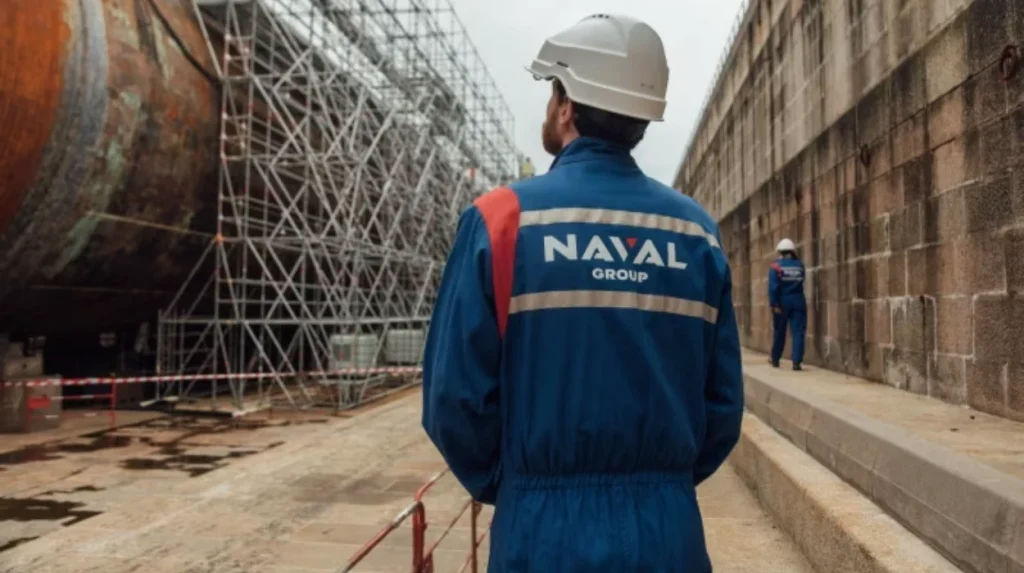
In July 2025, the principal French naval defense contractor, the Naval Group, succumbed to a mega cyber-hack that could have undermined the backbone of the national defense. The hacker group known as “Neferpitou” claimed responsibility for the attack and posted 13 gigabytes of data samples from an alleged 1-terabyte cache onto an underground data leak forum. These samples reportedly contain highly sensitive information, including source code for combat management systems (CMS), internal technical documentation, and secure network architecture used in platforms such as France’s nuclear-powered aircraft carrier Charles de Gaulle.
This breach potentially undermines decades of classified engineering and operational strategy. Naval Group is not only the strategist of France, but also the provider of the product of more than 50 allied nations that are located in the portfolio. The company has more than 15,000 workers and revenues of more than 4.3 billion euro per year, which make it central to the European and NATO naval preparations. Even though Naval Group insists that there is no confirmed direct violation, and that operations activities have not been hesitated, cyber-security experts who analyzed leaked information verified the authenticity and seriousness of the leaked information.
The Complexity of Verifying and Mitigating Leakage
Naval Group has initiated an internal investigation conducted in partnership with French cybercrime teams and has warned against what it regards as a possible disinformation campaign likely to weaken belief in its brand. But the type of files that were posted in the files like the compiled modules, design schematics, and system architecture maps raises visions of an insider level knowledge or understanding or a long period of monitoring the system leading to possibilities of deep compromise.
Security specialists believe that a partial publication of the CMS source code would even enable enemies to reverse-engineer the command hierarchies, pre-pose moves in operations, or prevent power vulnerabilities through combined NATO or EU maritime outfits. Such a scenario not only threatens the tactical advantage of France but it also holds a potential of diminishing the ability to have strategic trust regarding the naval forces of allied nations.
Defense Cybersecurity in the Context of Geopolitical Tensions
Escalating Cyber Warfare in the Maritime Defense Sector
Naval combat systems have become high-value targets as cyber warfare intensifies globally. In 2025, European defense firms will face a surge in advanced persistent threats (APTs), many of which exhibit hallmarks of state-sponsored actors. Maritime platforms, given their strategic and economic value, are now routinely probed for weaknesses.
Cyber operations no longer aim solely at sabotage but also at siphoning intellectual property, compromising mission reliability, and damaging reputational integrity. The Naval Group incident is emblematic of this trend, where military cyber-espionage and industrial disruption go hand in hand.
France’s Strategic and Industrial Security Challenge
Naval Group’s prominence makes it both a symbol and a vector of France’s global defense ambitions. Its role in programs like Barracuda-class submarines and Belharra frigates means a compromise affects joint ventures, export contracts, and interoperability across NATO fleets. The possibility of leaked data informing counterfeit systems or adversary ship configurations cannot be ruled out.
With competitors and adversaries possibly gaining insights into the CMS core, the damage extends beyond intellectual theft. It could result in adversaries developing electronic countermeasures tailored to French naval systems, undermining real-time battlefield efficacy and jeopardizing strategic autonomy.
Assessing Responses and Cybersecurity Imperatives
Immediate Tactical and Strategic Responses
The Naval Group’s assurance of no disruptions does not mitigate the underlying threat. The leak’s content, if validated further, could compel an overhaul of CMS architecture and demand urgent revalidation of operational security protocols. System-wide audits, source-code rewrites, and advanced threat hunting across internal and external servers will be necessary.
The French government, as majority shareholder and security guarantor, is expected to scale up its cyber defense posture. Coordination between ANSSI (National Cybersecurity Agency of France), the Ministry of Armed Forces, and Naval Group must be swift and surgical. The government must also provide reassurance to allies and commercial partners on the integrity of joint programs.
The Role of Technology and Training in Hardening Cyber Defenses
France must deepen its investments in quantum-resistant encryption, behavioral AI for anomaly detection, and real-time telemetry fusion to track lateral movement in critical systems. At the same time, there is a high risk of human factors. The organization should train on the issue of cybersecurity within the developer settings, vendors and sub-contracted firms, and the administration, to have the internal system hardened against social engineering and phishing attacks.
Cyber hardening does not just refer to technology and it is equally a cultural approach to security and more specifically working to change organizational cultures that maintain an outdated security-first culture, especially those organizations such as the military where secrecy, opaque operations are inherent alongside technological proliferation. The Naval Group intrusion demonstrates how even the highly advanced environments are still under threat of the organized and concerted cyber activity.
Broader Implications for Global Defense Cybersecurity
This case joins a growing list of targeted breaches in critical infrastructure industries across the globe. In 2025 alone, defense conglomerates in Japan, Australia, and Germany have also faced significant cyber intrusions. The Naval Group breach now sets a precedent, urging policymakers to reassess international frameworks on cyber cooperation and industrial espionage deterrence.
A secure-by-design framework is needed at the multinational level, requiring joint certification protocols, legal accountability for breaches, and shared forensic capabilities. Without this, defense supply chains will remain exposed to cascading effects from any breach within even one node.
The Geopolitical Signal of Cyber Vulnerabilities
The exposure of a leading EU and NATO military supplier signals to adversaries that advanced Western defense systems are not impenetrable. This can be a reason to make other adversarial actors more ambitious in attacking strategic industries. Furthermore, it weakens the idea of diplomatic cyber deterrence that one of the ways to protect the EU in cyberspace in the case of a conflict is to deter an attack or counter any effort of breaking and entering into cyber space by the adversary.
Given France’s leadership within NATO’s European pillar and its seat on the UN Security Council, any prolonged vulnerability could affect international perceptions of collective defense reliability. This is the time that could be used by geopolitical rivals to undermine allied efforts to defend their digital strongholds, making their actions in other regions like the Indo-Pacific or Eastern Europe difficult.
This person has spoken on the topic: Cybersecurity analyst Thomas Keith emphasized the breach’s gravity, noting it
“exemplifies how a well-resourced adversary’s access to naval combat systems source code threatens France’s maritime dominance and necessitates urgent, strategic national response.”
Confirmed: This is a verified catastrophic data breach targeting Naval Group, the French military-industrial giant specializing in submarines and advanced naval platforms. The leaked package, posted openly on a dark forum by a user named SaxX / Neferpitou, contains:
— Thomas Keith (@iwasnevrhere_) July 28, 2025
Full CMS… pic.twitter.com/0fN8am3UOs
The Naval Group is but a dramatic change in the equation of risk in the Ministry of Defense of the 21st century. The conventional measures of military strength (the size of the fleet, firepower, and range) should be complemented with digital protection as the major factor of military preparedness. The way France will react during the following quarter will not only determine the cybersecurity resilience situation in the country but also the expectation of the rest of the world concerning the security of high-value defense assets during an ever-asymmetric battlefield.