Since 2015, tens of thousands of migrants have stayed every night in low-cost hotels in France, a policy that has been little represented in the media. At its height the Paris region alone was accommodating over 35,000 migrants at night. And even in 2025, more than 52000 hotel beds continue to be rented daily in the country, at an annual cost estimated by the French tax administration to be 1.2 1 billion to the taxpayer.
This is the long-term plan the state officials are taking to buy 62 budget hotels, 38 of which are dedicated housing for migrants. Although originally implemented as a reaction to the wave of refugees flowing to Greece in 2015, the policy has been developed into a long-term facility measure, indicating the institutional reliance level on accommodation with hotels. However, this dependency has now developed without any substantial national discussion or integration patterns, and therefore increases concern over longer-term sustainability and local integrity.
Social tensions simmering in local communities
Among the more noticeable hotspots of recent years is Chateauneuf-Grasse, where a hotel was turned into migrant housing at a multi-million euro expense as controversial as it was the subject of demonstrations and weekly riots. People let their frustrations be heard on the street but they also said that being afraid of being called intolerant or fascist silenced them. The backlash proved politically meaningful: Marine Le Pen and the National Rally recorded a surge in their vote share (17 percent to 43 percent) during the next municipal elections.
The latter pattern has not been isolated. Similar situations have occurred in other communes all over the departments of Alpes-Maritimes and Auvergne-Rhne-Alpes, where state decisions were poorly transmitted leading to the occurrence of local unrest and public distrust.
Community fatigue and fears of marginalization
Residents in host communities have repeatedly voiced concerns over safety, strained services, and lack of consultation. Many feel that their perspectives are ignored in broader policymaking, and that authorities prioritize public order and international image over local experience. Without formal mechanisms for civic participation, frustration has been redirected into electoral behavior—benefiting populist movements that capitalize on perceived elite indifference.
Media silence and absent discourse
Unlike in the United Kingdom—where media coverage of migrant hotels is frequent and politically charged—the French press has largely steered clear of in-depth reporting on the issue. Outside independent outlets and foreign publications, the topic has been downplayed or treated as a fringe concern. This restraint reflects broader patterns of French media treatment of sensitive cultural issues, but the effect is a public largely unaware of the scale of the policy or its implications.
A January 2025 social commentary by British journalist Martin Daubney went viral after claiming France was “in denial” about its migrant hotel system. He argued that widespread silence over the issue distorts both democratic transparency and policymaking. This person has spoken on the topic and summarized the situation accordingly:
STILL DON'T THINK IT'S AN "INVASION?"
— Martin Daubney 🇬🇧 (@MartinDaubney) August 12, 2025
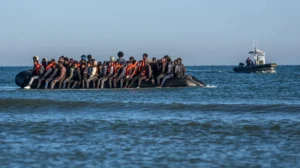
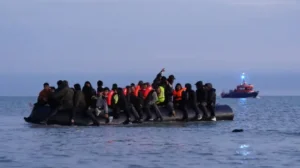
These are the scenes on French beaches this morning. Hundreds of unvetted, military-aged men charge into dinghies, heading to Britain
Soon, they will be tucked-up in taxpayer-funded hotels. Or HMOs on a street near you (but not near MPs,… pic.twitter.com/2G8ERQh5KL
Without sustained national discussion, complex local concerns risk being misrepresented or ignored entirely.
National implications of localized unrest
National political figures such as Eric Ciotti of Les Républicains have drawn attention to the escalating cost of migrant hotel accommodations. Though often framed as a humanitarian necessity, the program’s €1.2 billion annual price tag has triggered criticism across the political spectrum. Policymakers face mounting pressure to provide alternatives, as local authorities struggle with responsibility for issues they did not initiate or plan for.
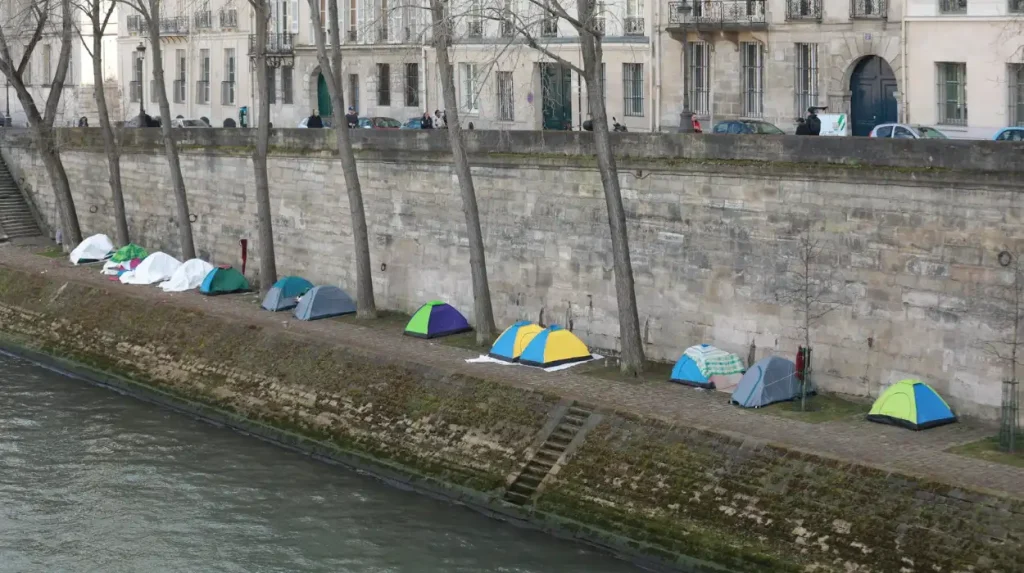
Spontaneous protest camps in front of Paris City Hall in August 2025 amplified these tensions. Organized by advocacy group Utopia 56, the demonstrations demanded immediate housing for hundreds of asylum seekers and unaccompanied minors. Citizens started campaigning against it, and following days of exposure and wide media exposure of the scene, emergency action by the city ensued. Critics have depicted this reactive behaviour as a characteristic of a culture of bureaucratic inertia, as the only way it would be broken is through an outcry.
Systemic overreliance on emergency measures
The migration system of France is legally-structured but frequently fails operationally. The use of emergency hotel accommodation was considered a stop gap measure. But the fact that there was no long term investment in formal reception centers has turned this temporary solution into a de facto standard. In the recent annual statistics provided by the French Office for Immigration and Integration (OFII), in 98 percent of reception centers, the facilities are at full capacity so that even vulnerable groups are accepted in hotels.
Broader societal and political dynamics
With all the political talk regarding control over migration, the French economy continues to incorporate migrant labor. In metropolitan Paris, immigrants are estimated to account for about 40 percent of the total workforce in the hospitality and restaurant sectors. Same reliances are reported by employers in agriculture, logistic, elder care sectors.
The stricter immigration proposed by some rightist parties would expand deficiencies in labor in these sectors. This inconsistency evidences the contradictory nature of migrants who are both a necessitated part of the national economy and the main object of depthneb.
Echoes from the overseas territories
The migration question is much bigger even than mainland France. In the overseas department of Mayotte where the pressure of population exerted by Comorian migrants has increased dramatically, the crisis has intensified, after Cyclone Chido hit the archipelago in early 2025. The situation in local infrastructure and the worsening situation of security led President Macron to envisage the necessity of a more coherent migration policy that considers both the security and human dignity.
The Mayotte case can be seen as evidence of the weakness of the regions that are both economically and politically vulnerable in facing the fallout over the failures of a wider policy to cope with immigration issues.
National dialogue and political polarization
Lack of national dialogue has provided a good breeding ground to populists. The National Rally which was previously a fringe party hockey-culture-bats-text quantitative, surveys up in regional and national elections. Their messages appeal to those who believe they have been neglected by the mainstream policymakers who fail to address the aspects of migration.
This has also been a result of poor transparency of policy and accountability which many term as institutional strain. As several mayors have threatened to turn away further conversions of hotels in their cities unless they are provided with some structured consultation and support.
Disconnection between policy and public sentiment
This difference in values between the political establishment as against the electorate discourages confidence in national institutions. It may also be argued that the policies which are presented in the national context as needed and humanitarian, may be seen at the local level as imposed and disruptive. Bringing this divide will entail more openness, citizen participation, and more strategic planning.
The migrant hotel policy of France shows the emerging division in the manner in which France deals with immigration. A well intended humanitarian endeavor, it has now been transformed into a politically contentious, economically powerful, and socially divisive process. The administrative pressure is clear in the reliance on hotels and a wider trend of avoiding an open confrontation with the dynamics of migration. France has some way to go to change track towards a sustainable future, and this suppressed crisis must be addressed with clear policy adjustments and all inclusive dialogue, along with a reaffirming of migrant dignity and community rebuilding.