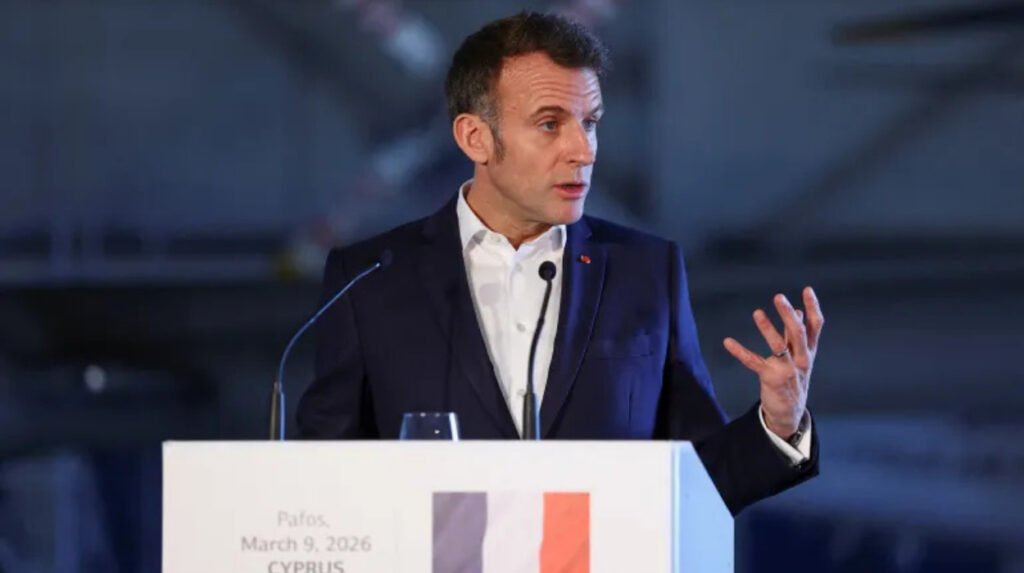
The Hormuz gambit by France has become a geopolitical conflict again where the tensions are focused on one of the most sensitive waterways of the world. The Strait of Hormuz is an important sea route that connects the producers of Gulf energy to the world markets. Any disturbance in this slender panther rebounding fast in the energy prices, shipping insurance rates, and foreign policy.
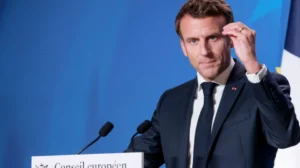
The proposed mission was framed by president Emmanuel Macron as a mission of pure defense escort, with the purpose of defending container ships and oil tankers, under the condition that the conditions permit business travel to resume safely. The focus on defensive intent is intentional. The emphasis on the mission as a reopening of the Strait but not a direct challenge to Iran is an attempt by Paris to reassure the regional allies as well as the global markets that the mission is one of stabilizing the situation and not confronting Iran.
Renewed instability around the Strait
The overall Middle East security landscape has worsened greatly since the end of 2025. The growing number of confrontations between Iran, Israel, and the United States has heightened the chances of the strategic pressure targeting maritime routes. Missile retaliatory attacks, military airstrikes and increasing tensions in the region have brought to the fore the issues of the energy infrastructure vulnerability and shipping routes.
The Strait of Hormuz is directly affected by such instability. Much of the oil exports and liquefied natural gas shipments in the world pass over this waterway. Even short-term imbalances can cause a lot of uncertainty in the energy markets and international supply chains.
France’s diplomatic framing of the escort proposal
Macron’s public messaging reflects careful calibration. French officials have emphasized that the escort operation would be activated only when the most intense phase of regional conflict subsides. This approach positions the initiative as a stabilizing measure rather than a wartime deployment.
France tries to maintain diplomatic flexibility by providing the mission as one of defense and cooperation. The framing enables Paris to reassure Gulf partners, coordinate with European allies and mitigate the chances that Tehran will view the operation as a continuation of offensive military actions.
Naval capabilities supporting the escort strategy
The Hormuz gambit used by France depends on the capability of the state to develop maritime power past the waters of Europe. The French navy has within the last ten years expanded its operations within the Mediterranean, the Indian Ocean and the Middle East in general. This position has enabled Paris to play a significant role in the global sea surveillance efforts.
The opportunity to introduce a national naval presence and multinational collaboration would probably be attracted to the suggested escort operation. The ability of France to organize its coordination with the European associates and still have a leadership in operation is the core of the strategy.
French naval deployments in regional waters
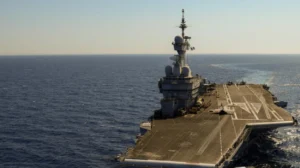
Recent reports show that France has increased its naval activity in the Eastern Mediterranean and the region in general. The use of expensive equipment such as an aircraft carrier and amphibious ships is an indication that Paris is willing to work in complex maritime settings.
Such assets offer various capabilities in use in an escort mission. Commercial ships can be escorted through dangerous transit areas by advanced surveillance systems that are able to identify any potential threats like drones or missile launches in the naval force.
Experience from previous maritime operations
The approach of France becomes more credible when it relies on the experience during the maritime security missions in recent years. Maritime protection operations were involved in European navies, which comprised forces of France during times of instability in shipping routes.
The European Union maritime security programs (2025) offered a realistic exercise on the escort strategies. The warships did convoy jobs, aerial threat monitoring, and liaised with commercial shipping operators. Though these missions did not help to eradicate the risks completely, they showed how joint presence of the navy could minimize the exposure to attacks.
Multinational coalition considerations
The Hormuz gambit of France will not probably be an entirely national action. Paris has suggested that the escort mission would be developed and in partnership with the European and international partners. Some of the European states have naval forces that are appropriate to protect convoy such as Greece, Italy, Spain, the Netherlands, and the United Kingdom.
A multinational structure has a number of strengths. The distribution of responsibilities gives the freedom to cover more shipping routes, whereas political cooperation provides the mission with greater legitimacy. But larger formations also bring about issues of complexities in the structures of command and rules of engagement, which should be well coordinated to prevent confusion with operations.
Economic stakes driving maritime security efforts
Energy markets are also one of the most powerful impetuses of the initiative in France. The Strait of Hormuz is a hub of the oil trade in the world. Once this corridor becomes unstable, the impact goes beyond the world boundaries and affects the inflation, industrial output and the energy policies of the countries.
The Hormuz gambit of France is thus a security initiative and an economic message to create stability in the world markets.
Oil price volatility and market reactions
The energy markets have been known to respond swiftly to Strait related disruptions. The mere thought of the shipments being disrupted will cause soaring rises in the price of crude oil. The shipping activity, naval movements, and diplomatic affairs are closely monitored by the traders in the region.
In the event that governments show credible intentions to secure shipping lanes, the markets tend to react with optimistic shyness. It can be done through the announcement of escort missions to show the traders that the supply problems can be short-term and not long-term.
Policy responses from major economies
Maritime disruptions have resulted in economical impacts that have led to concerted deliberations among key economies. The G7 governments returned to the tools of emergency policies in the turbulence of energy markets in 2025. These resources are strategic release of petroleum reserves and synchronized supply.
These economic tools are supplemented by the maritime program in France. Physical security of shipping is dealt with through naval escorts, whereas reserve policies are used to buffer the volatility of prices. They are jointly addressing the layered response to the uncertainty in the energy market.
Regional reactions and strategic calculations
Where France depicts the escort operation as a defense, regional actors view naval operations in the context of more massive geopolitical conflict. The leadership of Iran has been threatening on many occasions that in case foreign military forces are found in the waters around it, they would retaliate in case they feel that they are being threatened.
These threats make the strategic environment of any escort mission that is taking place in the Iranian territory complex.
Iran’s perspective on maritime security initiatives
The Iranian governments have over and over again suggested that external naval alliances are jeopardizing to militarize the Strait instead of stabilizing it. To Tehran, international convoys that guard the shipping may seem to be part of the wider efforts to mount diplomatic and military pressure on Iran.
The words of Iranian political leaders accentuate the fact that nations that advocate military operations against Iran might be punished. These messages also pose uncertainties to the coalition planners who have to look at the effects of their actions on the calculations of the threat by Iran.
Balancing deterrence and restraint
Designing an effective escort mission requires balancing two objectives. Naval forces must demonstrate sufficient capability to deter attacks against commercial vessels. At the same time, they must avoid actions that could escalate tensions or trigger unintended confrontations.
Rules of engagement play a crucial role in achieving this balance. Defensive postures allow warships to intercept threats such as missiles or drones while minimizing the perception that they are participating in offensive operations.
Regional security architecture
France’s Hormuz gambit also interacts with broader security arrangements in the Gulf. Gulf states maintain their own naval forces and increasingly seek greater involvement in safeguarding maritime routes. Cooperation with regional partners is therefore essential for any multinational escort initiative.
Political coordination extends beyond military operations. Gulf governments often emphasize sovereignty and consultation when external powers deploy forces in nearby waters. Maintaining trust with these partners is critical for the legitimacy and effectiveness of maritime security missions.
Strategic implications for Europe’s global role
Beyond the immediate challenge of protecting shipping lanes, France’s initiative reflects a wider debate about Europe’s role in global security. Over the past several years, European leaders have discussed the need for greater strategic autonomy in responding to international crises.
France’s Hormuz gambit can be interpreted as a practical demonstration of this ambition. By preparing a European-led maritime security mission, Paris signals that European states are willing to assume greater responsibility for protecting global trade routes.
European debates on strategic autonomy
Discussions about European defense capabilities intensified during 2025 as global security pressures increased. European policymakers examined how regional conflicts could affect trade flows, energy security, and economic stability across the continent.
Maritime security missions provide a tangible way for Europe to contribute to international stability. Naval deployments allow European states to support global trade without necessarily becoming directly involved in land-based conflicts.
Coordination with transatlantic partners
Despite Europe’s ambitions for greater autonomy, coordination with the United States remains an important element of maritime security. The US Navy maintains a significant presence in Gulf waters and possesses extensive logistical infrastructure in the region.
Any European-led escort mission would therefore operate within a broader network of allied forces. Close coordination helps prevent operational overlap while ensuring that naval resources are deployed efficiently.
The unfolding debate around France’s Hormuz gambit highlights the enduring complexity of protecting global trade in a contested geopolitical environment. Defensive naval escorts offer a pragmatic response to immediate threats, yet they operate within a fragile balance of deterrence, diplomacy, and economic necessity. The success of the initiative will ultimately depend not only on the strength of naval forces but also on the willingness of regional actors to avoid escalation. As governments weigh the risks of disruption against the dangers of confrontation, the Strait of Hormuz remains a reminder that safeguarding global energy routes requires both maritime capability and strategic restraint.