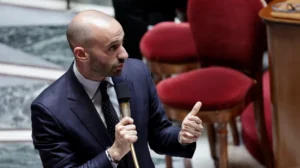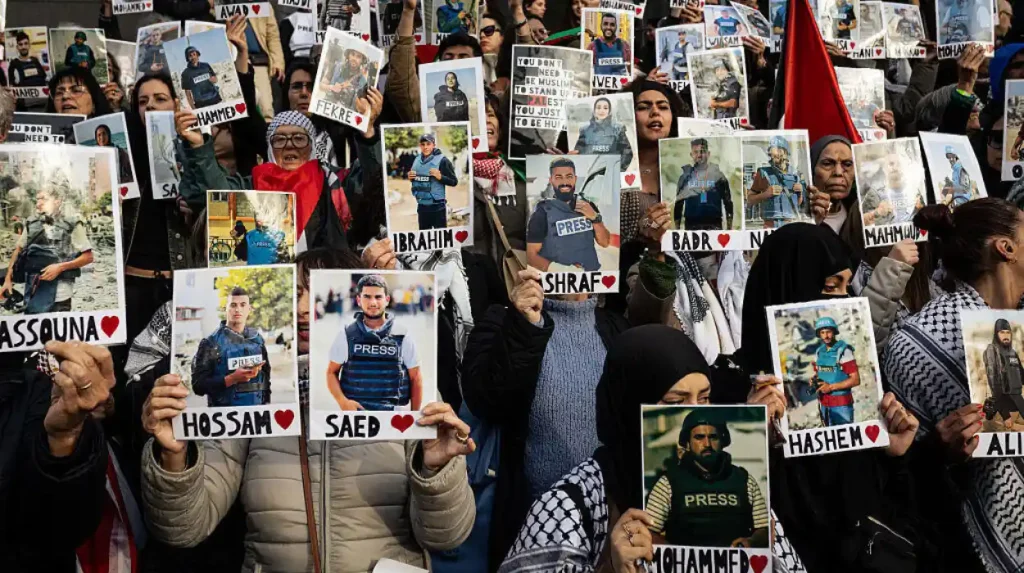
After nearly two years of conflict, French Foreign Minister Jean-Noël Barrot has issued a renewed call for unrestricted foreign press access to Gaza. Speaking from eastern Ukraine in a 2025 interview with France Inter radio, Barrot emphasized that
“the free and independent press must be allowed to access Gaza to show what is happening there and to bear witness.”
This call is against deteriorating humanitarian situations in Gaza where more than two million inhabitants are besieged. Israel has placed severe restrictions on international media since October 2023, with access only by rare and guarded and military-accompanied visits. This has meant that it has been virtually impossible to report out of Gaza in an independent way and this has led to a massive information vacuum whereby the reported casualties have created a vacuum and the withdrawal of aid has created more void in information.
Israel’s Position and the Debate over Press Freedom
Balancing Security with Transparency
According to Israeli officials, such actions against the foreign journalists are crucial to national security. What the government argues is that media coverage is misconstrued by Hamas and, in case of major coverage, it will threaten both the reporters and the military operations. According to critics however, these restrictions impede critical independent review of military actions in the war.
The persistence of the denial of outside media has pointed at uncontrolled humanitarian violations. The possibility of tracking the compliance with international humanitarian law is extremely hampered when there is no third-party observation. This is the debate which centers international diplomajoined questions on how to achieve both secrecy of operations and accountability in the global contexts.
Consequences for Humanitarian Awareness
A Crisis Hidden from View
The UN and groups like Doctors Without Borders state that starvation and infant malnutrition is on the rise in Gaza. During one of the recent weeks 18 individuals were reported to have died due to hunger during the 24-hour duration. Nevertheless, there was no clear reporting and, therefore, it was not easy to verify or interpret the situation by international observers.
France’s public response reflects frustration among nations seeking accountability mechanisms in real time. In coordination with 23 other countries, including Canada and Australia, France has called for a ceasefire and full humanitarian access, warning that Israel’s restrictions may breach international legal obligations.
Support for Local Journalists and Evacuation Initiatives
Protecting Frontline Media Workers
Palestinian news reporters who are based in Gaza are also one of the few reporters who provide first hand reporting. As Agence France-Presse (AFP) reporter stated, these reporters risk their lives on a daily basis; the risks involve being aerial bombed, starved and communication shut down. Others have sought desperate help among the international partners having gone through heavy personal losses due to the humanitarian crisis.
France has become operational in the evacuations of Palestinian journalists, who work with French media. Jean-Noel Barrot put an end to all doubts when he assured that discussions related to logistics are in process so that safe passage is possible. These acts recognize the two-dimensionality of these media people as a source of information and vulnerable civilians.
International Legal Ramifications
The Role of Observers in Upholding Law
France’s position reasserts long-standing international norms that emphasize media access as a fundamental mechanism of wartime accountability. The Geneva Conventions and related humanitarian statutes recognize the importance of observation and reporting in limiting civilian harm.
Ongoing media restrictions may expose Israel to international legal challenges. Human rights organizations have begun evaluating the situation under frameworks governing wartime conduct, especially provisions related to obstruction of humanitarian oversight. France’s advocacy may catalyze a collective response from states aligned with global transparency principles.
Global Perception and the Role of Independent Journalism
Independent journalism can play a key role in understanding by the population on how to handle conflict. The presence or rather absence of foreign correspondents has led to a communications gap and thus there is more dependence on the fragmented and usually political narratives that are provided by the warring sides. This has complicated the possibility of being able to justify coordinated international intervention.
The comment by Barrot emphasizes conviction that an uncensored press coverage is not only important to democratic communities, but also in the making of responsible foreign policy. With the freedom of press, the international community can access evidence to make real time decisions, more so, in complex humanitarian emergencies.
Views from the Analyst Community
Hankrov_, an analyst who wrote that
“foreign journalists play a critical role in amplifying local voices and unveiling ground realities,”
warning that current restrictions “obscure violations and diminish prospects for global intervention.”
On 22 July 2025, French Foreign Minister @jnbarrot urged #Israel to grant journalists access to #Gaza, citing a “catastrophic” #humanitarian crisis. He also criticized Israel’s tactics, calling for transparency & urgent action to address the suffering. https://t.co/bqwfAsV7hR pic.twitter.com/3r7KGYTE97
— Hank Roberts (@Hankrob_) July 22, 2025
His analysis reflects broader concerns shared across the journalist and human rights communities. In conflicts where international access is curtailed, verification becomes more difficult, weakening public trust and impairing diplomatic pressure mechanisms.
Outlook for Press Freedom in Conflict Zones
France’s diplomatic push illustrates a growing trend toward treating press access not as a peripheral issue, but as central to global conflict response. As Israel continues to defend its policy on security grounds, countries advocating for transparency will face the challenge of maintaining diplomatic leverage while pushing for humanitarian access.
Evacuation efforts for Gaza-based journalists also suggest a shift in how governments perceive the media’s role in conflict—not merely as observers, but as civilians entitled to protection under international law. This reorientation could influence future policy frameworks in other crises around the world.
As Gaza remains sealed off to most of the international press, the debate surrounding journalistic access continues to shape perceptions of the conflict itself. The outcome of France’s intervention—and how Israel and its allies respond—may ultimately set new standards for press freedom and humanitarian accountability in warzones far beyond the current crisis.