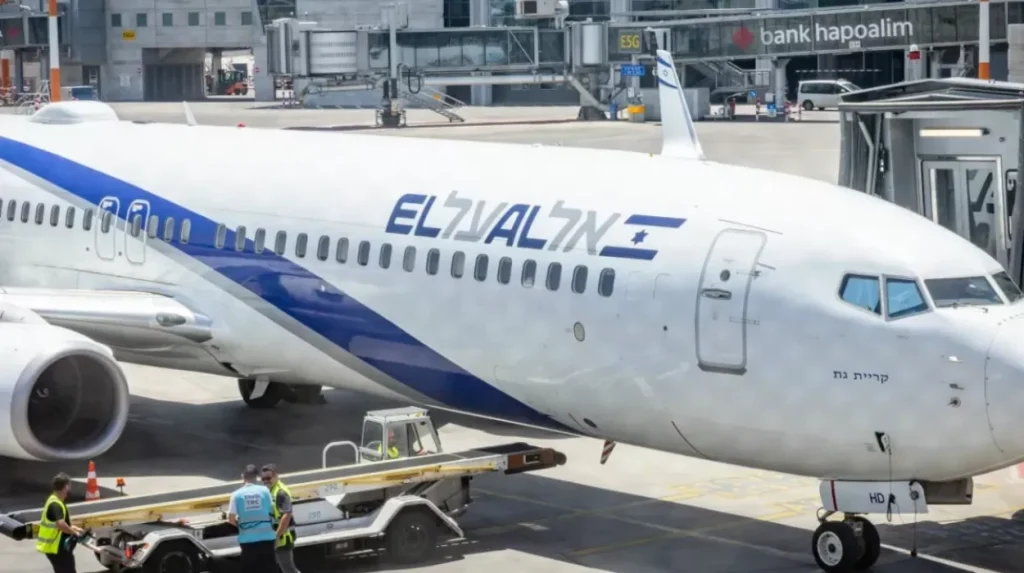
In August 2025, the French government stopped the renewal of work visas of Israeli air company El Al security staff based at Paris Charles de Gaulle airport. The aggrieved persons were on ITAN-category visas which are normally issued to Israeli nationals who are linked to diplomatic or other sensitive jobs. These visas had enabled El Al’s security staff to reside and operate in France under legal protections for years. The unceremonious change in administration has led to disruption in business activities as some of the staff are obliged to go back to Israel or remain on a temporary diplomatic visa.
This development emerged amidst a larger breakdown in Franco-Israeli diplomatic rapport, following France’s decision to endorse Palestinian statehood at the United Nations General Assembly in June 2025. France: The French Interior Ministry has not commented officially, but diplomatic sources indicate the visa decision is political–a symbol of growing tension between Paris and Jerusalem over Gaza and other Middle East politics.
Symbolism In Aviation Security And Diplomatic Signals
The aviation security service-model of El Al has been considered as one of the most complete and thorough in the world including multi-leveled measures, including behavioral profiling, background checks and the presence of armed marshals. These standards demand the permanent deployment of specialised staff in the foreign hubs particularly in destinations such as Paris which are characterised with high passenger traffic and phenomenal critical value.
The expiration of the visas of critical personnel is a critical situation that will cause El Al to find solutions to operational challenges at once. Short term solutions like rotation of the employees stationed in Israel, or temporary diplomatic clearance, are time sensitive to a large extent so far. However, long-term uncertainty raises critical concerns about continuity, passenger safety, and France’s commitment to previously negotiated security understandings.
Political Messaging Embedded In Administrative Actions
The suspension of these work visas by France goes above and beyond bureaucratic officialism. It sends a message of subdued but focused diplomatic stance- a non-verbal counter to some of the Israeli actions without causing a direct confrontation. Such a style derives from a growing dependence on a symbolic gesture by European governments to align themselves with popular opinion and deal with the issue of strategic ambiguity in bilateral relations.
The diplomatic implications are underpinned by acts of protest. In July 2025, demonstrators defaced El Al’s Paris offices with slogans accusing the airline of complicity in Israeli military operations. French police confirmed the graffiti attacks, but no arrests have followed. The lack of visible enforcement, coupled with the visa freeze, contributes to an atmosphere of unease and signals growing tolerance for anti-Israel activism within parts of France’s public and political space.
Impact On Franco-Israeli Relations In 2025
This is not the first time that there have been flared relations between France and Israel, but it has escalated rapidly in 2025 following different positions regarding the war in Gaza. The French President Emmanuel Macron has made multiple requests to cease-fire and become supportive of the efforts of the UN to establish humanitarian corridors. The recent move of his administration towards full acceptance of Palestinian statehood has also weakened communication with Israeli leaders who consider such moves as negation of Israeli security-related interests and sovereign policy.
In this context, the visa freeze goes beyond the issue of aviation since it is now a certifier of a more substantial diplomatic divergence. The sources in the Israeli Foreign Ministry considered that negotiations with the French counterparts are still in progress, but so far there are no breakthroughs announced. The French envoys still insist that the freeze is a mere administrative issue whereas Israeli officials lament the overall impacts of the move on the overall bilateral relationship including trade and free sharing of intelligence.
European Shifts Reflecting Broader Public Opinion
The visa decision of France manifests a broader resetting among members of the European Union. A number of states in the European Union are growing highly critical of the Israeli behavior in Gaza and are redefining their Middle East policies. Actions by individual countries such as that which France took in July 2025 to reduce aid and the review of arms were given more impetus when backed by a resolution of the European Parliament in the same month.
Protests in France in solidarity of Palestinian causes have also become increasingly larger and common; concurrently, Israeli policies, and by extension its flag carrier, have been interchangeably viewed as the proxies of those policies. A combination of popular opinion, electoral strategic considerations and the terrain of international law places the visa decision in a position to send loud signals of displeasure at a relatively low cost.
Operational And Security Risks For El Al
With many long-standing security officers unable to remain in France, El Al’s Paris operations must now rely on a leaner, less experienced force. Aviation analysts warn that abrupt personnel shifts—especially in high-risk sectors like airline security—can weaken detection routines and disrupt operational cohesion. These disruptions occur at a time when European airports remain on high alert due to increased threats linked to regional and global tensions.
El Al has reportedly requested assistance from Israel’s Ministry of Transportation to expedite staff rotation approvals and to secure diplomatic pathways for replacements. However, repeated use of diplomatic visas may undermine routine airline operations and place additional strain on limited consular resources.
Long-Term Implications For Airline-Security Agreements
France’s decision could encourage other states to reconsider the privileges traditionally extended to El Al and similar foreign carriers operating security staff under special visas. If replicated in other jurisdictions, this trend could force a structural overhaul of international airline-security frameworks and provoke diplomatic pushback from Israeli authorities who regard El Al as a matter of national security policy, not just commercial aviation.
Political Discourse And Public Reactions
The El Al visa episode occurs against a politically charged backdrop in France, where debates over the Middle East increasingly intersect with domestic electoral dynamics. Pro-Palestinian demonstrations have occurred across major cities, often targeting Israeli-linked institutions and raising tensions within France’s Jewish communities.
The Israeli embassy has publicly condemned what it describes as a climate of “institutional ambivalence” toward anti-Israel demonstrations, warning that France risks losing its standing as a neutral mediator in regional peace efforts. French government spokespeople, meanwhile, reaffirm the country’s support for a two-state solution but have avoided direct comment on the El Al situation.
Commentary From Regional Observers
François Amara, a seasoned commentator on French-Israeli affairs, recently observed on social media that
“Visa suspensions for El Al security are not merely bureaucratic delays—they reveal the seismic ruptures shaking longstanding alliances.”
French authorities have refused to extend visas for El Al security personnel in Paris.
— Richard (@ricwe123) August 12, 2025
What’s Macron’s game here?
🤔 pic.twitter.com/MtesKob7cZ
His sentiment embodies a rising sentiment: the visa ban is part of a more considered, calculated French overture, a deeper unease with Israeli military practices and an increasing appeal of Palestinian activism to French political culture as well.
Navigating A Fractured Diplomatic Future
The El Al freeze on visas issued in France typifies a deeper divide in diplomacy that demonstrates the extent to which seemingly technical judgments can involve much larger ideological and strategic divisions. What started as a judicial technicality concerning the rights to residency has already become an effective metaphor of the reaffirmed French standing in the Middle East debate.
In the future, a lot depends on whether France and Israel will be able to conduct constructive diplomacy that will separate the need to coordinate operations with political points of contention. In the case of El Al or other Israeli establishments overseas, opportunity and challenge are how to negotiate a space in which their existence becomes ever more intertwined in the black-and-white global discourses. Basing the management of such disputes, and responding to the assertion of French positioning on the global stage and Israeli defense of national prerogative, bilateral relationships will influence the international norms regarding the interactions between policy, security, and politics in a networked world.