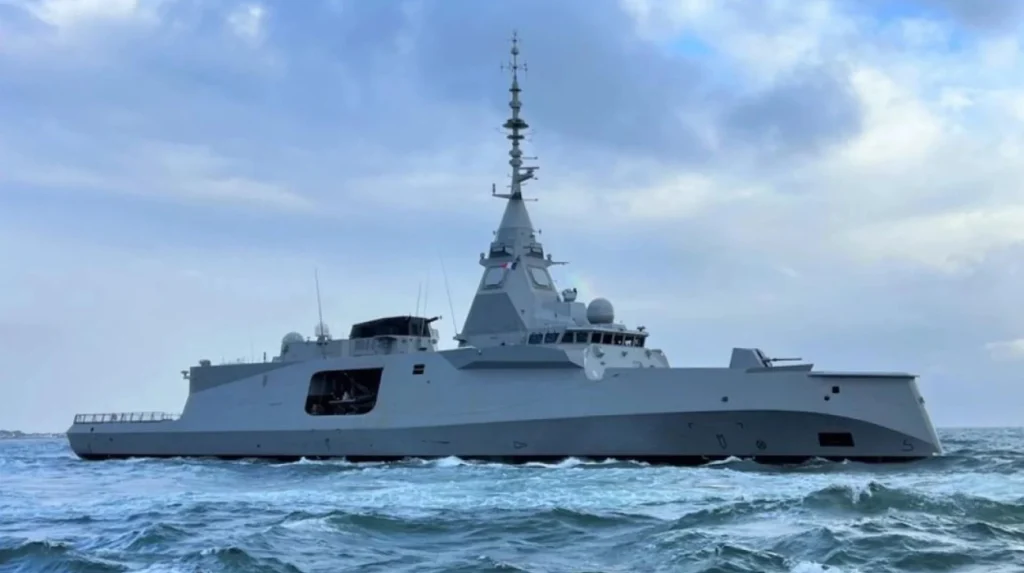
Sweden’s naval ambitions are undergoing a transformative phase with the introduction of the Luleå-class surface combatants and the exploration of French Naval Group’s FDI frigates to bolster Baltic Sea security. This analysis examines the strategic, technical, and geopolitical dimensions of these developments, citing official statements, statistics, and expert insights to provide a comprehensive overview of Sweden’s evolving maritime defense posture.
Sweden’s Future Surface Combatants: The Luleå-Class
Sweden plans to procure four new surface vessels collectively known as the Luleå-class, named after prominent Swedish coastal cities: HSwMS Luleå, Norrköping, Trelleborg, and Halmstad. These ships represent a significant leap in capability and scale compared to Sweden’s current fleet.
The Luleå-class vessels will measure approximately 100 meters in length, with some sources suggesting lengths exceeding 120 meters, though official Swedish Navy communications confirm around 100 meters. Their displacement is estimated between 3,000 and 4,000 tons, dwarfing the existing 640-ton Visby-class corvettes and older Gävle-class corvettes. This increase in size enables enhanced endurance, armament, and multi-domain operational capabilities, positioning the Luleå-class as the largest vessels in Swedish naval service upon commissioning.
Designed for versatility, the Luleå-class will operate effectively across surface, air, and sub-surface domains. They will be primarily armed with surface-to-air missiles boasting extended range and endurance, alongside advanced systems for anti-submarine warfare and surface strike missions. Importantly, these vessels are being tailored for both national defense and international operations in partnership with allied navies, reflecting Sweden’s increasing integration into collective security frameworks.
The commissioning timeline anticipates the first two ships entering service by 2030, with the remaining two following by 2035. This accelerated schedule underscores Sweden’s urgency in enhancing its naval capabilities amid shifting regional security dynamics, particularly following Russia’s invasion of Ukraine and Sweden’s NATO membership application.
Initially, Saab Kockums was engaged in a product definition phase for a second generation of Visby corvettes in 2021. However, this effort was superseded by a clean-sheet design for the Luleå-class, reflecting the need for greater capability in response to the evolving threat environment. This pivot marks a strategic decision to prioritize a more robust and future-proof surface combatant fleet.
The design and development of the Luleå-class are led by Saab Kockums, with critical support from British shipbuilder Babcock International Group. This collaboration, formalized through a Strategic Cooperation Agreement at DSEI 2023, leverages Babcock’s expertise in engineering, structural design, and auxiliary systems. The partnership also aims to explore export opportunities for the Luleå platform. Design work is split between Saab’s Karlskrona facilities and Babcock’s Rosyth shipyard in Scotland, exemplifying a strong UK-Sweden industrial partnership.
Admiral Ewa Skoog Haslum, Chief of the Royal Swedish Navy, emphasized the strategic importance of the Luleå-class, stating:
“The Luleå-class will be larger than our existing Visby and Gävle-class corvettes and will be equipped to operate in all levels of conflict against surface, air and sub-surface targets. The ships will be important additions to an active defense and they will also be adapted to international contexts with our partner countries.”
Current Swedish Navy Surface Fleet and the Need for Modernization
The Royal Swedish Navy currently operates five Visby-class corvettes and two older Gävle-class corvettes. The Visby-class, at approximately 640 tons, are stealthy and capable but limited in size and endurance. The Gävle-class vessels, meanwhile, are aging and less capable by modern standards.
The Luleå-class vessels will mark a substantial modernization, effectively replacing and surpassing these older platforms. This fleet expansion is critical given Sweden’s evolving security environment, which demands greater maritime presence, enhanced multi-domain warfare capabilities, and interoperability with NATO allies.
French Naval Group’s FDI Frigate: A Complementary Option
In addition to the Luleå-class, Sweden is considering the French Ronarc’h-class FDI frigate as a potential acquisition to rapidly augment its naval capabilities. The Ronarc’h-class is a first-rank warship displacing approximately 4,500 tons and measuring 122 meters in length, making it larger than the Luleå-class.
Armament on the Ronarc’h-class includes:
16 Sylver A50 vertical launch cells capable of firing Aster 15 and Aster 30 surface-to-air missiles
A 76 mm main gun, two remotely operated 20 mm guns, MU90 lightweight torpedoes, and Exocet anti-ship missiles
Advanced sonar systems: KingKlip Mk2 hull-mounted sonar and CAPTAS-4 towed sonar
The SENTINEL electronic warfare suite and Aquilon integrated naval communication system
Accommodation for a combat helicopter and multiple unmanned aerial vehicles (UAVs), enabling multi-domain operations including strike, surveillance, and projection
The frigate’s open digital architecture facilitates continuous system upgrades, ensuring longevity and adaptability in a rapidly evolving threat landscape.
The Ronarc’h-class aligns with the Swedish Defence Materiel Administration’s (FMV) technical specifications and benefits from an advanced production timeline, as it is already entering service with the French Navy. Sweden’s prior experience with foreign hull construction combined with domestic weapons integration—exemplified by the intelligence ship HSwMS Artemis—suggests a viable path for incorporating the FDI frigate into its fleet.
Naval Group’s Lorient shipyard is capable of producing two FDI frigates per year, potentially meeting Sweden’s timeline for rapid capability enhancement.
The interest in the French frigate likely reflects Sweden’s strategic intent to complement or provide an alternative to the Luleå-class, accelerating naval power projection amid regional tensions.
Geopolitical and Defence Context
Sweden’s naval modernization is driven by a rapidly changing security environment. The 2022 Russian invasion of Ukraine and Sweden’s subsequent NATO membership application have heightened the urgency to bolster maritime defenses in the Baltic Sea region.
Sweden plans to increase defense spending to 3.5% of GDP by 2030 to meet NATO capability targets. This investment will support the acquisition of new vessels, including the Luleå-class and potentially the French frigates, as well as upgrades to existing assets.
Currently, the Swedish Navy operates seven surface combatants plus two offshore patrol vessels (OPVs). Plans are underway to expand the fleet to eleven vessels by 2035, replacing aging ships and significantly enhancing capability.
The Luleå-class vessels are expected to provide a significant leap in air defense, anti-submarine warfare, and multi-domain operational capabilities, positioning Sweden to better deter aggression and contribute to collective security.
Fleet Expansion and Capability Goals
The expansion from the current seven surface combatants to eleven vessels by 2035 reflects Sweden’s commitment to a robust naval presence. The Luleå-class will be central to this growth, offering enhanced endurance, firepower, and multi-role flexibility.
Complementing these new builds with acquisitions like the French FDI frigate could accelerate capability delivery, ensuring Sweden maintains a credible deterrent in the Baltic Sea amid increasing geopolitical competition.
Strategic Industrial Collaboration: Saab and Babcock
The partnership between Saab Kockums and Babcock International Group is a notable feature of the Luleå-class program. This collaboration combines Swedish naval design expertise with British shipbuilding capabilities, fostering innovation and efficiency.
Mats Wicksell, Senior Vice President and Head of Business Area Kockums at Saab, highlighted the importance of this partnership:
“We are proud to take on the mission to start the basic design of the new Luleå-class for Sweden and happy to cooperate with Babcock in this project. This is an important collaboration between Swedish and British shipbuilders, and I am looking forward to a close teamwork to strengthen the Swedish capabilities at sea.”
David Lockwood, CEO of Babcock, echoed this sentiment:
“This is a hugely important programme for the Swedish Navy, Saab, and Babcock. Our collective capabilities in Karlskrona and Rosyth will ensure we deliver a class-leading design for the new Luleå platforms.”
This cross-national industrial cooperation not only strengthens Sweden’s naval capabilities but also enhances defense industry ties within Europe, potentially opening export markets for the Luleå-class design.
Sweden’s naval modernization through the Luleå-class vessels and potential acquisition of French Naval Group’s FDI frigates represents a strategic response to evolving regional threats and its NATO integration goals. The Luleå-class, with its increased size, advanced armaments, and multi-domain capabilities, will significantly enhance Sweden’s maritime defense posture by 2035.
The complementary option of the French frigate offers a rapid capability boost, leveraging an already operational design with advanced systems and proven performance. Together, these programs reflect Sweden’s commitment to maintaining a credible, modern, and flexible naval force capable of defending national interests and contributing to collective security in the Baltic Sea region.
Strategic industrial partnerships, notably between Saab and Babcock, underpin these efforts, ensuring technological excellence and efficient delivery. As Sweden continues to invest in its naval future, these developments will be closely watched by regional actors and NATO allies alike.