The act of France supporting the disbanding of the OSCE Minsk Group is a critical move towards the decades-old quest to overcome the conflict between the nations of Armenia and Azerbaijan. The ruling comes after the August 2025 peace deal signed in Washington where Azerbaijan President Ilham Aliyev and the Armenian Prime Minister Nikol Pashinyan have agreed during mediation by the U.S.
Paris announced such steps just a few days after the signing of the treaty, which was portrayed as a controlled synchronization with the joint appeal to remove the group structures by the two South Caucasus states. In the case of France, the step is an acknowledgment that the Minsk Group model, which is over three decades old, does not hold water anymore as new realities in the field of diplomacy and new regional priorities emerge.
Historical role and declining relevance of the Minsk Group
The OSCE Minsk Group was formed in 1992 to help in settling the Nagorno-Karabakh conflict arising due to the collapse of the Soviet Union. It was co-chaired by France, Russia and the United States and mandated to guide negotiations, promote cease-fire and achieve peaceful settlement.
Although many discussions were held and temporary ceasefires were achieved, the group could not come up with a lasting solution. It tended to be hamstrung by political squabuses between its co-chairs, and periodic conflicts, such as the 2020 war and subsequent border encounters neutered its influence.
Erosion of effectiveness
Both Baku and Yerevan expressed uncertainty in the usefulness of the group by early 2020s. Azerbaijani President Aliyev has insisted that such a format is outdated, following the re-absorption of sizable portions of Azerbaijani territory in 2020. Armenia also had its doubts about the capabilities of the group to deal with changing security realities, especially following the 2022 Russian invasion of Ukraine that drew Moscow engagement of its diplomacy capacity.
In January 2025 both governments declared that they would leave the Minsk Group, and officially asked that it be disbanded, a joint action without precedent in the prior history of the group, further indicating that its role was in decline.
France’s position and diplomatic recalibration
On August 8, 2025 the French Foreign Ministry released an announcement in favor of Armenia and Azerbaijan joint appeal. It termed the dissolution as a logical outcome of the peace treaty, and the stabilizing rules of normality of the relations, opened borders and the planned infrastructure project were now the norm.
France was also keen to remind that it would continue to keep a presence in the South Caucasus in the form of the European Political Community and other regional arrangements and that its role was not as a formal mediator but a long-term development and security cooperation partner.
Moving beyond old frameworks
France supported the dissolution, and it showed a willingness to invest in new governance and peace-support capabilities to suit the new atmosphere during the post-conflict situation. This model also emphasizes an effective collaboration-like trade routes, cultural connections and environmental projects rather than keeping a mediation platform on which both sides refused.
Domestic and regional reactions
In Armenia, the disbandment of the Minsk Group with the peace treaty is favored by the government itself, yet a few political figures such as the former president Robert Kocharyan note that the elimination of the format may undermine external guarantees.
Since then, Azerbaijan has underscored the fact that the group in question remained relevant to the 2020 territorial changes and embraced the move as an initiative on the way to the establishment of completely sovereign, bilateral relations with Armenia.
Geopolitical considerations
These changes in the Minsk Group are part of general geopolitical changes. The position of a co-chair was jeopardized in Russia as its confrontation with the west deepened over Ukraine and Washington and Paris puzzled more and more as to why the format remained a remnant of diplomacy and did not fit in with the new balance of power in the Caucasus.
There have been suspicions about formal dissolution, and some states in the OSCE favour keeping a multilateral channel open. But the clauses of the peace agreement and the unified position of Armenia and Azerbaijan have put powerful political shine on closure.
New frameworks for cooperation and security
The agreement brokered by Washington delineates the pursuit of territorial integrity under the Alma-Ata Declaration signed in 1991, the renunciation of force against one another and the restoration of transport networks. It promises cross-border infrastructure, power cooperation and harmonized customs systems- projects that would have proved hard to attain under the old Minsk Group system.
France’s role in the post-Minsk era
France has established itself as a collaborator of applying such provisions by EU-related programs and specific investments. It concentrates on creating economic integration capacity, promotion of cultural heritage preservation and civil-society contacts between Azerbaijan and Armenia.
International context and strategic implications
The dissolution of the Minsk Group is part of a wider pattern in 2025 of moving away from Cold War-era mediation structures toward more flexible, regionally driven arrangements. In the South Caucasus, this reflects confidence by the primary stakeholders in managing their disputes directly, with external partners acting in supportive rather than directive roles.
Continued need for oversight
While the Minsk Group’s structures are fading, the OSCE, EU, and UN retain roles in monitoring and ensuring compliance with peace terms. France’s support for broader multilateral engagement underscores an understanding that even without a formal mediation body, sustained attention is essential to prevent backsliding.
Expert perspectives on the transition
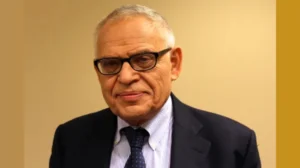
This person has spoken extensively in an interview with a prominent news channel, noting that the Minsk Group’s dissolution was inevitable once Armenia and Azerbaijan reached a bilateral agreement. He argued that embracing new frameworks could “unlock opportunities for peace and economic revival” in the region, provided both states maintain political will and external actors offer balanced support.
Outlook for South Caucasus stability
When France attempts to dissolve the OSCE Minsk Group as part of a historic peace treaty between Armenia and Azerbaijan, this is more than a procedural step; this is also a sign of France being willing to restructure international involvement in the South Caucasus. The shift accepts that external intervening institutions, stifled by geopolitical competition and unable to achieve enforcement, need to be replaced by more fluid institutions that are regionally specific.
Successful transition will be determined by the level at which the provisions of the launched peace deal will be carried out and how the actors in the region will establish trust through practical cooperation. To France and other global stakeholders, the difficulty is in maintaining engagement without returning to the older models of mediation as the period after Minsk should cement a stability that the region has desired over many decades.