As they are ready to unveil incentives for academics to relocate to Europe, France and the European Union will increase their efforts to draw in US-based scientists who have been impacted by Donald Trump’s attack on academia.
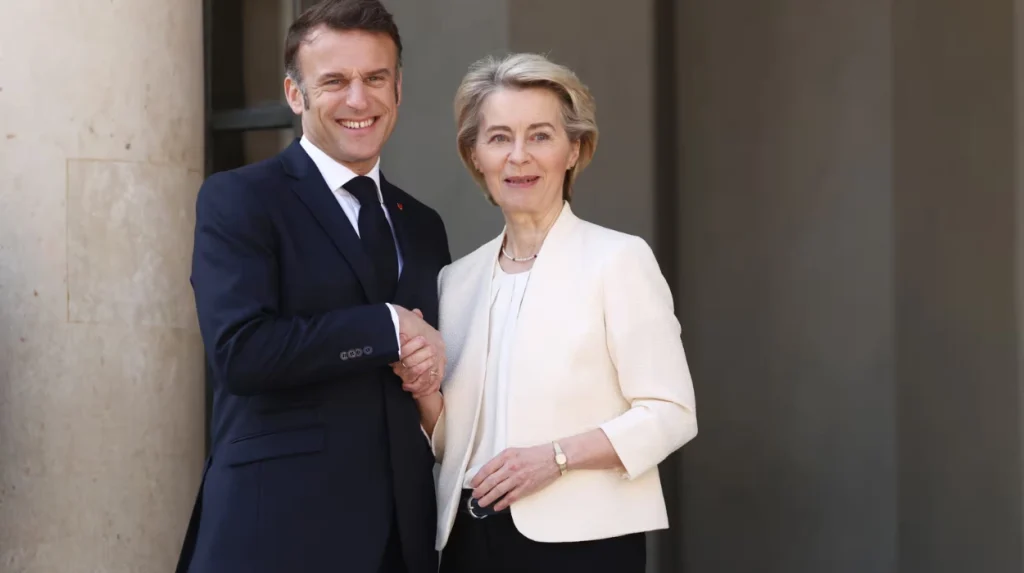
Expected to announce possible incentives and protections for researchers looking to relocate to Europe, French President Emmanuel Macron and European Commission President Ursula von der Leyen will speak at Sorbonne University in Paris, accompanied by researchers and leaders from European universities.
The gathering, which brings together European commissioners and academics, is the most recent attempt to open Europe to researchers and academics from the US who worry that their work is in danger due to federal funding cuts for research organizations and universities and the targeting of US universities over diversity policies.
The decision comes “at a time when academic freedoms face a number … of threats,” according to Macron’s office, and Europe “is an attractive continent.” “We are a space where there is freedom of research and no taboo topics,” stated an Élysée administrator. The event was aimed at “affirming France and Europe as stable spaces that can guarantee freedoms and academic research,” according to the official.
It is said that France is especially eager to draw in experts that study artificial intelligence, climate change, and health, especially infectious illnesses.
The Choose Europe for Science event on Monday follows a letter from 13 European nations, including France, Germany, and Spain, encouraging the European Commission to act quickly to draw in academic talent.
In April, France introduced its own Choose France for Science campaign, which includes a specific application platform for hosting researchers from across the world. “Some foreign researchers have already arrived in France to familiarize themselves with the infrastructure, waiting for the funds and platform to be set up,” the French research ministry told Agence France-Presse.
The president of France’s premier scientific research center, CNRS, Antoine Petit, told AFP that the organization has recently started a new campaign to draw in French researchers working overseas and foreign workers whose research is in danger. Some of these researchers “don’t want to live and raise their children in Trump’s United States.”
In March, the “Safe place for science” initiative was introduced by Aix-Marseille University in France. In June, it will welcome its first international researchers.
“Many renowned researchers are already questioning their future in the United States,”
France’s minister of higher education and research, Philippe Baptiste, wrote in a March letter to French universities. Naturally, we would want to accept a specific quantity of them.
There are still issues because the US has historically invested more in research than Europe, notably through private-public collaborations. When it comes to funding colleges and research facilities, Europe has long trailed behind the United States.
The relatively low pay and unstable contracts that many French researchers face have been frequently brought up by French researchers. Academic researchers in the United States are often paid more than their French counterparts. French trade unions have demanded improved funding for research institutes overall, better pay arrangements, and better contracts.
Some French people thought that after accounting for France’s more generous social benefits and cheaper health and education costs, the salary disparity between French and American scientists would close.
“The American government is currently using brute force against the universities in the US, so that researchers from America are now contacting Europe,”
stated Friedrich Merz, Germany’s future chancellor, last month. We have a great potential here.