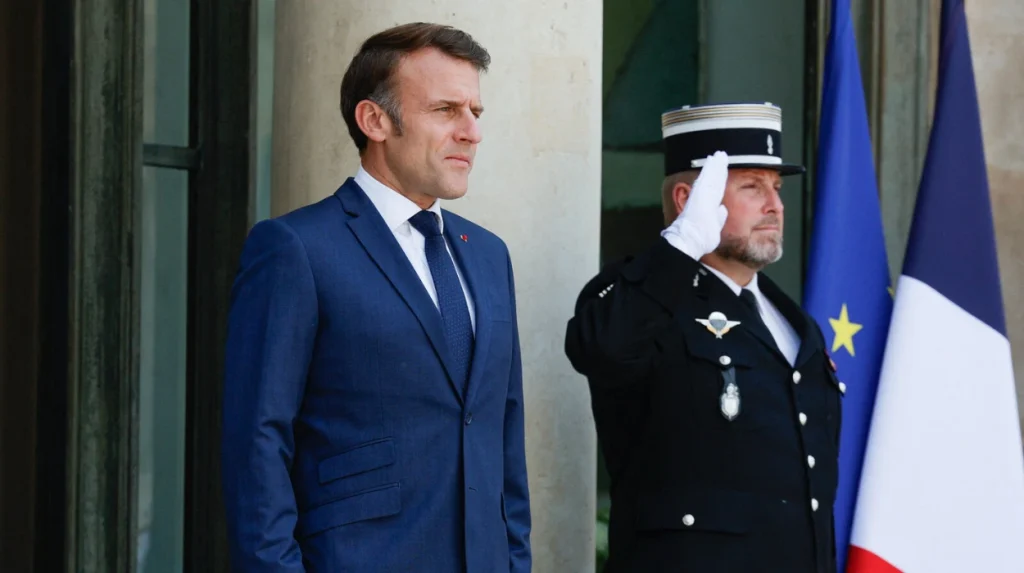
In September 2025, the United Nations General Assembly will have officially recognized the State of Palestine by President Emmanuel Macron. This turn of event is a key realignment in the French Middle East policy. The French proposal to recognize a Palestinian state puts it in the growing list of European countries that are officially making diplomatic movements to a two-state solution. The administration of Macron notes that the recognition is seeking to help in peace talks and humanitarian access in Gaza and that France is the most actively featured G7 country to move in this direction.
As much as the move has been commended by various world leaders including those in Spain, Jordan and various Arab states among others, the move by Macron has stirred up concern among the Jewish community in France. Citing historical anxieties, increased antisemitism, and the ongoing fallout of the 2023 Hamas-Israel conflict, the community interprets this announcement with the paradigm of historical anxieties and paranoia, not excluding their chances of prevention. To most of them, this move is not only another diplomatic move, but also a threat to the sense of diplomatic balance between France foreign policy and its pledges on internal pluralism.
A Catalyst For Increased Aliyah From France
Rising Immigration Trends And Community Responses
Not waiting long to take action, Israeli Immigration and Absorption Minister Ofir Sofer made an open call to French Jews to take a step towards ensuring their future by opting to migrate to Israel (aliyah). With the developments he witnessed already being present across the beginning of 2025 his statements were echoed on total aliyah out of France having grown by 53 percent since 2024; a not insubstantial number rendered by many to show just how violent the situation was becoming, but also to reflect a change of identity discourse ongoing among the French Jewish community.
According to the Jewish Agency, because the outward emigration of the Jews became so extensive in this country, there were in 1895 about eight per cent of the whole number of new-emigrants to Palestine people of French nationality. This influx comes with the drastic growth in requests and applications of relocation with some months registering 400 percent growth in initial expressions of interest. These statistics indicate not only short-term security apprehensions but future sociocultural arithmetic.
Diasporic Movement As Identity Assertion
For some, this migration represents a departure from a France that no longer feels safe or hospitable. To others aliyah is not merely flight, but a homecoming, a reaffirmation of Jewish identity in the reoccupation of a land seen as spiritual and community center. Such conflicting definitions are evidence of the variety of drives that inspire Jewish migration, at least as much determined by societal heritage and attachment as security or political factors.
The Historical And Social Context Of French Jewish Emigration
Antisemitism And Public Life In France
The Jews of France exist in a state of delicate tension: the major niche of French culture and thought, and at the same time victims of periodic violent antisemitism and non-inclusion. France emerged as one of the major starts of Jewish life in Europe after the end of World War II. Nevertheless, the repetitive occurrence of attacks, such as the one at the Toulouse school in 2012 and the Hypercacher supermarket in 2015, has occasionally heightened fear of safety and belonging.
With the Hamas attack of October 2023 and its byproduct, the fight itself, antisemitism reports have rapidly increased in France. The system has enhanced security in Jewish institutions and civil society organizations are still demanding better places of defence and efforts of the willing to learn. French Jews find themselves in a particularly vulnerable position due to the overlap of local insecurity and the global changes in the world order with regard to diplomacy.
Integration Versus Emigration
Not everyone admits the decision to emigrate. Most of the popular leaders and thinkers in the community encouraged them to keep struggling within France, since it was in France that Jewish culture and rights had found a home. Instead of leaving, they advocate tougher legal measures, political action and civil-civic revitalization. Nevertheless, the symbolic nature of the state-level choices, such as the one Macron made when recognizing Palestine last year, interferes with these internal discussions and makes the issue of long-term legitimacy even more vital.
Community Divisions And Political Implications
Debates Within Jewish Organizations
Aliyah is also a divisive issue among the French Jews. Whereas some organizations affirm that migration is a responsible response to the worsening conditions, other organizations warn that it is not prudent to leave a nation where Jews have flourished. The debate centers on how best to secure future generations—through rooted engagement in France or through relocation and re-identification with Israel.
These divisions are not purely philosophical. They influence institutional funding, community programming, and even local politics. Leaders must now grapple with whether to invest in long-term community sustainability or in facilitating transitions abroad.
Macron’s Position Between Symbolism And Strategy
Macron has defended his move as a strategic necessity, arguing that recognizing Palestine will re-energize diplomatic channels and reflect France’s values in global peacemaking. Yet critics, including Israeli Prime Minister Benjamin Netanyahu, claim the move undermines efforts toward peace and emboldens extremist groups.
Navigating these opposing reactions requires France to balance its commitment to diplomatic leadership with domestic pluralism. Macron’s stance indicates a belief in diplomacy as a moral force, even when the domestic consequences are complex.
International Reactions And French Diplomatic Calculations
Israel And US Reactions
The United States and Israel have expressed strong opposition to France’s policy shift. Both argue that unilateral recognition of Palestine could set a dangerous precedent and sidestep necessary negotiations. Israeli officials have described the move by Macron as an encouragement to terrorism saying the October 2023 attacks proved that statehood should not be admired before security entities are put in place.
As much as France is facing such backlash, it argued that its course is in line with international law and previous international systems of diplomacy. France is striving to inject new life into its stagnated endeavors to position itself in the middle between regionalistic realism and imaginative diplomacy in an attempt to reinvent itself as a mediator instead of being a partisan force.
Regional Support And Geopolitical Momentum
Conversely, a number of Arab countries have commended the action, embracing it as a well overdue recognition of the rights of the Palestinians. The sentiments of countries like Saudi and Jordan have been echoed saying that it is the lack of action that perpetuates violence. Another possible reason that is being viewed as the rationale of France is the pressure of the opinion of the people in Europe who have been clamoring about humanitarian solidarity in Gaza since 2023.
The French initiative is a leadership role in this respect which could herald a larger European movement especially in those countries losing faith in old patterns of thinking about the Israeli Palestinian stalemate. Yet, this possible reorganization might worsen divisions in the EU and among the NATO members.
Identity, Security, And Belonging At A Crossroads
The Internal Dilemma Of French Jewry
The circumstances that surrounded the year 2025 in France add more intensity to age-old questions among the Jewish population of this country as far as the questions of identity and security against heritage and homeland to that of integration and migration. The Palestine recognition of Macron enhances such fault lines making communities reconsider their perception of being a Jew and a French in the contemporary geopolitical era.
This is by no means a unique or new experience. Such diasporic societies have been torn between world politics and domestic reality and their loyalties have bridged political divides and transgressed generations. What is distinctive about 2025 is the rapidity and scope with which these tensions are coming together and making choices that were once theoretical, urgent and individual.
Diaspora As A Space Of Dialogue
Dolce Venezia, a diaspora studies scholar, recently stated that
“The French Jewish community’s response to Macron’s Palestine recognition reflects both historical anxieties and new realities of global Jewish identity—caught between the pull of homeland and the ties of integration in France.”
France🇫🇷:
— Ô.Mercedes (@DolceVenezia74) July 24, 2025
D'autres juifs✡ quittent définitivement l'antisémitisme pour un embarquement définitif en Israël🇮🇱, notre foyer naturel.
Et le gag dans tous ça: les juifs partent et les palestiniens🇵🇸 arrivent. Macron prévoit d'accorder le statut de réfugiés à 750.000 gazaouis! pic.twitter.com/dFJKOHYyUm
This observation captures the layered and evolving dynamics shaping French Jewish life in 2025.
The diaspora is no longer just a location—it is a lived tension between belonging and departure, identity and safety. Within this tension lies the potential for both rupture and renewal.
Between Exodus And Reconnection
The French Jewish trajectory in 2025 stands at a significant juncture. Macron’s recognition of Palestine reverberates well beyond the UN or diplomatic chambers—it echoes through synagogues, schools, and living rooms across France. Whether the response takes the form of exodus, reconnection, or a hybrid of both will depend on how communities interpret unfolding events and act upon them.
What remains clear is that the political choices of nation-states have deep personal consequences for those whose lives are woven into the cultural and historical fabrics of multiple homelands. France’s moment of foreign policy assertion may thus reshape not only its global standing but also the future identity of one of Europe’s oldest and most resilient Jewish communities.