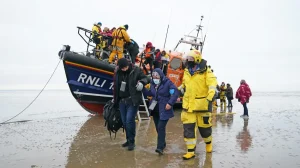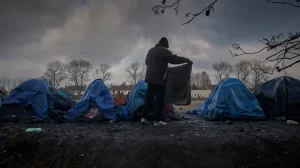
Refugee migration is among the most burning humanitarian and political issues which Europe is currently struggling to address, and the crossings between England and France in the English Channel serve as the epitome of the lack of understanding of how to control irregular migration. A three-year agreement on cooperation in reducing irregular migration and enhancing returns was signed in March 2023 between the UK and France, supported by a 476 million ( 541 million ) UK political commitment. By 2025, though, there are some gains realized in the deal that are also countered by a large body of challenges due to the volatility of migration patterns and humanitarian issues.
The current paper analyses the current data on migration and returning and the usefulness of the UK-France settlement, as well as considerations of the implications of the refugee policy and border control in 2025.
Migration and Returns: The Latest Statistics
Rising Returns and Enforcement Efforts
Although in the year till March 2025 there were 9838 asylum related returns recorded in the UK which is 29 percent more than it was in the last year. The number of forced removals where people are taken by force increased to 8,590, a 22 percent jump from the previous year, and higher than the number was in 2019 of 7,198. Detention played a major role in facilitating these returns as it was employed in 95% of the cases.
The highest population of enforced returns was between the Albanian nationals in the past five years, constituting 29 percent (2,530) within the last 12 months, but their population has recently decreased by 11 percent. In the meantime, compelled costs of returning Romanians grew by 39%, Brazilians by 30%, and Indians by 94 percent. Such a shift is indicative of swinging migration patterns and directed enforcement activities.
Increase in returns has in part been linked to impact of restarting of asylum processing categories after July 2024 and reallocation of 1,000 staff to the immigration enforcement in the UK government Plan to Change entailed securing borders by increasing returns among measures.
Irregular Arrivals and Channel Crossings
Due to the higher returns, the cases of irregular arrivals in the UK keep going up. During the year March 2025, irregular arrivals were 44,000 being a 14 percent rise as compared to the previous year. Of these arrivals, 38,000 (86%) were in small boats and this is a 22 percent increase over the previous year, though 17 per cent lower than in the previous year.
The largest nationality among the small boat arrivals were the Afghans (16% / 5,800), although this is smaller than the maximum of 9,100 of Afghan persons who arrived in 2022. Syrians, Eritreans, Iranians and Sudanese were other major nationalities.
Small boats registration One-third of all asylum claims in the UK were made by people who arrived on small boats, highlighting the persistence of the Channel route in the migration profile in the country.
🚨Revealed: France’s £500m deal with UK didn’t allow authorities to stop migrant boats at sea — until now.
— Talk (@TalkTV) June 3, 2025
“It was always going to get worse under Keir Starmer, always!” @TVKev | @LiddleRod pic.twitter.com/1XsgQ7CTg3
Safe and Legal Routes
The total number of humanitarian visas granted the year up to March 2025 fell by 26 per cent on the preceding year, much of it because of a fall in visas granted under the Ukraine scheme. Also 7700 refugees were settled, 90 percent of them arriving under the Afghan Resettlement Programme. These statistics indicate that the UK continues to uphold legal migration channels despite facing the challenges of irregular migration.
The UK-France Returns Agreement: Framework and Funding
Financial Commitment and Cooperation
The UK also pledged to spend $476 million (541 million euros) in three years (2023/24 to 2025/26) to help with the cooperation with France to disrupt the route of irregular migration and enhance returns. France will also make a huge though-to-be-defined contribution to the collective endeavors.
The agreement involves joint strategic reviews to be able to determine the effect of cooperation and funding. There is however no public announcement of the results of these reviews save that the UK government says it has security reasons and that it does not want to jeopardise relations with other countries.
Operational Impact and Trends
In the UK-France March 2023 Joint Leaders Declaration ambitious targets were expressed to raise interception levels of Channel crossings of boats and percentages down on a year to year basis to reduce the amount of year to year boat crossings drastically. In 2023 there were fewer people and vessels being identified arriving in the UK compared to 2022 and also less people being intercepted and returned to France.
Statistics released toward the end of September 2024 revealed that during the first nine months of that year, 25,244 people had arrived on small boats, which is a small increase on the 24,830 people who arrived during same months in 2023, but fewer boats (479 vs. 506). It is also noteworthy that the number of arrivals shot up in October and November 2024 in comparison with the past period, and weather was indicated as one of the reasons.
Stakeholders’ Perspectives
UK Government
The significant role of the agreement on returns in the UK government is the need to seal the borders and curtail irregular migration. It also points out the higher returns and interceptions as good endorsements of fruitful collaboration with France. These gains have come with the redeployment to immigration enforcement and with the resumption of asylum processing.
The government insists that strategic reviews with France serve to steer continuing improvements but does not release details of findings to ensure security of operations.
French Authorities
The French officials have pledged to contribute significantly by way of cooperation and funding, but have not revealed any particular amounts. France cooperates with the UK in terms of interception and returns in the Channel: it is in common interest to regulate migration flows.
Refugee and Human Rights Organizations
Human rights organizations are turning on the government in regards to transparency of how money is spent and any effects the returns are having on unprotected migrants. They lay emphasis on the constant humanitarian threats among the asylum seekers, especially many of those who have resorted to perilous crossings through the Channel.
Safe and regular migration channels are promoted by these organizations and they demand policies that would create a balance between enforcement and protection and integration.
Challenges and Opportunities in the UK-France Cooperation
Balancing Security and Humanitarian Concerns
The UK-France returns arrangement is a realistic idea of dealing with irregular migration. Nevertheless, the fact that the numbers of arrivals remained high and that the crossings of the Channel are dangerous in humanitarian terms reflects the boundaries of enforcement-based policy approaches.
How to approach the issue of border protection while guaranteeing the safety and dignity of the migrants is a complicated task. The sudden peak of arrivals in late 2024 also shows that migration flows are volatile, and that weather has an important role.
Transparency and Accountability
The obscure reporting of expenditure of cooperation funds and the results of strategic reviews cast doubts on the issue of accountability. People may trust the government more and make a more informed discussion about migration policy as well.
It is important to balance the security of operations and openness to make migration management compliant with human rights and democratic values.
Future Directions
The UK and France are still on a search for new approaches, such as intelligence sharing, increasing police presence, and introducing new authorities to intervene in shallow waters. Negotiations are in place of pilot schemes along the lines of a so called one-for-one principle, where illegal migrants sent back to France would be traded off against legal immigrants allowed into the UK.
These are being pushed to discourage smuggling and cut down crossings in the Channel but implementation needs to be done with caution so as to result in the desired outcomes.
Broader Context: Migration Trends and Policy Responses in 2025
Changing Migration Patterns
The asylum seekers have become more diversified with the increase in asylum claims made by Pakistan, Afghanistan, Iran, Bangladesh and Syria migrants as well. The UK is ranked the 17 th highest in Europe in asylum applications per head.
The figure of the number of persons in each of the small boats has risen to 54 in the year ending March 2025, as compared to 50 in the preceding year, which may imply an increase in risks facing the migrants.
Policy Shifts and Enforcement
The Plan for Change undersigned by the UK government implies the redistribution of resources to the immigration enforcement, raising returns, and commencing asylum processing to cover backlogs. The number of deportations of foreign national offenders and other enforced returns has grown tremendously.
Nevertheless, it has been added that the enforcement cannot in itself tackle the root causes of the irregular migration, but rather it is required to have a set of policies such as protection, integration, and legal channels.
The returns agreement between UK-France has led to higher returns and interceptions, a factor that depicts enhanced collaboration and deployment of resources. However, the uneven arrivals are increasingly growing and the humanitarian issues have arisen with the refugee crisis being quite multifaceted.
The issue of maintaining balance between the effective work of borders and human rights and a place of transparency in this area is also acute. The future success of work is to be based on continued interaction, creative policy-making, and a pledge toward safe, legal, and humane migration channels.