By 2025, immigration is still influencing the political and economic situations in Europe. As labour markets come under strain, demographic ageing gains momentum, and geopolitical disruption initiates new displacement tides, European countries have adopted quite distinct courses in their immigration strategies. There are countries that are inclined to integration and inclusiveness, and there are countries that strengthen the idea of border control and legal restrictions.
This divergence is not just an administrative one, but a representation of more profound national discourses of identity, social cohesion and economic survival. Towards a more harmonized migration management, the call of the European Union to develop its Migration and Asylum Pact is still on the road, with member states retaining significant freedom on how to formulate national immigration agendas.
Policy patterns across regions
Northern and western European countries, such as Germany, Sweden, France, and the Netherlands, have mainly taken the approach of immigration based on the idea of managed entry, integration support, and long-term inclusion. The states are an integration of humanitarian aspirations and expedient economic aims and aim at getting competent manpower and serving international asylum needs.
The legal system of Germany promotes a hierarchical transition between asylum and citizenship, connecting regularization of status to occupational training and learning the language. The settlement services and education that have been a consistent focus in Sweden have helped achieve better social outcomes among refugee populations and migrant populations. These policies usually go hand in hand with the active discussion of the capacity, national values, and the speed of integration.
Central and eastern resistance to migration
Conversely, multiple Central and Eastern European nations, including Hungary, Poland, and Slovakia, have taken extremely restrictive immigration policies since it became clear that there was a 2015 migration crisis. The avenues of law are few, asylum is barely processed, and the discourse of migration tends to portray it as a danger to the state and national culture.
In certain domestic settings such policies have been popular politically, but it has resulted in difficulties, such as labor shortages in manufacturing and healthcare. According to Eurostat data, there is a steady reduction in the working age populations in these areas and this is moving to the next policy debate of the selective labor migration scheme in 2025.
Southern Europe’s mixed strategies
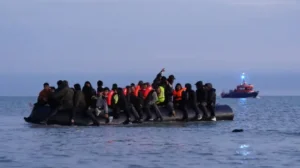
The states in southern parts of the Mediterranean such as Italy, Greece, and Spain are still at the centre of the migration processes because of their geographical location. The countries undergo high rates of irregular arrivals through the Mediterranean and have to cope with humanitarian interventions as well as border control.
Greece has made efforts to enhance its asylum facilities but still encounters bottlenecks and capacity holes especially the island reception facilities. Spain has sought bilateral agreements with the countries of North Africa to regulate flows in line with the promotion of legal seasonal labour programs. Italy with its domestic political issues has played with both amnesty and enforcement.
Leaders in inclusive migration frameworks
Germany has been regarded as the model of progressive migration management. In 2025, it increased its 2023 Skilled Immigration Act to further ease entry of qualified professionals, as well as make foreign qualifications recognition easier. The policy involves integration subsidies and strong liaison with the employers especially in areas where there are shortages in labor like elder care and construction.
Sweden is determined to resettle refugees and include them long-term. Some of the policies focus on family reunification, early childhood education, and housing assistance. Institutional support of integration has been strong though this has been inconsistent with the changes in public opinion and municipal partnerships have been influential in delivery.
The netherlands and france’s blended strategies
The Netherlands have been perfecting their model of participation contract, which obligates newcomers to engage in civic education and learning the language in the first year of entry. Enforcement is associated with the benefits access; however, it is rather positive participation than punitive measures.
France, dealing with a greater number of asylum requests, has reorganized its migration services in 2025 to decrease processing time and expand the assistance infrastructure to legal entrants. The national approach it is pursuing now incorporates focused support towards women migrants, better information exchange between departments in order to efficiently handle social services.
Innovations and evolving best practices
There are a number of states which have launched digital visa processing and asylum case management systems. Finland and Estonia have the highest rates with completely online portals to apply and verify with the biometrics to cut down the processing and administration costs. The aim of these systems is to improve transparency and efficiency.
Europe has also seen a growth in vocational training of migrants, particularly in Germany, Austria and Denmark. These programs are becoming connected with the employer requirements with skills training along with language acquisition and mentorship.
The growing interest is also in the education support of children and youth. Sweden and Belgium also invest in the intercultural curriculum development and training of teachers in order to have inclusive classrooms. Longitudinal research shows that early learning assistance is among the best foretellers of effective integration in the course of maturity.
Barriers and lagging models
There are still those countries which are opposed to total immigration reform. Hungary has an almost zero asylum admission rate and border controls to the south. Migration is associated with insecurity through media campaigns in which the EU reports indicate that there is less crime among immigrant communities.
Poland, as it accepts Ukrainian refugees on the basis of different humanitarian agreements, is shut to other migrants. Analysts observe that there is a paradox between an increase in labor demand and a general unwillingness to open up channels in the system to allow migration. The risk of this disconnection is the lack of competitiveness over the long run, especially as the native working-age populations decrease.
Under pressure of irregular migration, Greece and Bulgaria are faced with backlogs in asylum and integration resourcing. The 2025 Migration and Asylum Pact of the EU provides funding to countries on the frontline yet there is an existent gap that exists between the promises and actions.
Shifting trends and future pathways
In Europe, the migration debates are being redefined by the demographic trends. Eurostat estimates the EU working-age population will decline by about 30 million people in the year 2050, without the contribution of net migration. It is presumed that those countries that manage to attract and incorporate migrants will have a more sustainable economic growth and pension system.
In May 2025 a briefing by the European Commission determined that a coherent, rights-based migration policy, which is compatible with labor market needs, will be the key to the economic performance of Europe. This understanding is promoting more experimentation with points-based systems, mobility alliances with third-countries and EU-wide talent recognition schemes.
Policy convergence and continental cooperation
Despite national differences, signs of policy convergence are emerging. The EU’s relocation mechanism is being tested in 2025 through pilot resettlements from Greece and Malta to northern states. Meanwhile, a European skills passport for migrants has been launched to support credential recognition across borders.
Civil society and business associations are increasingly involved in policymaking, advocating for pragmatic reforms that align migration with economic and demographic needs. Public debates are more nuanced in countries with high foreign-born populations, where integration outcomes are visible and local partnerships shape public perceptions.
As Europe advances into a decade of profound labor transformation and global mobility, the divergence between leaders and laggards in migration policy may narrow. With the right frameworks, political resolve, and community investment, the continent has the opportunity to reframe immigration as a foundation of renewal, not division.