Channel tragedies persist despite years of bilateral coordination between France and the United Kingdom aimed at curbing irregular crossings. The recent deaths of eight migrants in an overloaded dinghy departing from northern France underscore how enforcement measures struggle to outpace adaptable smuggling networks. French authorities confirmed that rescue operations recovered multiple survivors, yet the incident reflects recurring patterns rather than isolated failure.
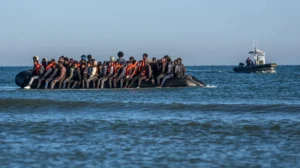
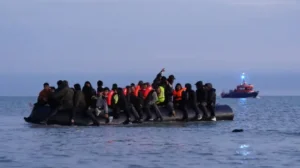
Smuggling operations continue to charge between €3,000 and €6,000 per person for crossings in inflatable boats designed for far fewer passengers. In 2026, average vessel loads have reportedly reached 62 individuals per attempt, nearly doubling typical figures from 2025. These overcrowded conditions significantly increase the risk of capsizing, particularly in the Channel’s unpredictable weather and tidal currents.
Overloaded Boats and Escalating Risks
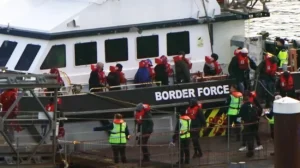
The operational model of traffickers prioritizes volume over safety, maximizing passenger numbers to offset interception risks. French maritime patrols and UK Border Force vessels frequently detect departures, yet launches often occur at night or during periods of reduced visibility. Even with expanded drone coverage, gaps remain in monitoring the entire coastline.
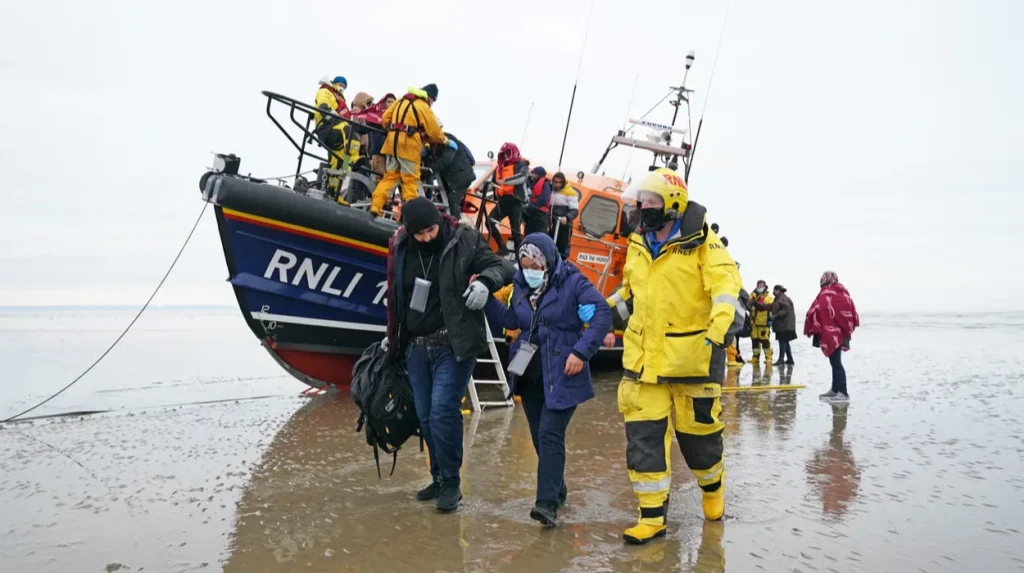
Rescue services, including cross-Channel coordination units, report sustained pressure on resources due to frequent interventions. Although fatalities declined from 73 in 2024 to 24 in 2025, the persistence of deaths signals that partial deterrence has not fundamentally altered smuggling incentives. The tragedy illustrates the structural tension between enforcement and mobility demand.
Shifting Routes and Smuggling Adaptations
Trafficking networks have demonstrated agility in response to enhanced surveillance. Following increased drone deployment in 2025, smugglers adopted faster rigid-hulled inflatable boats capable of carrying larger groups at higher speeds. These operational adjustments have reduced interception rates and shortened launch windows.
At the same time, interdiction efforts have increased. French authorities reported intercepting approximately 28,000 attempted crossings in 2025, reflecting expanded patrol capacity. Yet interdictions alone do not eliminate demand, and traffickers continue operating from both coastal staging points and cross-border coordination hubs.
Franco-British Sandhurst Treaty Under Pressure
The Sandhurst Treaty was designed to strengthen joint enforcement through financial investment and intelligence sharing. It allocated approximately €500 million over three years to support patrol vessels, surveillance systems, and coordinated returns. The agreement also formalized mechanisms for real-time data exchange between French and British authorities.
Despite these commitments, small-boat crossings have remained persistent, with detection levels hovering near 5,000 monthly attempts in some 2026 estimates. Implementation challenges, including legal backlogs and jurisdictional constraints, limit the treaty’s operational impact. The persistence of fatalities suggests that deterrence measures alone cannot fully address the underlying dynamics.
Operational Coordination and Legal Constraints
Joint operations have improved communication channels, yet enforcement remains divided by maritime boundaries. France controls territorial waters, while the United Kingdom assumes responsibility beyond the midline, creating zones that traffickers attempt to exploit. This jurisdictional complexity introduces brief response delays that networks can anticipate.
Legal processing constraints also shape outcomes. A significant portion of intercepted migrants enter lengthy asylum procedures, which can delay removals or transfers. Returns agreements exist but do not operate at full capacity, limiting their deterrent effect on repeat attempts.
Resource Allocation and Personnel Strain
Expanded patrol commitments require sustained manpower and technological investment. French seasonal deployments have increased in response to higher activity levels, while the UK has maintained continuous maritime surveillance. However, personnel turnover and fatigue have emerged as operational concerns.
Budgetary increases have supported new vessels and fusion centers designed to improve intelligence integration. Nonetheless, trafficking revenues estimated in the hundreds of millions annually continue to fund network resilience, enabling reinvestment in boats, communications systems, and cross-border logistics.
2025 Trends and Fatality Patterns
The year 2025 recorded 24 Channel deaths, representing a reduction from prior highs but confirming ongoing risk exposure. While the decline suggests some deterrent effect, vessel capacity has increased, raising the potential severity of incidents when accidents occur. The contrast between reduced frequency and persistent danger underscores the limits of enforcement alone.
Globally, migrant fatalities reached approximately 8,000 in 2025, highlighting broader structural drivers beyond the Channel. Conflicts in parts of the Middle East, North Africa, and Sub-Saharan Africa continue to generate displacement pressures. These global dynamics influence demand for routes into the UK despite elevated risks.
Regional Comparisons and Policy Context
Compared to Mediterranean routes, the Channel represents a smaller share of overall migrant deaths but carries significant political visibility. Policy shifts in both France and the UK during 2025, including tighter asylum procedures and expanded returns frameworks, aimed to alter incentive structures. However, irregular crossings remain consistent, suggesting adaptation rather than reduction.
The broader European migration framework has also evolved, with discussions on burden-sharing and external partnerships. These developments reflect recognition that bilateral enforcement alone may not address upstream drivers such as instability, economic disparities, and organized crime networks.
Technological Enhancements and Limits
Both governments have invested in enhanced surveillance tools, including drones, coastal radar, and intelligence fusion centers. These systems have improved detection rates and asset seizures, yet traffickers continue to adapt operational tactics. Technology increases visibility but does not eliminate launch attempts.
Plans for further drone coverage in 2026 aim to expand coastal monitoring capacity. However, even comprehensive surveillance cannot fully neutralize the incentive structure that sustains demand for crossings. The interaction between enforcement capacity and migrant desperation remains central to the policy challenge.
Broader Political and Economic Dimensions
Channel tragedies persist within a politically sensitive environment in both countries. Domestic debates in the United Kingdom have focused on asylum backlogs and enforcement credibility, while France balances migration control with humanitarian obligations. The Sandhurst framework sought to align these priorities but operates within differing legal systems.
Economic pressures also intersect with migration flows. Trafficking networks rely on established transnational routes and financial channels, some linked to broader criminal economies. Disrupting these networks requires sustained international cooperation extending beyond the Channel region.
Cross-Border Criminal Networks
Arrests and asset seizures demonstrated improved coordination between law enforcement agencies. Yet leadership figures often operate outside direct jurisdictional reach, complicating long-term disruption efforts. Financial flows connected to smuggling frequently traverse multiple countries before reaching coastal staging areas.
Upstream interventions targeting departure points and transit corridors may influence future volumes. However, the durability of such measures depends on consistent diplomatic engagement and resource allocation across participating states.
Outlook for Enforcement and Cooperation
The persistence of fatalities highlights the limits of deterrence models focused primarily on maritime interception. While interception rates have improved, the structural drivers of migration remain active. Channel tragedies persist because smuggling networks continuously recalibrate operations in response to policy shifts.
Future cooperation may rely on expanded technological integration, improved legal processing, and strengthened returns frameworks. Yet long-term reduction in fatalities likely depends on a combination of enforcement, international coordination, and broader regional stability measures. As policymakers assess the effectiveness of the Franco-British pact, the Channel remains a concentrated case study of how rapidly adaptive criminal networks intersect with complex legal systems and humanitarian pressures, leaving open questions about how enforcement strategies can evolve without compromising safety or legal integrity.