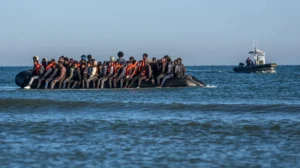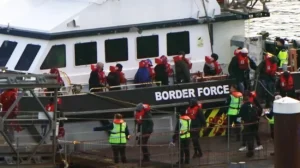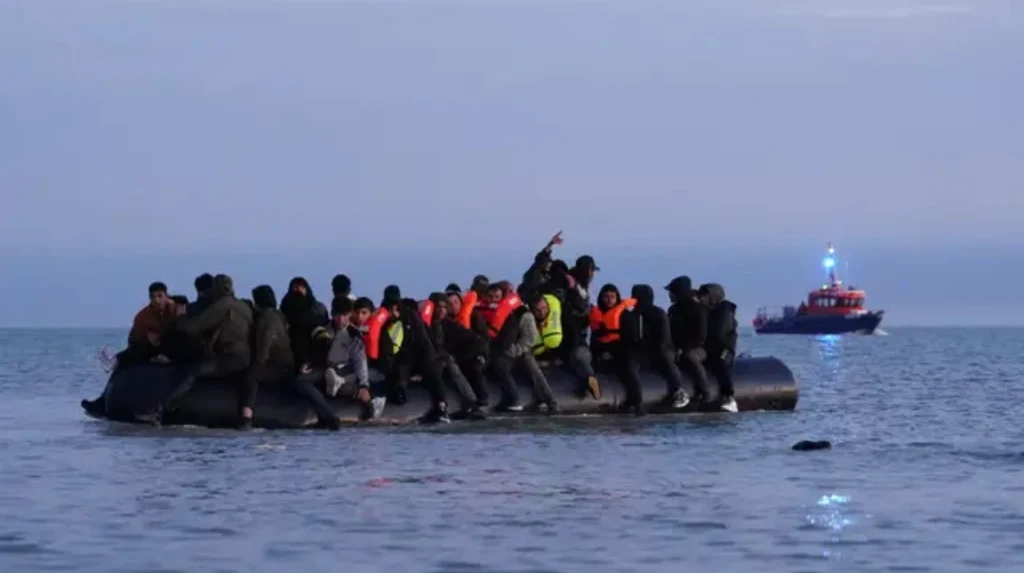
The debate surrounding Channel Crossings, Funding Gaps, and Rising Migrant Deaths Near Gravelines intensified after a fatal maritime incident close to the northern French coast. Authorities reported that an overcrowded inflatable boat carrying dozens of migrants encountered serious difficulties shortly after departing the shoreline near Gravelines, prompting a large-scale rescue response. Early reports from French emergency services indicated multiple fatalities and at least one person unaccounted for as search operations continued in challenging maritime conditions.
The timing of the tragedy has drawn attention because it occurred during a period when the broader UK-France patrol framework was undergoing financial renegotiation. Policymakers and analysts note that any disruption in coordinated monitoring can influence smuggling activity and departure patterns. While investigations into the exact circumstances remain ongoing, the event has renewed scrutiny of how funding cycles and enforcement strategies affect the safety of Channel crossings.
Conditions surrounding the gravelines departure point
Gravelines has increasingly appeared in migration reports as one of several coastal zones where departures toward the United Kingdom occur. Local officials have observed that boats often leave during limited windows when weather conditions appear favorable, even though the Channel remains one of the world’s busiest shipping routes.
Maritime authorities emphasize that small inflatable vessels face significant instability in such waters. When boats are overloaded or launched quickly to avoid detection, the risk of capsizing rises sharply, making rescue efforts more complex.
Emergency response and search operations
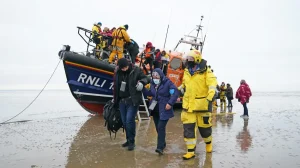
French coastguard units, supported by regional rescue teams, mobilized rapidly once distress signals were detected. Helicopters and patrol vessels were deployed to locate survivors and recover those in the water.
Officials involved in the response described the operation as a reminder of the Channel’s unpredictability. Even short journeys can become life-threatening when vessels lack proper safety equipment or navigational capability.
Migration mortality trends since enforcement expansion in 2023
Analysts tracking Channel migration patterns note that fatalities have fluctuated since enforcement cooperation between the United Kingdom and France expanded in recent years. Data compiled by research groups and universities suggests that the number of recorded deaths increased during certain periods following stronger coastal monitoring initiatives.
Reports from academic institutions studying migration routes indicate that 2024 was one of the most severe years in terms of recorded fatalities along the Channel corridor. These findings have sparked debate among policymakers, researchers, and humanitarian organizations regarding the relationship between enforcement measures and migration risk.
Data comparisons across recent years
Statistics from 2023 through 2025 illustrate a pattern of recurring fatal incidents despite expanded surveillance and patrol operations. Researchers tracking these cases argue that deaths often occur close to departure zones rather than in the middle of the Channel itself.
This pattern suggests that migration risks are influenced by immediate coastal conditions as well as broader enforcement dynamics. Observers emphasize that statistics must be interpreted carefully, as they reflect both migration demand and operational responses.
Academic research examining enforcement and risk
Institutions including the Centre for Sociodigital Futures at the University of Bristol have examined how enforcement policies shape migration behavior. Their analyses highlight how surveillance measures, policing strategies, and access restrictions interact with smuggling networks.
Researchers describe these factors as interconnected rather than isolated. When enforcement increases in one location, migration routes may shift or departure tactics may change, sometimes increasing the risks faced by those attempting crossings.
Funding uncertainty affects operational coordination along northern coast
The Gravelines incident occurred during negotiations over the future structure of UK-supported patrol funding. Previous agreements provided substantial financial support for French coastal enforcement, including personnel deployment and surveillance infrastructure. However, the transition between major agreements and short-term extensions has introduced periods of uncertainty for operational planning.
Officials involved in cross-border coordination note that consistent funding allows agencies to maintain equipment, schedule patrol rotations, and expand intelligence sharing. When agreements move into temporary extensions, planning horizons often become shorter, which can complicate long-term operational strategies.
Short-term extensions and planning challenges
Temporary financial arrangements may preserve basic patrol activity but do not always support broader operational improvements. Law-enforcement agencies typically require longer commitments to upgrade technology or expand training programs.
French officials have noted that sustained cooperation works most effectively when funding cycles align with operational requirements. Short gaps or renegotiation periods can create uncertainty that smugglers attempt to exploit.
Shifts in enforcement patterns during negotiation phases
Migration researchers observe that enforcement intensity sometimes fluctuates during periods when agreements are being revised. While patrols continue, strategic priorities may adjust as authorities assess available resources and diplomatic developments.
These shifts can influence how smuggling networks operate along the coast. When patterns of patrol activity become less predictable, departure attempts may cluster in short periods of perceived opportunity.
Political responses highlight differing views on channel strategy
The Gravelines tragedy has prompted renewed political discussion within the United Kingdom about the effectiveness of current Channel management policies. Government representatives argue that cooperation with France remains essential to addressing irregular migration while preventing disorder at key transport hubs.
Officials within the Home Office have reiterated that joint patrol operations have disrupted thousands of attempted crossings over recent years. The department continues to frame bilateral cooperation as a cornerstone of its border security strategy.
Government approach under home secretary shabana mahmood
Home Secretary Shabana Mahmood has emphasized the importance of maintaining strong operational ties with French authorities while negotiations continue. She has noted that joint efforts aim to tackle organized smuggling networks and reduce dangerous journeys across the Channel.
Statements from her office suggest that policymakers are exploring ways to strengthen the next agreement so that enforcement measures remain consistent and effective.
Opposition criticism and policy debate
Political opponents have used the incident to question whether the current strategy sufficiently addresses migration challenges. Among those raising concerns is Chris Philp, who has argued that funding agreements must demonstrate clearer results.
These debates reflect broader tensions within British politics regarding how migration policy should balance deterrence, humanitarian obligations, and international cooperation.
Humanitarian concerns and maritime safety considerations
Beyond the political discussion, the tragedy near Gravelines has reinforced concerns among humanitarian organizations and maritime safety experts. Groups working on migration issues emphasize that the Channel remains inherently dangerous for small vessels, regardless of enforcement levels.
Rescue authorities stress that preventing loss of life requires a combination of monitoring, emergency preparedness, and broader migration governance measures. Safety concerns often intersect with legal and humanitarian obligations under international maritime law.
Role of rescue agencies in channel incidents
Search and rescue teams along the northern French coast operate within a coordinated network designed to respond rapidly to maritime emergencies. Their work often involves collaboration with multiple agencies across borders.
These operations highlight the complexity of managing migration routes that pass through heavily trafficked waters. Ensuring effective response capacity remains a priority even as governments focus on enforcement.
Calls for broader migration policy solutions
Humanitarian groups frequently argue that enforcement alone cannot resolve the risks associated with irregular migration. They advocate for expanded legal pathways and improved asylum coordination to reduce reliance on dangerous crossings.
Policy analysts note that such proposals remain part of ongoing discussions among European governments, particularly following migration debates that intensified during 2025.
Funding negotiations may shape future channel migration dynamics
The developments associated with Channel Crossings, Funding Gaps, and Rising Migrant Deaths Near Gravelines illustrate how financial decisions and operational strategies intersect in one of Europe’s most closely watched migration corridors. The Channel has become a testing ground for how governments attempt to balance security objectives with humanitarian responsibilities.
As the United Kingdom and France work toward the next phase of their cooperation framework, policymakers face the challenge of ensuring that enforcement measures remain stable while also addressing the broader factors influencing migration. The evolving situation raises deeper questions about whether future agreements will prioritize longer-term coordination and safety measures, or whether recurring negotiations will continue shaping the rhythm of migration patterns along this narrow but consequential stretch of water.