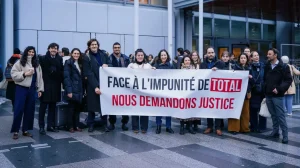
The French institutions remain an influential factor in the discourse of human rights on national and international levels. They are based on the grounds of the constitutional principles that have been implemented following the great political transformations in France, such as the Declaration of the Rights of Man and the Citizen. This legacy can help institutions to incorporate both law and popular accountability in a manner that can enhance rights-based policymaking.
The organisations like the National Consultative Commission on Human Rights (CNCDH), the Defender of Rights (Defenseur des Droits), and the permanent mission of France to the United Nations Human Rights Council are still at the heart of the human rights structure in the country in the year 2025. Their different mandates all give strength to what France commits itself to in equality, liberty and the rule of law. The CNCDH lets policymakers know the opinion, the Defender of Rights protects the rights of individuals, and the delegation of the UNHRC provides the promotion of the interests of France in international institutions.
Institutional Oversight And Independent Mandates
One of the major reasons for long-term human rights achievements is institutional independence. Legal independence of the Defender of Rights enables the independence to deal with the breach of law without political interference. Its 2025 reports point to increased policing and public service behavior control. In the meantime, the advisory opinions of the CNCDH are influential in the legislative procedure and the creation of political discourse on the new rights issues.
Influence On Domestic And International Norms
French institutions have the tendency of projecting national experiences on the international arena. The United Nations jurisprudence of the United States to the UNHRC has been employed in supporting resolutions on discrimination, digital rights and abuse related to conflicts. This is a multi-level model that helps France to influence international standards and strengthen domestic commitments.
Strategic Litigation And Judicial Advocacy
One of the most high profile types of human rights development orchestrated by French institutions remains strategic litigation. By 2025, the history of court cases shows how specific legal interferences have safeguarded the civil liberties and remedied the ways of people in the sector. The Defender of Rights has increased its participation in racial profiling, use-of-force policy and discrimination in community services cases.
One of the prominent cases of 2025 was the legal questioning of the use of algorithmic surveillance tools by the law enforcement. The Defender of Rights also filed a formal opinion requesting strict protection so as to avoid discrimination and infringement on privacy. Its critique affected the resolution of a Council of State to put restrictions on biometric surveillance, strengthening the protection of digital rights.
Legal Interventions Driving Policy Reform
The impact of the CNCDH on the debate in the parliament is still crucial. In 2025, when discussing the asylum reforms, the Commission urged legislators to meet the EU and international protection requirements. Published opinions indicated in its opinions that there were procedural gaps that disadvantaged groups were affected and necessary amendments were done to enhance access to legal aid and appeal rights.
International Engagement Through Rights-based Diplomacy
The UNHRC delegation in France has utilized the diplomatic avenue to help in maintaining accountability within the conflict situations. In 2025, the French mission supported the work on enforced disappearances and civilian protection in the areas with the growing violence. This advocacy represents a larger approach to bring national principles to the international standards of human rights.
Mobilizing Civil Society And Fostering Public Engagement
Even the success of human rights advocacy in France is often due to effective institutional cooperation with the civil society. Grassroots groups and advocacy networks often rely on institutional support to raise issues, and alliances in 2025 have been very effective in increasing the reach of the masses.
A major effort was a campaign of awareness of hate speech on the internet and a digital lifestyle organized by the CNCDH and youth-related NGOs. The project called upon schools, local authorities, and social media tools in the adoption of prevention frameworks that are in line with human rights protection.
Expanding Access To Public Complaint Mechanisms
The Defender of Rights also continues to increase access to its complaint procedures. In 2025, it released the expanded digital reporting facility to include the citizens with mobility issues or in remote areas. This has made case processing easier and boosted the confidence of the people towards institutional responsiveness.
Building Human Rights Capacity Across Public Institutions
Some of the training programs that were organized by French institutions in 2025 were in the police units, magistrates, and public administrators. Such efforts served the purpose of harmonizing the professional practices with the international human rights standards especially in handling protests, handling minors, and offering services to migrants. The respondents said they had a better idea about the discrimination laws and procedural protections.
International Cooperation In Human Rights Advocacy
The achievements of human rights in France are more and more dependent on the collaboration on the international level between local experience and global activities. In 2025, the French institutions helped in European and Francophone initiatives to strengthen the protection of displaced populations and in fighting discriminatory practices in the border management.
France worked together with the European Union Agency on Fundamental Rights in a research that assessed whether member states were meeting asylum obligations. This collaboration reinforced surveillance systems and delivered information that informed policy-related suggestions in various jurisdictions.
Supporting Legal Reform And Civil Society Abroad
French institutions have maintained human rights activists in places where suppression is increased. Programs of training and technical assistance, especially in French-speaking African countries, were aiming at empowering judicial independence and widening the involvement of civil societies. These initiatives strengthened the focus of the rule-of-law development and democratic resilience in France.
Diplomatic Engagement On Emerging Global Challenges
France was at the forefront at the UNHRC in deliberations relating to digital rights and displacement related to climate. The representatives promoted new human rights paradigms to overcome new types of vulnerability associated with environmental stresses and technological growth. This participation goes in line with European-wide programs of digital sovereignty and environmental accountability.
Case Studies Demonstrating Advocacy Success In 2025
A number of case studies in 2025 can also be used to demonstrate how the French institutions have turned legal and diplomatic instruments into significant safeguards. A notable case is the changes in the national policing standards following the concerns of racial/ethnic profiling raised by the Defender of Rights. There was further updating with well-documented requirements and more anti-discrimination training.
There was also another incident that came up due to international advocacy on protection of children who are migrants in reception centers. CNCDH recommendations led to the enhancement of the screening procedures, to provide specific protection to minors according to the international law. The reforms proved the way to a direct impact on administrative practice by institutional supervision.
A third one was an instance of a successful co-sponsorship of the resolution creating new investigative mechanisms regarding conflict-related disappearances by the UNHRC delegation of France. The need to have independent monitoring to curb impunity in unstable areas was reiterated by diplomats, and this commitment by France to accountability.
Evolving Landscape And Future Implications
The fact that human rights issues will persist in 2025 shows that the institution should remain adaptable. French institutions have demonstrated that they can react to changing dangers such as digital surveillance to increasing xenophobia. Their approaches are based on the ability to realize that the protection of rights should follow the changes in the social, political and technological environment.
The success stories of human rights advocacy of French institutions depict an example of a combination of precision in the law, mobilisation, and global co-operation. The subsequent issue is how well these institutions can maintain momentum with the new forces of the world redefining the standards of governance and re-establishing the boundaries of institutional accountability.