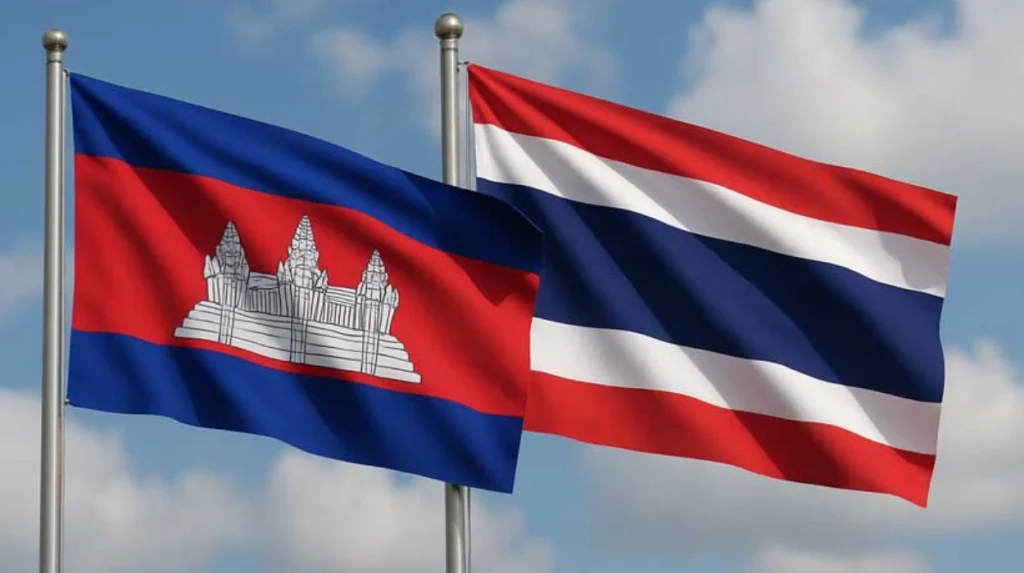
Cambodian Prime Minister Hun Manet has made a formal request to France for help in gaining access to historical documents that would assist in resolving a long-standing border dispute with Thailand, the country’s foreign ministry announced on Thursday. The request was made following border clashes that twice turned into armed conflict in 2022, killing more than 100 people and displacing over 500,000 on both sides.
Request for Historical and Technical Records
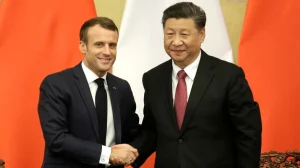
In a letter to French President Emmanuel Macron, Hun Manet requested
“any historical and technical documents related to the border between Cambodia and Thailand.”
He also invited French advice and assistance in resolving the border dispute, citing the “constructive engagement” that France could offer.
The statement from the Cambodian foreign ministry, issued on February 4, reported that Hun Manet had already met with Macron, who offered his help in the matter.
France’s Colonial Role in Cambodia
The demand for French documents is also closely related to the colonial history of Cambodia. Cambodia was a part of French Indochina from 1863 to 1953, and the French played an important role in the demarcation of the region.
The present border between Cambodia and Thailand, measuring 817 km (508 miles), was first demarcated in 1907 during the French colonial period. The French cartographers drew the border mainly on the basis of the natural watershed dividing the two countries. Many of the original maps, reports, and technical surveys are still to be found in the French archives, and thus France is an important source of historical evidence in any contemporary boundary dispute.
It is pointed out that the role of France in this matter is not without precedent, since in colonial days, French administrators were called upon to resolve territorial claims between Siam (now Thailand) and Cambodia, especially with regard to areas of strategic and cultural importance. The archives can assist Cambodia in obtaining historical evidence of the boundary as recognized by law.
Disputed Territories and Cultural Sites
The border dispute includes a number of territories of great historical and cultural value. One of these territories is the Hindu temple of the 11th century, Preah Vihear, which is also known as Khao Phra Viharn in Thai. The temple was awarded to Cambodia by the International Court of Justice in 1962, but the surrounding lands are still in dispute, and tensions rise whenever military forces are deployed in the vicinity of the temple.
Other disputed territories include forests, watersheds, and villages in the northern border.
Timeline of Recent Clashes
The dispute erupted into open conflict twice in 2025:
- July 2025: Fighting broke out after the death of a Cambodian soldier in late May during a border skirmish. The clashes lasted five days, killing 43 people. A ceasefire was brokered in Malaysia, with diplomatic involvement reportedly including then–U.S. President Donald Trump.
- December 2025: Hostilities resumed, lasting more than three weeks. Both sides accused each other of violating the previous truce. By the end of December, at least 101 people had died, and over 500,000 were displaced across border regions before a new ceasefire took effect on December 27.
Why Cambodia Turns to France
Cambodia’s appeal to France is rooted in legal, historical, and practical considerations:
- Historical Maps and Documentation: The 1907 French maps and technical surveys remain the most authoritative colonial records demarcating the border. These can support Cambodia’s legal claims in diplomatic negotiations or potential arbitration.
- Colonial Legacy and Neutrality: As a former colonial power, France holds records respected by both Cambodia and Thailand, potentially serving as a neutral source for verification.
- Expertise in Dispute Resolution: France has experience mediating border disputes in former colonies and can provide technical advisors familiar with historical cartography, legal frameworks, and territorial arbitration.
France’s engagement could help prevent further escalation in Southeast Asia, where territorial disputes are often intertwined with nationalist sentiment. Cambodia’s outreach underscores its desire to pursue a historical and legal resolution rather than prolonged armed conflict.
France’s embassy in Phnom Penh and the Thai foreign ministry did not immediately respond to requests for comment.