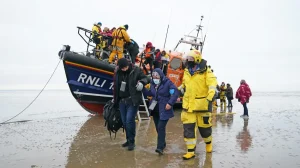
An increasing humanitarian and political battle ground has been witnessed at the English Channel. By 2025, the way France manages crossings by migrants has turned much harsher, as the government develops aggressive methods to prevent people wishing to reach the UK via small vessels. The French government’s strategy has been the focus of worldwide discussion on the topic of border enforcement vs human rights due to the rising number of crossings (which rose by more than 45% between 2024) and fatalities. Many gaps are exposed in the framework of Europe migration by this ongoing crisis and prove that sustainable solutions should be developed based on collaboration.
The Scale and Nature of the Channel Crossing Surge
Surging Numbers Underscore Structural Pressures
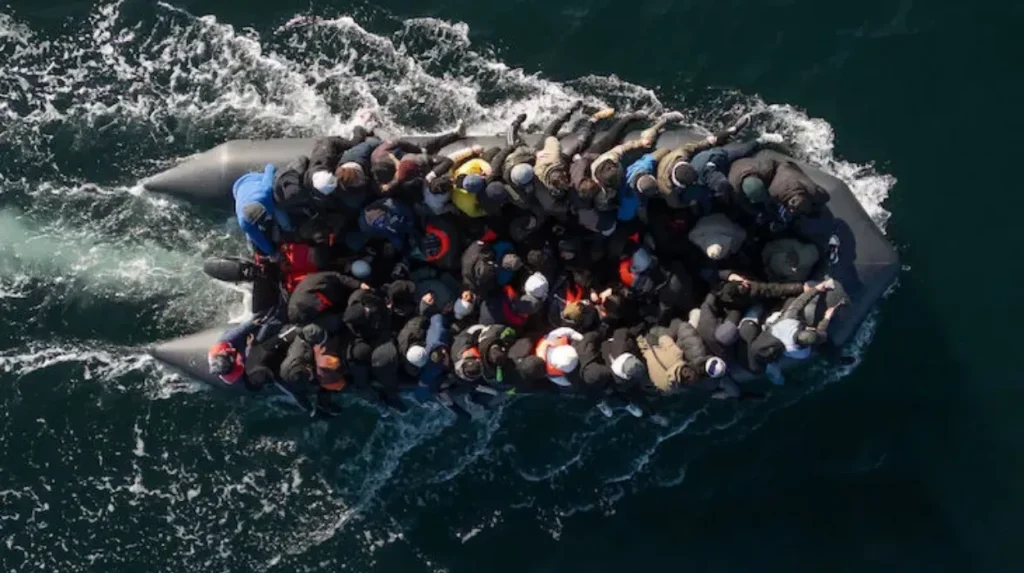
According to the UK Home Office, accounting for the early July, 2025, over 20,000 individuals had already sneaked into the country on small boats, of which 16,545 occurred in the first half of the year. It is a significant boost compared to the past years and the trend started in 2018. These statistics affirm to show that the existing deterrence has been not working to deter the crossings. Rather, they indicate an emergence of a more serious humanitarian crisis nestled in political stagnation.
Most migrants belong to the war-torn states or economically torn ones like Sudan, Afghanistan, Eritrea and Syria. Causes put forward so as to explain the assumption of the dangerous trip include lack of legal asylum channels, lengthy UK visa queues and protection failure in France. An escalating fraction concerns women and under-age girls, which is also causing concern over the frailties of people trying to cross.
Dangerous Journeys and Growing Fatalities
The English Channel is one of the cold water channels and the changing tides have taken away dozens of lives in recent years. In 2025 alone, 2024 of the least number of dead migrants when at least 15 lost their lives, no doubt continues. The dinghies employed are overcrowded and unseaworthy so many drown or die of hypothermia. The safety justified by French authorities in their aggressive interventions on shores is very much criticized by locals and some authorities since over-intervener creates panic and chaos around the departure areas.
Changing Smuggling Tactics Complicate Law Enforcement
Well-established groups of smugglers have been found to be resourceful. Rather than setting off in common hotspots such as Calais and Dunkirk, the networks have now started to set off boats over 100 kilometers south such as Boulogne-sur-Mer and Berck. This geographic shift is intended to evade surveillance and security patrols, but it also increases the voyage’s length and risk.
French authorities are stretched thin across the extensive coastline. Despite heightened patrols and surveillance drones, they remain reactive. British promises to “smash the gangs” through harsh sentencing and intelligence-sharing have so far yielded limited disruption. The adaptability of smuggling networks and the desperation of migrants continue to outpace enforcement.
French Enforcement Tactics Draw International Criticism
Tear Gas and Batons on the Northern Coast
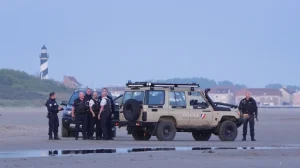
In the recent months, police in France have intensified their operations along beaches in which the migrants organize to go out in the early mornings. NGO reports and eyewitness testimony note that riot officers would hit people with batons and tear gas the groups, sometimes sending them into knee-depth waters where they would stand for hours at a time. These are operations recorded around Gravelines and Wimereux.
One Somali woman, Luna, recounted being trapped between riot police and the sea.
“They told us to go back, but we were already in the water. They fired gas, and people screamed,”
she said. Others confirm that elderly migrants have collapsed from exhaustion while waiting for boats that often fail to arrive.
French police justify the tactics as life-saving, preventing overloading and poorly timed launches. However, human rights advocates argue the use of force in such vulnerable settings lacks proportionality and contradicts France’s obligations under international refugee law.
Humanitarian Fallout and Broken Systems
Charities operating in the Calais region report a spike in injuries, stress disorders, and family separations. Children are often left behind in confusion.
“The violence is not stopping the crossings,”
said a volunteer with Utopia56.
“It just spreads people thinner and makes the journey more traumatic.”
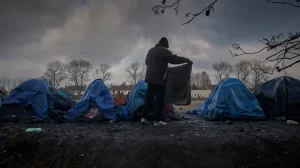
France’s inability to offer stable housing, legal pathways, or humane treatment for asylum seekers in northern coastal regions is repeatedly cited as a root cause of the crisis. There is a system of demolishing makeshift camps and providing no alternative provoking a new round of eviction and violent confrontation.
Diplomatic Moves and the Franco-British Agreement
The ‘One-In-One-Out’ Pilot
In July 2025, the French President Emmanuel Macron and the UK Prime Minister, Keir Starmer, revealed a new pilot migration agreement that aims at resolving the crisis at bilateral level. The UK will take in one asylum seeker in France who came in by boat in exchange with every migrant it sends back on the UK shores under the so-called one-in-one-out scheme, with priority in the bonds with the UK. The in-store pickups are anticipated to be around 50 returns every week.
This agreement will symbolize a political tradeoff that attempts to contain crossings without exclusively use of deterrence. It follows previous agreements signed last year, in 2022 and 2023 that have involved funding joint patrols and sharing intelligence. Nevertheless, analysts doubt its effectiveness in the long-term. Tens of thousands of crossings are expected every year and a 50-weekly exchange rate is unlikely to alter the situation much.
Operational and Legal Barriers
French patrol boats such as the Minck have received extended authority to intercept boats up to 300 meters from shore, a legal shift from earlier protocols that restricted intervention to rescue scenarios. However, French law still forbids police from forcibly removing migrants on land unless specific judicial procedures are followed, reducing proactive interdiction options.
The inability to detain or process migrants within French territory without formal proceedings forces law enforcement to rely heavily on beach-side dispersal and site surveillance—tactics which many say aggravate the problem without solving it.
Reactions Across Political and Civil Sectors
Political Calculations and Policy Paralysis
In France, public sentiment remains polarized. A recent IFOP survey found 48% of respondents supported increased policing, while 41% favored expanded legal migration channels. Macron’s government walks a tightrope, balancing electoral pressures from both the center-right and pro-immigration left.
Prime Minister Starmer, who took office in May 2025, faces similar pressures. His Labour-led coalition has promised to manage migration “with compassion and control.” Yet critics argue that the government’s focus on deterrence—mirroring elements of the previous Conservative administration—fails to address the causes of irregular migration or the lack of viable asylum routes.
Civil Society and Rights-Based Critiques
NGOs, including Human Rights Watch and Amnesty International, continue to document abuses on the French coast. Their calls for legal migration corridors, expanded humanitarian visas, and reform of the Dublin Regulation remain unanswered by both Paris and London.
A UNHCR representative recently warned that
“deterrence without protection leads to disaster.”
The agency has urged both governments to expand refugee resettlement commitments and invest in regional protection hubs to reduce dangerous secondary movement.
Expert Views and Ground-Level Realities
This person has spoken on the topic in an interview with GB News, stressing that current French tactics risk producing the opposite of their intended effect.
RESULT – a dinghy burns 🔥🔥
— Steve Laws (@Steve_Laws_) September 21, 2024
Violence erupted in Northern France between the illegals & French police during the early hours of this morning.
The illegals refused to move away from the dinghy when instructed by the police & carried on trying to reach the sea. Tear gas was… pic.twitter.com/eTKvc5fA5w
The speaker emphasized that police operations, though aimed at saving lives, are often counterproductive, forcing migrants to launch at riskier times and from more remote areas. They advocated for a long-term strategy centered on legal access routes, intelligence-led policing of smuggling operations, and increased support for local municipalities hosting migrants.
At the same time, the migrants testify that fear of police scarcely deters emigration plans. To a lot of people, crossing the Channel is the last step of a months-long journey, their will is honed by much harsher conditions to date.
Towards A Multilateral and Durable Approach
The Channel crisis illustrates the failure of reactive border control strategies in isolation. France’s current use of tear gas and tactical force may offer temporary disruption, but it does not present a sustainable deterrent. On the contrary, these actions compound trauma, push migrants into greater danger, and strain diplomatic
The bilateral pilot agreement though an improvement of the situation is symbolically narrow and administratively cumbersome. Unless, and until, there is sturdy investment in legal migration infrastructure and underlying-cause diplomacy, particularly in Africa and the Middle East, migrant flows are not likely to abate.
Smugglers will find space where there is darkness in the policies and where desperation is humanitarian. Addressing them can neither be accomplished simply through the use of force; it must consist of concerted governance mechanisms, transnational measures to reform laws and the deployment of substantial humanitarian options. The big outstanding question that will define the second stage of this crisis is whether our political class in Europe will be able to take the step to go beyond border theatrics.