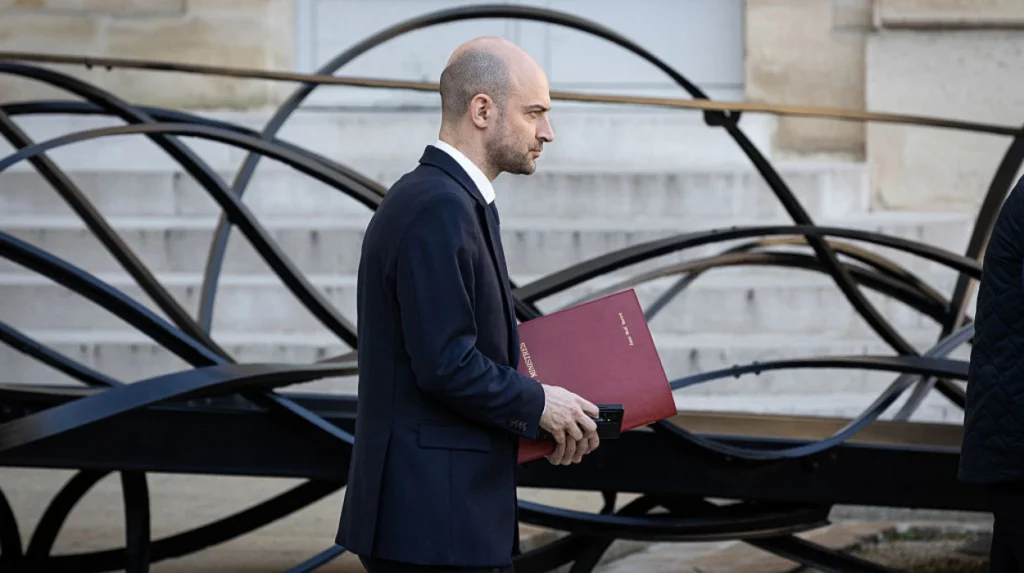
An apparent institutional conflict has also arisen in the European Union leadership in the nature of national governments, the European Commission and the European External Action Service in the process of making foreign policies. The Foreign Minister of France, Jean-Noel Barrot openly criticized the European Commission President Ursula von der Leyen saying that the Commission has long overstepped its traditional policy remit into direct diplomatic activity.
The dispute is indicative of more fundamental issues regarding the way the European Union carries out its foreign affairs in a more geopolitically volatile era. With the escalation of the crises in the Middle East and Eastern Europe, and in other points of strategic importance, the internal power equilibrium within the EU is under test. The intervention by France is an indication that certain member states are becoming quite alarmed by the fact that Brussels-based institutions are increasing their diplomatic influence without enough coordination with the national governments.
Diplomatic tensions triggered by Middle East developments
The most recent confrontation between Barrot and von der Leyen took notice after diplomatic talks were associated with increasing tension in the Middle East. With the international leaders reacting with military advances between Iran and regional powers, the European Commission also reached the Gulf governments and their allies.
The way these diplomatic contacts took place was in question with French officials. Barrot suggested that this outreach should mainly be implemented by the authority of the European External Action Service which is the official diplomatic service of the EU that is headed by the High Representative Kaja Kallas. To him, going round the usual diplomatic procedures is unwise because it can lead to institutional confusion of the Union, in foreign policy.
France’s concern over institutional balance
France has always supported the necessity of establishing a better separation among the political institutions of the EU. The foreign policy competence is a formal part of the member states who do it through the Council under the Lisbon Treaty, with the High Representative and the EEAS Liasonning the Union to act as the Union representative.
This criticism by Barrot is indicative of an understanding in Paris that the European Commission has over time become engaged in geopolitical missions outside of its economic diplomacy. This has created a debate in the diplomatic circles on whether the changing governance structure of the EU needs to be lined with a decisive line of authority.
Ursula von der Leyen’s geopolitical leadership strategy
Ursula von der Leyen has frequently spoken of the European Commission since her election to office in 2019 as a geopolitical Commission. Her leadership has focused on a more active Brussels in reacting to crises in the world whether in security issues or in energy diplomacy.
This is the strategic vision which has been spreading among the key international developments within the last several years. Proponents also contend that increased Commission representation will assist the EU to respond faster in a disjointed geopolitical context where agreement by twenty-seven member states may be hard to retrieve.
Expansion of Commission diplomacy
Since 2022, the European Commission has become increasingly prominent in foreign relations, particularly when it comes to managing several crises. Negotiations on energy partnerships Von der Leyen himself was the figure at the forefront of negotiations on energy relationships in the 2022 and 2023 energy supply problems, meeting leaders of Norway, Azerbaijan, and Gulf states to find alternative gas supplies.
It was followed in the year 2025 when the Commission was more active in foreign relations. Von der Leyen shared a number of high-level talks with international collaborators on matters of trade, security cooperation, and technological control. These interactions were commonly described as economic diplomacy although they could not but be connected with larger foreign affairs.
2025 developments shaping the debate
The expanding diplomatic presence of the Commission was prominently felt especially in the happening in 2025. After the renewed tensions in the Middle East and events concerning the global energy markets, the Commission held quick consultations with the governments of the region in order to reassure the European markets.
Although the rapid reaction was praised by many EU officials, some diplomats said such efforts were confusing institutional lines. Critics maintained that the EEAS must be left as the key coordinator of EU diplomacy so that the influence of the member states in key foreign policy decisions should not be lost.
France’s effort to reinforce the European External Action Service
The stance of France in the present dispute is an indication of a long-term commitment to make the European External Action Service stronger. The EEAS has since its establishment in 2011 been designed to act as a diplomatic service of the EU, which combines the experience of both the Commission and the member states.
The comments of Barrot are indicative of the wish of France to reestablish the EEAS as the key point of European diplomacy. The French officials argue that empowering the institution would enable the EU to have a unified external policy and retain the role of the national governments.
The role of High Representative Kaja Kallas
Kaja Kallas who took over as the High Representative of Foreign Affairs at the end of 2024 is now in a strategic position in the institutional discourse. She leads the EEAS tasked with organizing the diplomatic efforts of the EU and being the Union in international negotiations.
According to the French policymakers, investing more power in the office of the High Representative would bring more clarity in leadership in times of international crisis. To them, powerful EEAS would avoid institutional redundancy and at the same time, EU diplomacy would be representative of the agreement among the member states.
Support from other EU capitals
France is not the only one that is worried about institutional balance. The diplomats of various countries in the EU have privately shown their interest to strengthen the role of EEAS. Smaller nations, especially, tend to perceive the diplomatic service as a machinery to enable them to impact European policy as a bloc.
Meanwhile, the fact that the Commission can do things fast in situations where political consensus is sluggish can be welcomed by some governments. The controversy thus indicates rivalry in the views of how the EU is to play its role in the international arena.
Broader implications for European Union governance
The case of Barrot vs Von der Leyen raises more general structural issues on governance in the European Union. In recent years, the EU is more and more requested to intervene in geopolitical crises, whether it be the invasion of Ukraine by Russia, or unrest in the Middle East or the situation in the Indo-Pacific.
Both crises have demanded that the Union juggle between speed, coordination, and democratic legitimacy. Though the Commission is able to mobilize regulatory and economic instruments within a short period of time, the final say is left to the member states in terms of foreign and security policies.
Institutional complexity in EU foreign policy
European foreign policy has an institutional structure that has many layers. The EU strategic priorities are defined by the European Council, national positions are aligned by the Council of the European Union, diplomatic interaction is maintained by the EEAS, and economic and regulatory tools are supervised by the Commission.
This was to be a structure to balance supranational and inter governmental authority. The growing point of convergence between geopolitics and economic policy, however, has resulted in less distinct boundaries in the institutions. The policy of energy security, trade control, and sanctions has become a tool of a foreign policy.
Impact on EU credibility abroad
Institutional disagreements can influence how external partners perceive the EU. When multiple European leaders engage in parallel diplomacy, foreign governments may struggle to identify the Union’s unified position.
Supporters of stronger Commission leadership argue that von der Leyen’s proactive diplomacy helps project European influence globally. Critics counter that bypassing established channels risks sending mixed signals and weakening the EU’s negotiating power.
Power dynamics heading toward the next political cycle
The timing of the Barrot vs Von der Leyen debate is significant. The current European Commission began its second mandate in 2024, meaning that institutional relationships established during this period could shape EU governance through the end of the decade.
France’s intervention suggests that some member states want to recalibrate those relationships early rather than allowing institutional practices to evolve informally. The outcome of the dispute may therefore influence how future crises are managed within the EU system.
Potential institutional adjustments
Diplomatic observers expect that upcoming meetings of EU foreign ministers could address coordination mechanisms between the Commission and the EEAS. Discussions may focus on clarifying responsibilities during crisis diplomacy while preserving flexibility for rapid responses.
Such adjustments would not necessarily reduce the Commission’s international role but could formalize consultation processes. Strengthening communication channels between institutions might prevent future disagreements from becoming public disputes.
Strategic implications for EU diplomacy
The European Union’s ability to project influence globally increasingly depends on its capacity to coordinate diverse institutional actors. As geopolitical competition intensifies, the balance between supranational leadership and member state authority will remain a central question for European policymakers.
Whether the debate ultimately strengthens the EEAS, reinforces Commission leadership, or produces a hybrid arrangement remains uncertain. What is clear is that Europe’s external strategy is evolving in real time as global crises demand faster and more coherent responses.
Europe’s diplomatic architecture has always reflected a delicate compromise between national sovereignty and collective action. The current friction between Paris and Brussels illustrates how that balance continues to evolve as the Union confronts an increasingly volatile international environment. If the Barrot vs Von der Leyen debate leads to clearer institutional roles, it may ultimately strengthen the EU’s capacity to act abroad. If the rivalry deepens, however, Europe could face a more complicated challenge: projecting unity to the world while negotiating authority within its own political framework.